 Ryan Echternacht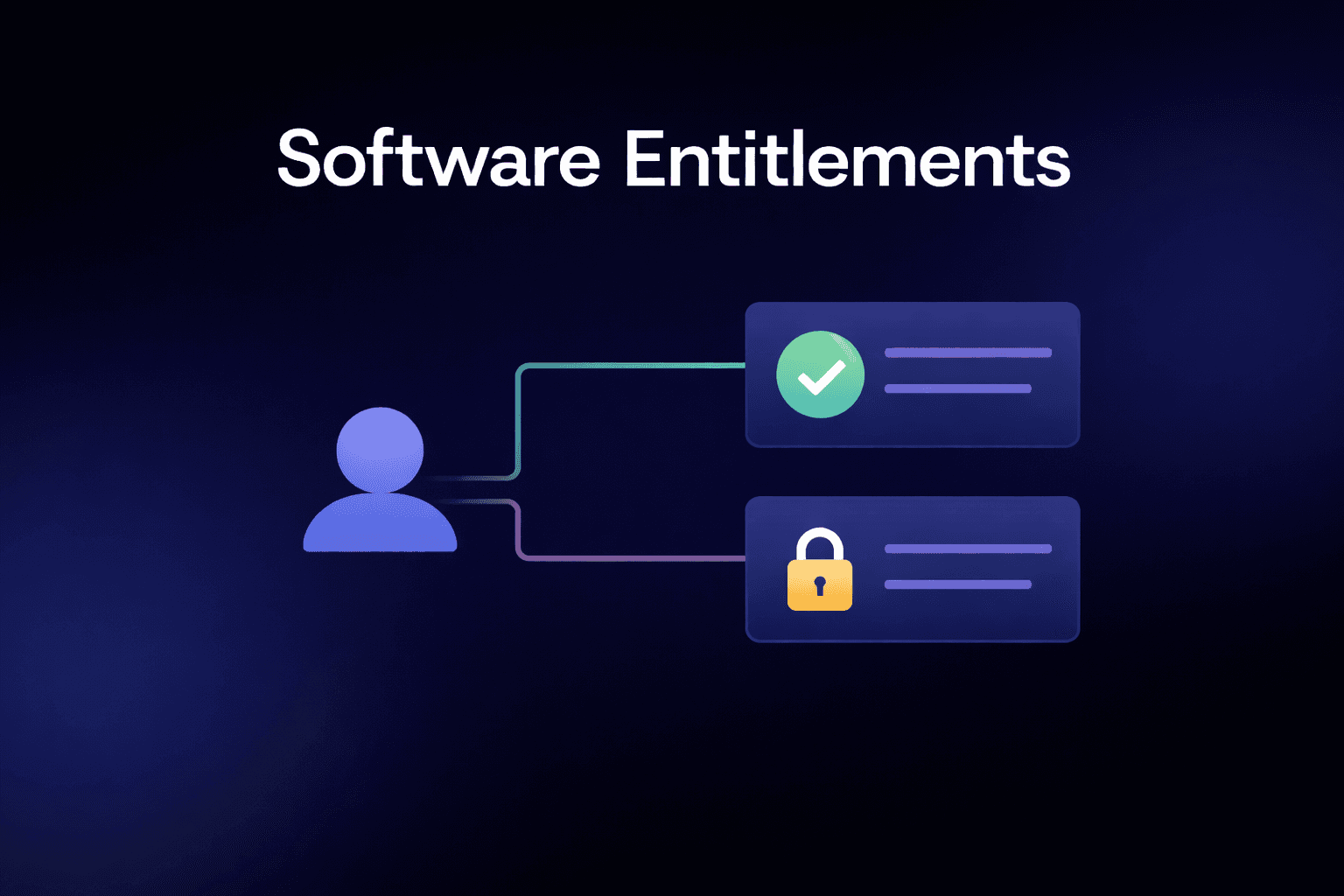
Modern SaaS products monetize more than subscriptions. Teams sell seats, usage, credits, add-ons, and bundles at the same time.
Many still rely on brittle billing logic to control access. That approach breaks down once pricing becomes usage-based or hybrid.
Software entitlements define how monetization shows up inside the product. They control access, limits, and feature access settings at runtime.
When entitlements work well, pricing stays aligned with how customers actually use the software product.
This article explains what software entitlements are, how they differ from traditional subscriptions/licenses, and how SaaS teams manage access as pricing and customer needs change.
TL;DR
- Software entitlements define the runtime rules that control access, limits, and usage inside your product as pricing changes.
- Entitlements differ from licensing because licensing documents what was sold, while entitlements enforce what customers can use in real time.
- Entitlements break at scale when rules live in billing code, feature checks, and manual overrides, which leads to drift from Stripe billing state.
- Hybrid pricing needs runtime enforcement so seats, usage, credits, and overages stay consistent with packaging and metered usage.
- Software entitlement management systems centralize plans and limits, and Schematic gives you one control plane to manage entitlements and enforce access without hard-coded logic.
What Are Software Entitlements?
Software entitlements define what a customer or a company can access inside your product based on a subscription plan, usage, and billing state. They control which features are available, what limits apply, and when access changes. Enforcement happens at runtime.
Software entitlements differ from permissions. They answer what a company can use, while permissions answer what an individual user can do.
Entitlements support common monetization scenarios such as:
- Grant trials of advanced features to encourage upgrades
- Enforce usage limits tied to credits or consumption to drive upgrades
- Trigger sales workflows as accounts approach their limits
- Use paywalls to prompt plan upgrades in-product
- Identify churn risk signals based on usage drops and intervene early
Entitlements typically cover feature access, usage limits (e.g., API calls), seats, credits, trials, add-ons, and exceptions. You evaluate them against live usage and the Stripe-based billing state to keep access accurate.
Without entitlements, access rules spread across billing code, feature checks, and overrides, which fail as pricing turns hybrid and selling combines product-led and sales-led deals.
With a dedicated entitlement layer, you define plans and limits once, then enforce them consistently as customer state changes.
Software Entitlements vs. Software Licensing
Software entitlements and software licensing solve different problems. One governs access inside the product. The other defines ownership and static limits.
The distinction becomes important once pricing moves beyond static plans and teams start analyzing usage patterns to guide enforcement, upgrades, and limits.
Software Entitlements
Software entitlements control access at runtime. They determine which users can access certain features, what limits apply, and how software usage is enforced based on plan, billing state, and actual consumption.
This model supports dynamic scenarios, such as usage-based limits, trials, credits, temporary overrides, and mid-cycle upgrades. Entitlement decisions often rely on analyzing usage patterns in real time to keep access aligned with how enterprise customers consume value.
Entitlement compliance happens inside the product. Access reflects current state and actual usage, not assumptions or static contracts.
Software Licensing
Software licensing focuses on purchase validation and access at the account or installation level. It defines which edition or package a customer bought and is often enforced through license keys, account activation, or contract records.
License enforcement typically relies on static checks, such as keys, activation limits, audits, or periodic verification.
This approach works for fixed plans and packaged software. However, it struggles with usage-based and hybrid pricing models, where access needs to change continuously based on consumption, upgrades, or billing state.
Why the Difference Matters
Licenses document what was sold. Entitlements control what the product allows at any moment.
As SaaS pricing becomes usage-driven and hybrid, teams need entitlements to enforce access dynamically based on live data, while licenses remain a record of what was purchased.
Modern SaaS products rely on both, but entitlements handle the day-to-day operational reality inside the product.
Why Software Entitlements Break as Products Scale
Entitlements often break once products grow beyond early plans. Many teams still rely on legacy billing systems that hard-code rules into the product.
Over time, access logic spreads through billing systems, feature checks, and sales workflows. Billing systems typically were not designed to handle dynamic usage or frequent changes.
As teams introduce hybrid pricing, rigid pricing models, and manage them through code, they create friction. Each exception adds more manual effort, especially when teams manage multiple development accounts.
Handling trials, overrides, and migrations while you support multiple environments becomes risky. Teams try to shield potential integration errors, but gaps still appear.
These issues surface most when serving existing customers. Plan immutability billing systems make changes slow, forcing teams into workarounds or allowing legacy customers to drift from current pricing.
In complex production environments, billing systems and access can easily fall out of sync with what customers actually bought.
How Schematic Supports Software Entitlements
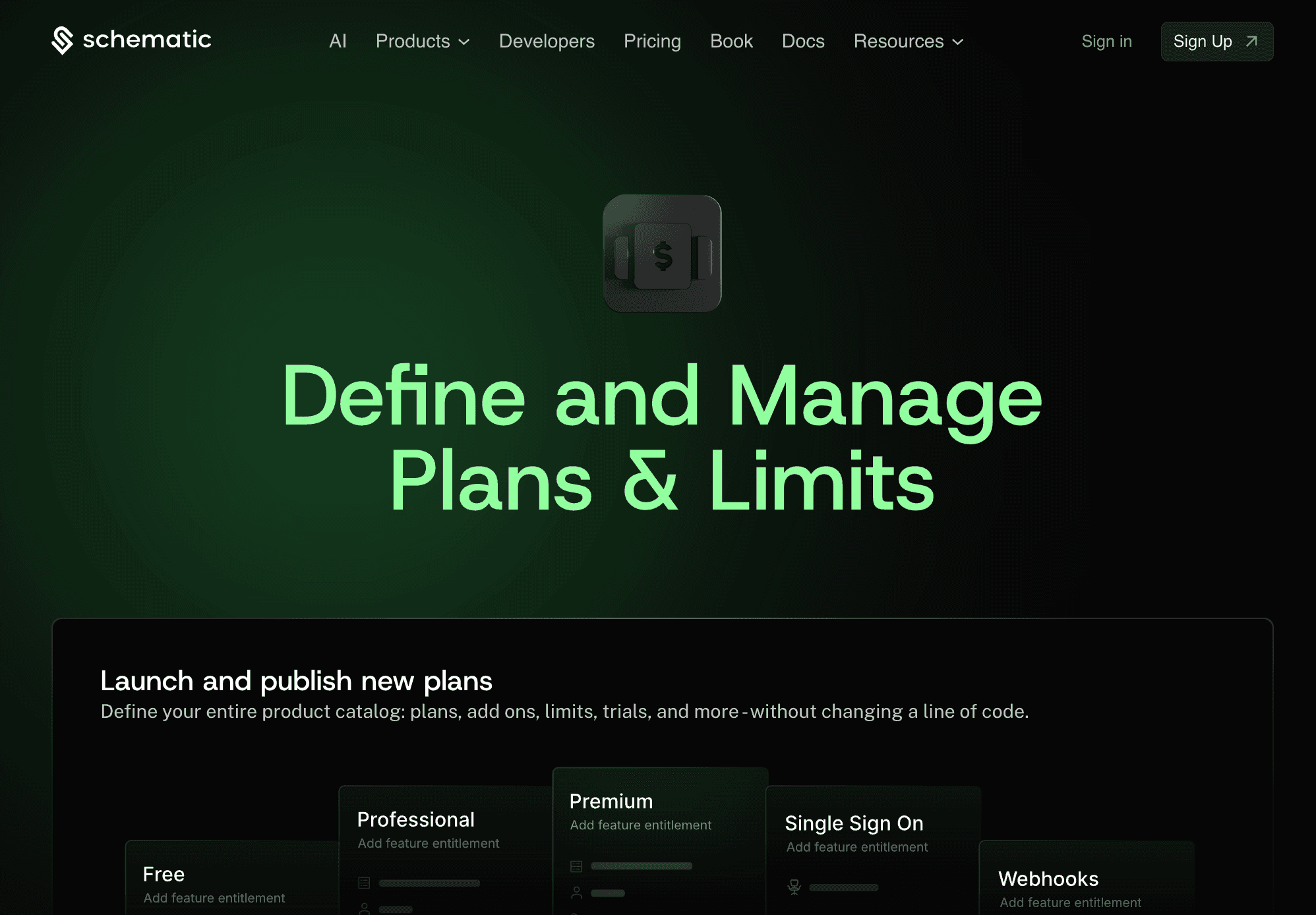
Schematic fits this topic because it treats software entitlements as part of the monetization infrastructure, not a scattered set of checks. It helps you define plans, limits, trials, credits, add-ons, and exceptions in one place, then enforce access inside the product.
Here are the three core ways it supports software entitlements:
- One source of truth for your product catalog, including plans, entitlements, limits, overrides, and trials
- Runtime enforcement inside the product, so access stays consistent across self-service and sales-led flows
- Stripe-friendly setup that keeps billing state and access rules aligned without rebuilding your billing stack
What Schematic supports in day-to-day entitlement work:
- Model plans and entitlements without hard-coding logic into feature gates
- Track usage and enforce limits that match your packaging and billing periods
- Manage exceptions and temporary overrides for sales-led deals and migrations
- Keep product, billing, and GTM aligned between environments and releases
If you are scaling hybrid pricing, the main win is operational control. You can change packaging and enforcement without turning billing work into an engineering project.
Why Hybrid Pricing Requires Runtime Entitlements
Hybrid pricing mixes seats, usage, and overages in a single motion. Usage-based billing shifts how teams think about access and enforcement inside the product.
Some models follow pay-as-you-go or pay-as-you-use structures, where access grows with consumption. Others rely on a tiered pricing method that blends fixed plans with usage thresholds.
This setup pushes beyond static pricing plans and introduces different pricing plans based on how customers consume value. Each pricing model includes configuration for limits, credits, and overages while combining fixed costs with variable usage.
Entitlements make this workable in the product. You can track usage patterns by analyzing usage data and feature usage. Teams rely on accurate usage tracking to aggregate usage data and calculate feature usage in real time.
This makes soft or hard limits possible while protecting margins without blocking customers mid-flow. With clear entitlement limits, teams can optimize entitlement limits as needs change.
AI products especially need real-time enforcement to prevent overuse while keeping upgrades frictionless.
How Modern SaaS Teams Use Entitlement Management Systems
Modern teams move entitlements out of application code and into entitlement management systems built for change.
You define plans, limits, and usage in the entitlement management solution, then enforce system access at runtime. This creates centralized entitlement management instead of scattered checks in individual services.
With flexible access management, product teams and RevOps can adjust limits, trials, and overrides without shipping code.
Engineering relies on appropriate abstraction mechanisms that keep the feature’s business logic centrally managed and consistent. This reduces risk for software developers working on multiple services.
These systems act as a shared management system for product, billing, and GTM teams. Access stays aligned with Stripe-based billing and live usage.
A flexible and scalable infrastructure becomes important in a rapidly changing market environment, where pricing models shift faster than release cycles.
This approach keeps enforcement precise while letting teams move quickly.
When to Invest in a Dedicated Entitlement Infrastructure
Homegrown entitlement logic works early on. It usually breaks once pricing and selling become more complex.
A common signal is when access rules live in multiple places. For example, feature flags are in one service, while billing logic sits in another. Keeping them in sync takes constant effort, especially if you also handle sales overrides manually.
Pricing complexity adds more pressure. Seats plus usage. Credits with overages. Trials that convert mid-cycle. Each change increases the risk of inconsistent access.
Product maturity is also important. Supporting multiple environments, migrations, and existing customers makes hard-coded rules harder to maintain. Engineers spend time fixing access instead of building features.
If entitlements affect pricing and packaging strategies, block sales flexibility, or create customer-facing errors, it’s time to treat them as infrastructure, not glue code.
Common Software Entitlement Use Cases
Software entitlements show their value when pricing and access need to change without breaking the product. These use cases reflect how teams manage real customer scenarios in both self-serve and sales-led motion.
- Free to paid conversion - You expand customer access based on the user’s subscription status while keeping access control enforced during the active billing period.
- Feature trials - Teams unlock features for a fixed time to support software monetization without manual cleanup. Trials help existing customers immediately test value before upgrading.
- Sales-led overrides - RevOps handles exceptions by managing user access for specific accounts. Entitlements enable GTM teams to close deals without engineering support.
- Usage-based upgrades - Products adjust access as usage grows, supporting upgrades tied to real consumption. This keeps financial transactions aligned with value delivered.
- Credit-based access for AI products - Credits control spend while managing financial transactions safely. Teams can support gradually transitioning customers as pricing changes.
These patterns are common among modern software vendors operating at scale in such a highly competitive tech industry.
Run Software Entitlements Without Hard-Coding Using Schematic
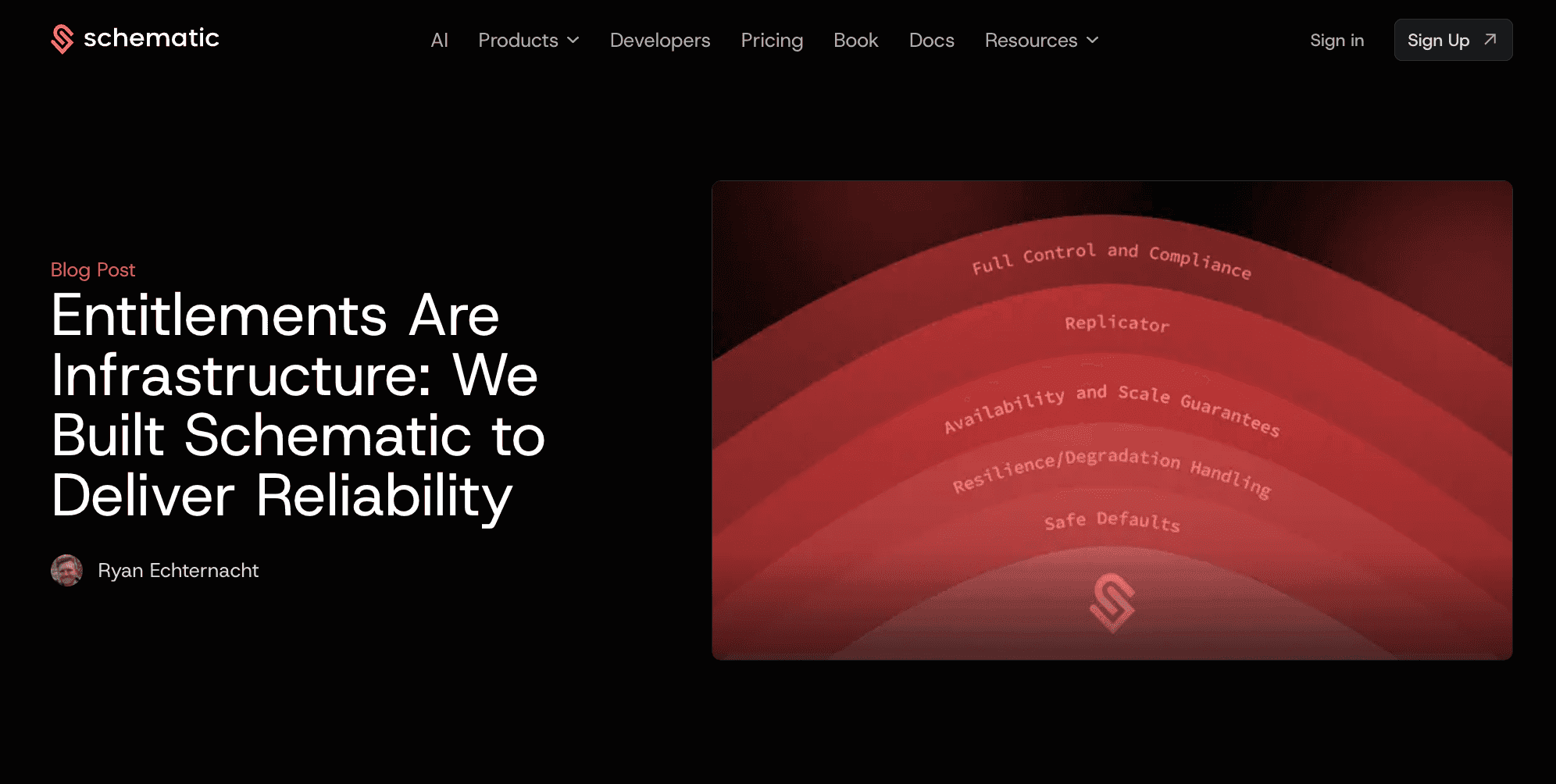
Software entitlements are no longer a configuration detail, but the core infrastructure for how modern SaaS and AI companies price, sell, and enforce access.
As pricing becomes hybrid and usage-driven, teams need a way to keep product behavior aligned with what customers actually buy.
When entitlements are designed well, pricing stays flexible without creating operational drag. Product teams can iterate on packaging. Engineering avoids brittle billing logic. RevOps can support real-world deals without breaking access to the product.
Schematic supports this shift by giving teams a single control plane for plans, entitlements, usage, and enforcement. You can adjust pricing, manage exceptions, and enforce access at runtime without turning every change into an engineering project.
If you are scaling hybrid pricing and selling through self-serve and sales-led motion, the right entitlement layer makes the difference.
FAQs About Software Entitlements
What is a software license entitlement?
A software license entitlement defines what functionality a customer is allowed to use after purchasing a plan or product. In SaaS environments, it connects the commercial agreement recorded in billing with the access rules enforced inside the product.
How do SaaS companies manage customer entitlements across plans?
SaaS teams manage customer entitlements by mapping plans, add-ons, and usage limits to runtime rules inside the product. When a request occurs, the system evaluates those rules to grant access to features or prompt an upgrade when limits are reached.
How do entitlements work with licensed software?
In products that combine subscriptions and licensed software, the license confirms what was purchased, while entitlements determine how the product behaves in real time. This allows features, limits, and usage thresholds to adjust as plans change.
What are the key benefits of using an entitlement system?
The key benefits include consistent feature enforcement, fewer billing mismatches, and easier management of hybrid pricing models. Centralized entitlements also help teams support optimizing pricing plans as usage patterns evolve.
How do entitlements help SaaS teams prepare for future pricing packages?
Entitlements give teams flexibility when launching future pricing packages because plans, limits, and add-ons can be updated without rewriting application logic. This allows product and revenue teams to update pricing while keeping access rules stable.