All posts
Entitlements Are Infrastructure: We Built Schematic to Deliver Reliability
Blog· Ryan Echternacht
Ryan Echternacht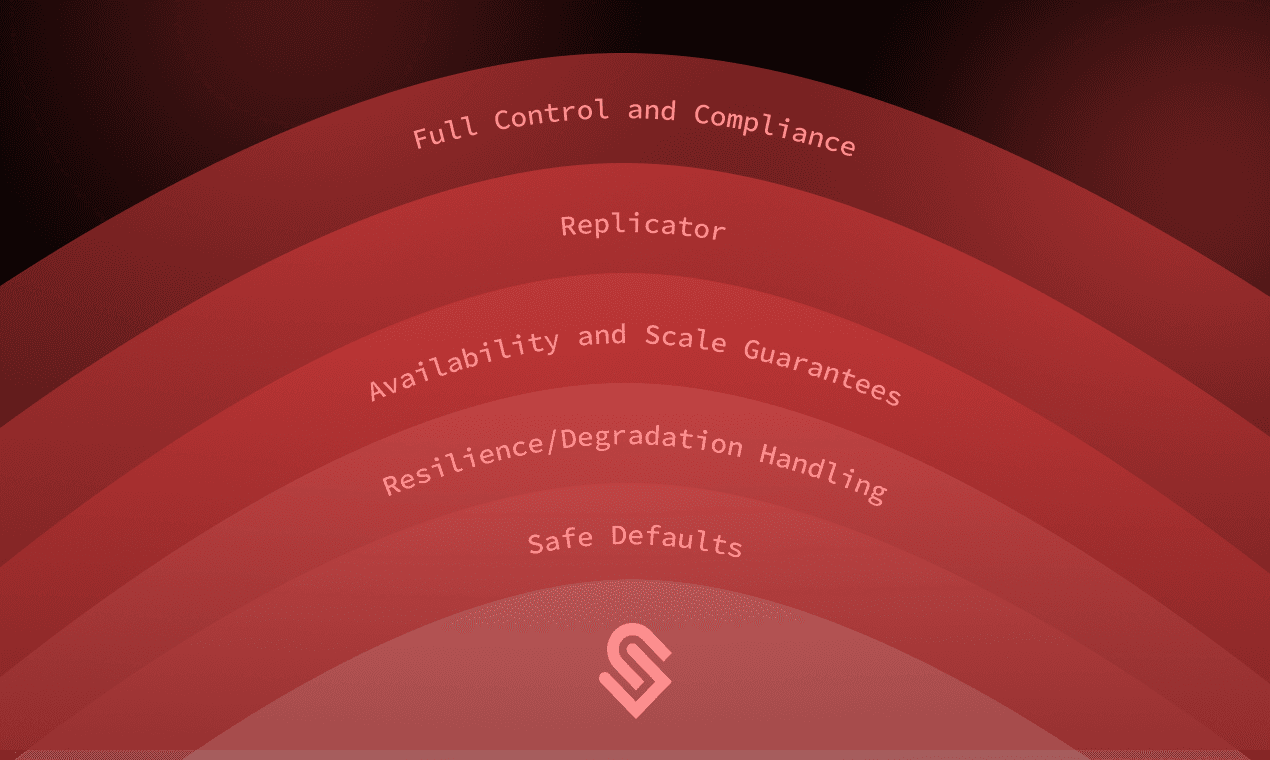
Feature flags and entitlements sit directly in the critical path of your product. They power paywalls, gate premium features, enforce usage limits, determine who can access what, and decide when a user needs to upgrade, expand, or talk to sales. In practice, they’re the layer that connects product behavior to billing and revenue.
If they’re slow, flaky, or unavailable, your product becomes slow, flaky, or unavailable. That’s why availability, reliability, and performance are foundational concerns for us. At Schematic, we assume that:
- Billing enforcement must be fast enough to feel invisible.
- It must work even when parts of the system are degraded.
- It must fail safely.
- It must scale with you as your product, customers, and revenue grow.
Most teams don’t think about this early, and that’s understandable. But once feature gating and entitlements become core to your go-to-market motion, they stop being “nice to have” and start being infrastructure. That's why teams teams ranging from AI infrastructure companies like Zep, to analytics platforms like Plotly, to fintech providers like Pagos rely on Schematic to enforce entitlements in production and drive more revenue.
This article explains how we think about high availability, why it matters, and the different ways Schematic supports it as your needs evolve.
Availability Is a Product Concern, Not Just an Infrastructure One
When people hear “high availability,” they often think about databases, load balancers, and cloud regions. But for product and GTM teams, availability shows up in very real ways:
- Can users reliably upgrade when they hit a limit?
- Do trials, promotions, and legacy plans behave consistently?
- Are enterprise contracts correctly enforced in-product?
- Do usage limits and meters update in real time?
- Do outages create billing or support incidents?
If your entitlements system is down, stale, or slow, you don’t just have a technical problem—you have a customer experience problem.
Additionally, For teams selling into enterprise or regulated environments, availability and security go hand in hand. Schematic is SOC 2 compliant, giving customers confidence that our availability guarantees are backed by audited operational and security practices.
That’s why we designed Schematic so that flag checks are safe, fast, and resilient by default.
Our Default: Fast, Cached, and Resilient
Out of the box, Schematic is built to be highly available without requiring any special configuration.
Flag checks are pre-calculated and cached so they:
- Check almost instantly
- Update in real time
- Keep working even during service disruptions
This means that even if parts of our backend are unavailable, your application can usually continue to function. In these scenarios:
- Flag checks still work
- Values may become temporarily stale
- Normal behavior resumes automatically once service is restored
For most teams, this model is exactly what they want: simple, safe, and reliable. You don’t have to think about replication, failover, or synchronization. It just works.
When You Need More: Stronger Guarantees and Local Reads
As companies grow, their requirements change.
You might need:
- More control over runtime dependencies
- Independence from external services
- Better support for enterprise uptime expectations
That’s where our more advanced high-availability options come in.
Replicator: Local, Real-Time, and Fully Resilient
For teams that want maximum performance and resilience, Schematic offers Replicator.
Replicator maintains a complete, real-time copy of your flag data inside your own infrastructure. Your application reads directly from that local store, rather than making live API calls.
This gives you three major benefits:
- Faster Checks: Since everything is stored locally in your infrastructure, there's no need to wait for network requests.
- Always Ready: Changes are sent to you immediately as they happen, so your app stays up-to-date.
- Full Outage Resilience: Even in the unlikely event of a full-scale Schematic outage, your application continues operating normally using your complete local copy of the data.
For enterprise customers, this can help address concerns about reliability and vendor dependencies.
DIY Replication: Full Control
Some teams choose to build their own local replication or caching layer using Schematic’s APIs and webhooks. This typically involves periodically syncing all of your customer's flag data and everaging Schematic webhooks for real-time updates.
While this approach introduces significant operational complexity, it remains a viable option for teams that need full control over their replication logic. We currently support customers who have chosen this path.
If you’re thinking about building this, we strongly recommend starting with Replicator. It provides the same core architecture in a more robust, battle-tested, and operationally simpler way.
Growing Into These Capabilities
At its core, high availability isn't just about uptime. It's about trust: trust that limits are enforced correctly, that plans behave consistently, that upgrades work when users need them, and that revenue logic won't take your product down.
We've built Schematic so that these guarantees exist from day one, and so that you can strengthen them as your business grows.
Most teams start with our default high-availability behavior and never need anything more. As your needs evolve, whether due to scale, enterprise requirements, or stricter reliability standards, you can upgrade to more advanced models without rebuilding your pricing or entitlement logic.
If you want help deciding what makes sense for your stage and motion, we're happy to talk. That's what we're here for.