 Ryan Echternacht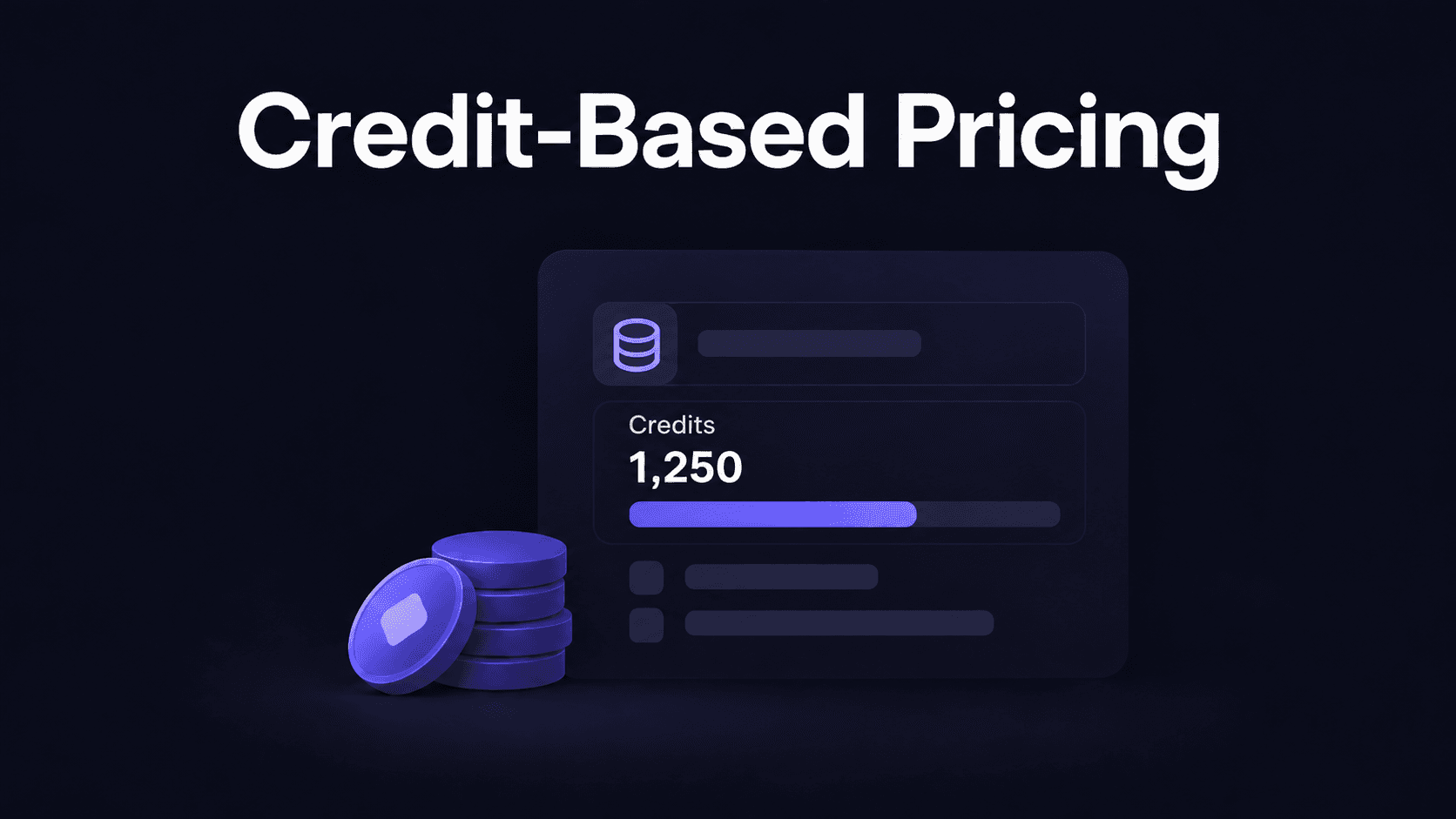
Credit-based pricing is a model where software products charge for usage through credits.
A credit represents a unit of activity inside the product. One credit might cover an AI generation request, a group of API calls, or a document processing task.
Many SaaS companies use credits when product usage varies between customers or features. Traditional pricing models often struggle to reflect that variation without creating confusing plans or rigid limits.
A single credit unit simplifies pricing by turning different types of usage into something customers can track and finance teams can bill.
This guide explains how credit-based pricing works, where it fits in SaaS pricing models, and how teams design credit systems inside their products.
TL;DR
- Credit-based pricing converts product activity into usage units called credits. Each credit represents a measurable action such as an AI request, API call, or automation task.
- Credit-based pricing works best in AI platforms, developer APIs, automation tools, and data processing products where infrastructure workloads change per request.
- To design a credit-based pricing model, define what a credit represents, map product actions to credit consumption, package credits into plans or prepaid balances, define overages, and decide rollover or expiration rules.
- Schematic is a usage-based billing platform that helps SaaS and AI companies define credit-based plans, meter product usage, manage credit balances, and control how customers consume and pay for usage.
What Is Credit-Based Pricing?
Credit-based pricing is a pricing model that converts product usage into billable units called credits. A credit unit represents a measurable action inside the product, such as an AI generation request, a group of API calls, or a document-processing task.
Credit-based models translate service usage into credit usage that teams can measure over time. Each usage event reduces the credit balance, and the system stops activity when credits run out.
The model supports variable usage and helps SaaS products maintain predictable revenue. Customers often prepay for credits and purchase more credits as demand grows. Usage-based billing systems then connect the actual consumption of credit values to infrastructure costs and operational costs.
Credit-based pricing also simplifies revenue recognition and deferred revenue accounting. Finance teams record usage data and usage history from prepaid services as customers consume credits during the billing period.
Why SaaS Companies Use Credit-Based Pricing
Many SaaS products rely on workloads where usage varies between customers and features. Fixed subscription tiers and seat-based pricing models often struggle to represent that variability without creating rigid plans.
Credit-based models address that challenge by converting actual usage into flexible units that align pricing with product activity.
The sections below explain the main reasons SaaS companies adopt credit‑based pricing:
Flexible Usage in Multiple Product Features
Modern SaaS products often include AI tools, automation workflows, APIs, and data processing features within the same product. Each capability can generate different variable costs tied to infrastructure usage.
Credit-based systems allow these features to draw from the same credit balance. Within a usage-based pricing model, teams can define credit definitions that reflect how much compute or service usage each operation consumes.
The shared credit pool makes it easier to track usage, control credit costs, and maintain a consistent billing model.
Unified Pricing for Complex Product Catalogs
As products expand, pricing complexity grows. New modules, premium features, and professional services can create fragmented pricing structures that are difficult for customers to understand.
Credits simplify packaging by acting as a shared unit of value. Teams can offer flexible credit pack sizes and volume discounts, while customers prepay for usage that fits their expected workloads.
That upfront commitment can improve revenue predictability and help teams maintain predictable cash flow.
Expansion Revenue Without Forced Plan Upgrades
Traditional pricing tiers often force customers to upgrade plans once usage exceeds predefined limits. That structure can interrupt product adoption or create friction during growth.
Credit systems support expansion in a more gradual way. Customers continue using the product and purchase additional credits when demand increases.
Customers scale usage without immediate plan changes, and the system simply deducts more credits from the balance through usage-based billing.
Pricing AI, APIs, and Compute-Heavy Features
Many modern SaaS platforms rely on workloads where infrastructure usage changes by request. AI inference, API activity, and automation tasks may generate different processing costs depending on the operation.
Credits provide a flexible way to map credit values to these workloads. Each action consumes a defined unit tied to the actual consumption of infrastructure resources.
This approach helps pricing reflect real value delivered by the product and keeps the pricing structure easier for customers to understand.
Where Credit-Based Pricing Works Best
Credit-based systems work best in products where usage varies by request, workload, or feature. Many modern software products rely on infrastructure that scales with activity. In these environments, credits help translate technical usage into a simple unit that customers understand.
The following product categories illustrate where credits work most effectively:
AI Products and Model Inference Workloads
AI platforms often process tasks that vary in compute requirements. A request handled by an AI agent, image generator, or text model may consume different resources depending on prompt length or model size.
Credits help normalize these differences. A product can assign credit values to each operation, so customers decide how many credits to spend depending on the task. This structure helps align perceived value with actual model usage and keeps pricing easier to understand.
API and Developer Platforms
Developer platforms frequently price services based on API requests, automation triggers, or event processing. Activity may change significantly between applications, which makes fixed limits difficult to maintain.
Credits allow platforms to connect usage to predictable billing logic and support flexible workloads. Each request deducts credits, allowing systems to measure how customers pay for infrastructure usage and maintain clear spending limits.
Automation and Workflow Tools
Workflow automation platforms execute tasks that depend on triggers, integrations, or scheduled processes. Activity often grows gradually as organizations automate more processes.
Credits provide a way to represent each workflow action as a measurable unit. Customers monitor their credit balance as they decide how tasks run.
Unused credits, expiring credits, or optional loyalty incentives may also appear in these systems to support long‑term product usage.
Data Processing and Infrastructure Platforms
Products that process files, analyze datasets, or run compute workloads often depend on infrastructure usage that changes per task. These workloads may involve batch processing, background jobs, or event‑driven pipelines.
Credits allow platforms to link processing activity to defined units of value. Usage maps directly to credits while teams align product pricing with industry trends.
How Credit-Based Pricing Works in SaaS
Credit systems operate directly inside the product. Each plan includes a defined number of credits that represent allowed activity during a billing period. These credits function as a usage allowance tied to product features and infrastructure workloads.
Credits Included in a Subscription Plan
Many SaaS plans include a starting pool of credits. The number of credits reflects the amount of product activity the plan supports. Teams define how much value each credit represents based on compute usage or service actions.
Teams can also use customer behavior to estimate how frequently features will be used during the billing cycle.
Credits Consumed by Product Actions
Each action inside the product deducts credits from the account balance. For example, an automation job, API request, or AI generation task consumes a predefined number of credits.
This way, credits act as a measurable unit of product activity. Usage events trigger credit deductions in real time so the system can track consumption as it happens.
Credit Balances Control Product Access
The product continuously evaluates the remaining credit balance. Actions proceed as long as credits remain available. Once the balance reaches zero, the system may pause additional usage, allow overages, or trigger a refill based on the account rules.
This mechanism connects product access to usage activity and supports outcome-based pricing tied to product activity.
Overages, Refills, and Credit Purchases
Many products allow accounts to purchase additional credits when usage increases. Teams can launch credit models quickly by linking credit purchases to plan limits or refill rules.
As customers expand product activity, they can buy additional credits to continue usage. In this structure, businesses benefit from flexible growth without forcing immediate plan upgrades.
How to Design a Credit-Based Pricing Model for Your Product
Designing a credit system starts with connecting product activity to a measurable unit of usage.
The structure should reflect how features consume infrastructure and how customers interact with the product. Each decision shapes how credits translate usage into a clear pricing structure.
Step 1: Define What a Credit Represents
Start with a clear definition of what one credit represents in your product. A credit might represent a single API request, an AI generation task, or a batch data processing job.
The definition should reflect the underlying compute or service action that drives cost.
Step 2: Map Product Actions to Credit Consumption
Next, connect product actions to credit deductions. Each feature should consume credits based on the workload it generates.
For example, a simple API request may deduct one credit, and a larger AI inference task may deduct several. Usage events then update the credit balance as actions occur inside the product.
Step 3: Package Credits into Plans or Prepaid Balances
Credits can be included in subscription plans or sold as prepaid balances. A base plan might include a fixed number of credits per billing period, and larger plans include higher usage limits.
Prepaid credit balances also allow customers to purchase credits in advance for future usage, which supports consumption-based pricing and hybrid pricing models.
Step 4: Define Overages and Expansion Pricing
When customers exceed their included credits, the system needs a clear expansion path. Some products allow usage to continue with overage charges. Others require customers to purchase additional credit packs.
Both approaches let usage grow without interrupting product access and support expansion revenue without forcing immediate plan upgrades.
Step 5: Decide Rollover and Expiration Rules
Finally, define what happens to unused credits. Certain products allow credits to roll into the next billing period, while different products set expiration rules to encourage active usage.
These decisions influence how customers manage their credit balance, plan their usage, and perceive the value of their remaining credits.
Credit-Based Pricing vs Other SaaS Pricing Models
Credit systems often appear alongside other SaaS pricing models, each measuring product value in a different way. Comparing these models helps clarify how credit pricing connects usage, product access, and billing behavior.
Credit-Based vs Usage-Based Pricing
Usage-based pricing charges customers directly for each unit of service activity, such as API requests, compute time, or storage consumption. Billing typically reflects the exact amount of usage recorded during a billing period.
Credit-based pricing introduces an intermediate unit. Product actions consume credits instead of direct usage units. The system then converts those credits into usage charges or prepaid balances. This structure groups different types of service usage into a single pricing unit.
Credit-Based vs Seat-Based Pricing
Seat-based pricing charges based on the number of users who can access a product. Each additional seat increases the subscription price regardless of how frequently the product is used.
Credit systems measure product activity instead of user count. Accounts receive a pool of credits that represent available product usage. Teams can then distribute those credits throughout features, workflows, or automated tasks without increasing the number of seats.
Credit-Based vs Pay-As-You-Go Pricing
Pay-as-you-go pricing bills customers only for usage that occurs during the billing period. Charges appear after consumption takes place.
Credit-based pricing often introduces prepaid usage. Customers purchase credits in advance and consume them as product actions occur. Additional credit purchases extend usage when demand grows.
Enforcing Credits Inside the Product
Credit systems operate at the product layer, where access decisions happen in real time. Every account receives a credit allowance tied to plans, limits, or prepaid balances. Product actions trigger usage events that deduct from the account’s credit balance.
These credits function as entitlements that determine whether an action can proceed. When a feature runs, the system checks the remaining credit balance before processing the request.
If sufficient credits remain, the action proceeds and the system records the usage event. When the balance reaches zero, the product blocks additional activity until the account receives more credits.
Credits as Entitlements
Credits represent allowed product activity. Each feature, automation task, or API operation consumes a defined number of credits. The entitlement layer evaluates these rules during runtime to confirm whether the account can perform the requested action.
Usage Tracking and Runtime Enforcement
Usage tracking records actions that consume credits. Each usage event updates the credit balance immediately. Runtime checks evaluate the remaining balance before new requests run, keeping limits enforced during active product usage.
Syncing Credits With Billing Systems Like Stripe
Billing systems record charges and subscription changes. The product enforces usage limits. Credit purchases, plan upgrades, or prepaid balances sync with billing platforms such as Stripe. The system then updates entitlements and credit balances so usage rules match billing data.
Manage Credit-Based Pricing With Schematic
Schematic is a complete usage-based billing platform for SaaS and AI companies. It gives teams one system to define pricing and packaging, meter product usage, manage credits, and control how customers consume and pay for usage.
Teams can create plans with included credits, configure credit burn rates, set rollover rules, offer automatic top-ups, and sell additional credit bundles. Schematic also keeps an auditable credit ledger that records grants, purchases, usage, refunds, rollovers, and expirations.
Schematic meters product activity as it happens and uses the same usage data across credit balances, billing, and customer-facing usage information. This helps prevent different systems from recording conflicting usage or credit totals.
For customers, Schematic provides in-product wallets and usage controls that show current balances, consumption, and spending limits. Enterprise customers can track their usage and control spend before they hit a limit.
Teams can also change plans, credit allocations, pricing rules, and usage limits without rebuilding billing logic each time the pricing model changes.
FAQs About Credit-Based Pricing
What are the 4 types of pricing?
Four common pricing models used in SaaS are subscription pricing, usage-based pricing, seat-based pricing, and credit-based pricing. Subscription pricing charges a recurring fee for access to a product. Usage-based pricing charges based on actual consumption, such as API calls or storage.
Seat-based pricing charges per user account. Credit-based pricing converts service usage into prepaid credits that customers consume as they use product features.
How do credits work in SaaS pricing?
Credits act as a unit of service usage inside a product. Each action, such as an AI request, API call, or data processing task, consumes a defined credit value.
The system tracks usage events and deducts them from the customer’s credit balance. Customers typically prepay for credits or purchase additional credits as usage grows.
When should a SaaS product switch to credit-based pricing?
A SaaS product should consider credit-based pricing when feature usage varies widely between customers or when infrastructure costs scale with activity. Products that rely on AI requests, API traffic, automation workflows, or data processing often see large differences in how accounts use the system.
In these cases, flat subscription tiers can create mismatches between price and actual usage. Credit systems allow teams to package baseline access inside a plan while letting customers expand usage gradually by consuming or purchasing additional credits.