 Ryan Echternacht
Managing subscriptions gets harder as your SaaS or AI company grows. Having more customers can mean more plans, billing cycles, upgrades, renewals, usage charges, limits, and exceptions to track.
Traditional billing and payment solutions cannot handle these tasks. Your product needs runtime rules that decide who gets access and when based on subscription data.
Subscription management software solves this at the backend. It links subscription models to product logic so entitlement checks happen at runtime. Feature access, usage caps, trials, and add-ons stay consistent as subscription plan changes.
Below is a list of the top seven subscription management tools built for SaaS products. Each one focuses on recurring billing, backend pricing logic, and in-product access control instead of payment processing.
TL;DR
These are the seven best subscription management solutions:
- Stigg
- Maxio
- Lago
- Orb
- Chargebee
- Recurly
What Is Subscription Management Software for SaaS Products?
A subscription management solution is backend software that decides what customers can access based on their plan and usage.
It acts as the control layer between pricing and your product. You use it to define subscription models, attach software entitlements to plans, and enforce usage limits at runtime.
In a modern subscription business, pricing changes often as trials start and end, customers upgrade or downgrade plans, and add-ons expand access.
Subscription software enforces these rules at runtime by evaluating plan state, usage, and overrides before actions occur. This approach works the same way for self-serve signups and sales-led flows.
The platform gives your team the ability to support different pricing strategies without hard-coding access rules.
Why Does Subscription Management Matter for Modern SaaS?
Subscription pricing updates often break products when access rules live in code. Plans change, limits shift, and exceptions pile up.
Without a backend layer, your app falls out of sync with customer subscription data. That puts annual or monthly recurring revenue streams at risk.
Subscription management fixes this by enforcing rules at runtime. You apply the same logic to self-serve signups and sales-led deals.
This consistency matters when you support usage-based billing SaaS models. Accurate usage tracking tied to entitlements is required to apply limits, overage pricing, and plan upgrades correctly.
When permissions stay aligned with subscription data, you reduce mismatches between plans and usage and avoid access errors as customers move between tiers.
Teams also gain better subscription revenue management and clearer insights into subscriber behavior.
Over time, this supports subscription growth, reduces churn, improves user satisfaction, and creates long-lasting customer relationships.
7 Best Subscription Management Software in 2026
Below is a list of the best subscription management software designed for SaaS products. Each tool focuses on backend pricing logic, feature access, and usage limits inside the product.
1. Schematic
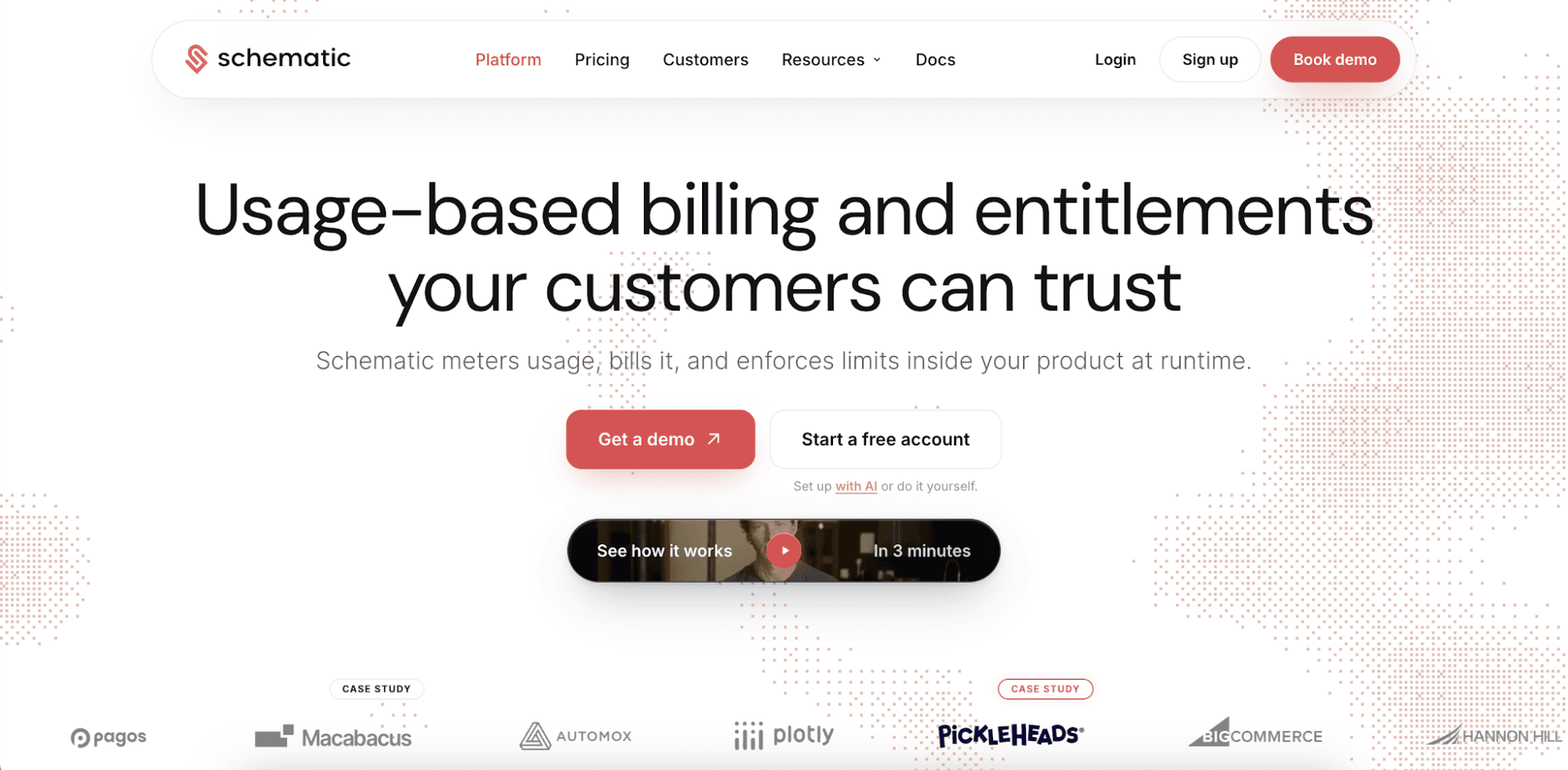
Schematic is the best subscription management platform for software and AI companies selling usage-based plans to enterprise accounts.
Unlike other subscription management software, Schematic acts as the central source of truth for all your monetization operations.
You can manage pricing and packaging, meter usage, version plans, migrate customers, run trials, grant AI credits as part of a subscription, and enforce limits in one place. A plan change happens through configuration, not code.
Enterprise credit wallets give your customers real-time visibility into usage. Meanwhile, self-service controls let buyers set per-seat or per-agent limits, manage automatic SaaS top-up rules, and define what happens at the cap.
Policies take effect the moment you or your customer saves them. Subscription plan state, balances, usage, and history stay consistent everywhere the product reads them.
Customers can see and use only what they are entitled to based on their plan, contract terms, and any exceptions provided to them by product managers.
Commercial teams benefit from out-of-the-box billing capabilities. Credit rollovers, expiry windows, priority consumption rules, and concurrency-safe holds enable businesses to implement credit-based pricing successfully.
Schematic even includes an append-only ledger with revenue recognition capabilities to help finance teams close the books faster and maintain compliance.
Key Features
- Customer lifecycle management: Manage subscribers from first checkout through renewal in one billing engine.
- Real-time ledger: Store pricing as data and change subscription plans through configuration.
- Usage metering and billing: Track product activity and charge customers for actual usage using any pricing model (e.g., pay-as-you-go, credit burndown, or hybrid).
- Enterprise credit wallets: Manage credit grants, rollover, burn-down, expiry, top-ups, and spending for users or autonomous agents.
- Runtime entitlement engine: Check product access at runtime and enforce limits from the same ledger used for billing.
- Plan versioning and simulation: Version plans and replay real usage against drafts before full pricing rollout.
- Self-service controls: Customers can set usage limits per company, per user, or per agent. They can also configure top-up rules and decide what happens at the limit.
- Credit holds and priority consumption: Reserve credits before committing or releasing them. Then, establish priority consumption rules to ensure promotional or oldest credits burn down first.
- AI and agent access: Use Schematic's MCP server to connect agents to billing context so they can list plans, check usage, and find companies near their limits.
- ASC 606 revenue recognition: Simplify credit-based revenue recognition through an append-only, export-ready ledger.
2. Stigg
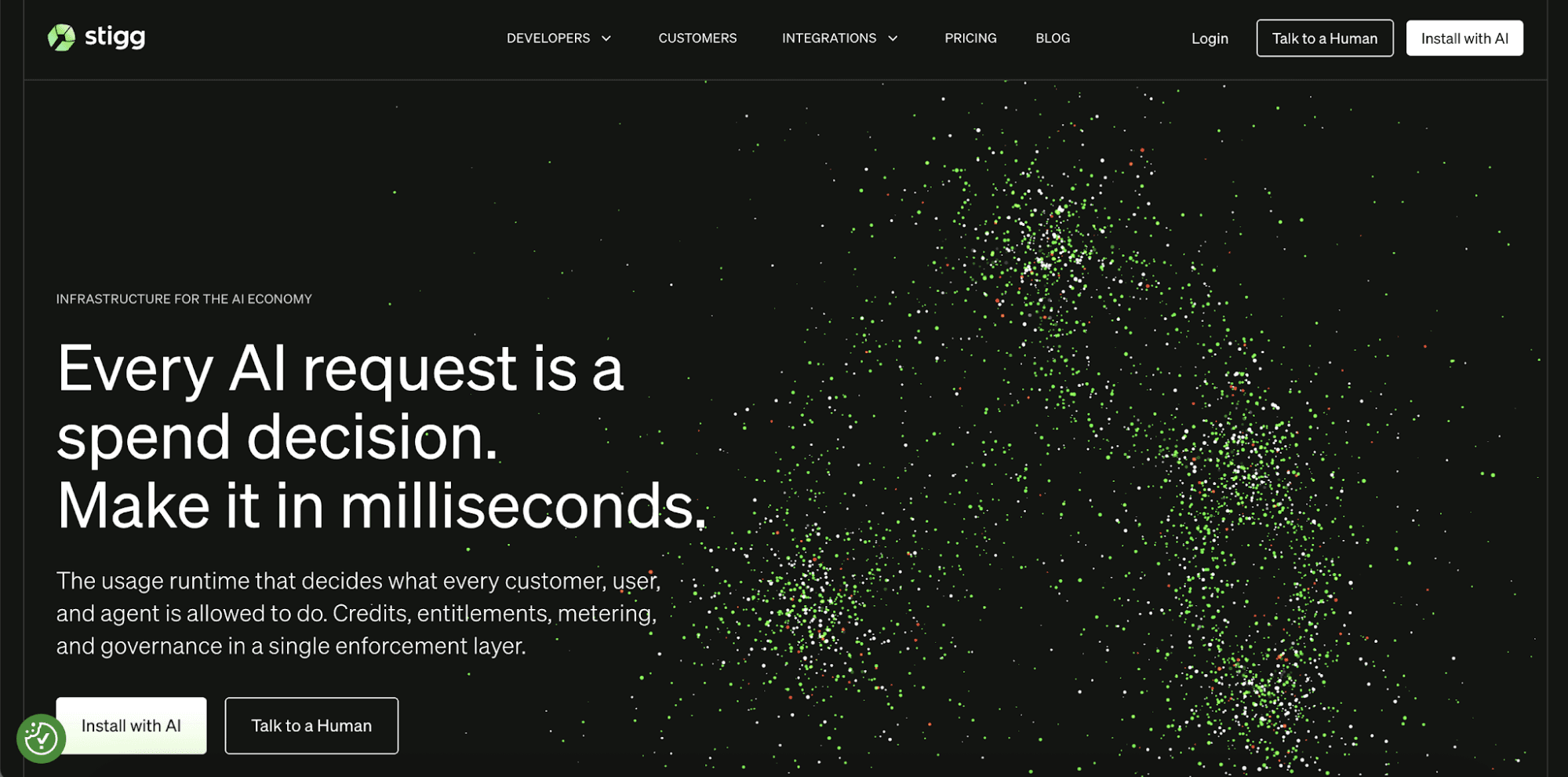
Source: Stigg.io
Stigg provides a product-side system for managing plans, entitlements, and usage rules inside SaaS applications. Teams use it to define which features and limits apply to each subscription plan, then enforce those rules at runtime.
Stigg supports usage-based pricing and plan-driven access. It typically augments an existing billing stack (e.g., Stripe Billing, Zuora, or a homegrown system) rather than replacing it.
Many SaaS teams connect Stigg to evaluate entitlements and collect data on feature usage, while product teams work with engineering to adjust limits and packaging as plans change.
It is commonly used in setups that combine self-serve access with sales-led contracts and custom terms.
Key Features
- Feature entitlements: Apply access rules based on plan and customer state.
- Real-time enforcement: Evaluate entitlements, credits, and usage limits before allowing a request to run.
- Usage metering: Capture and aggregate usage events to support usage-based pricing.
- Support for complex pricing models: Handle credit burndown, per-usage pricing, and hybrid billing setups.
- Self-serve controls: Customers can configure per-user, per-team, per-agent budget caps.
3. Maxio
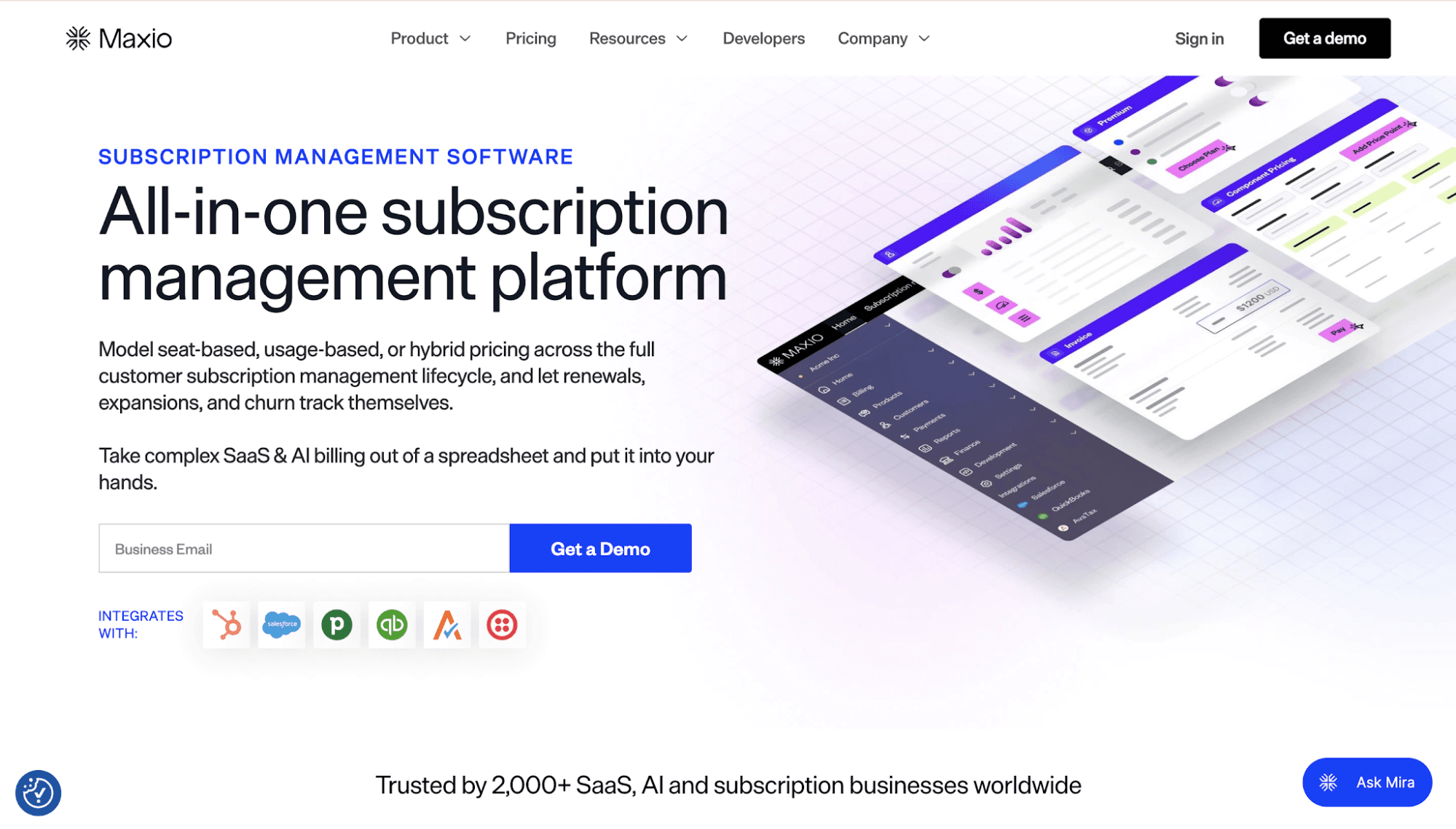
Source: Maxio.com
Maxio is an all-in-one billing and financial reporting platform built for B2B SaaS companies managing subscriptions at scale. It focuses on subscription billing, revenue recognition, invoicing, and financial visibility.
Teams use Maxio to automate billing processes, subscription renewals, and recurring billing workflows so revenue operations stay predictable as customer volume grows.
It supports flexible billing models, including contract-based pricing, usage-based plans, and custom pricing without requiring engineering involvement.
Maxio also tracks key metrics, such as monthly recurring revenue, churn, and customer lifetime value, to help companies identify revenue trends.
However, Maxio only reflects subscription state at the billing layer. That's why teams often pair it with entitlement management systems when access needs to change at runtime based on usage, trials, or custom contract terms.
Key Features
- Automated subscription billing and invoicing: Automate recurring invoices, proration, upgrades, and renewals.
- Usage-based pricing: Meter and rate usage for billing and reporting.
- Pricing and quoting: Configure contract pricing and custom plans without code changes.
- Self-service portal: Let customers manage subscriptions, payment methods, and cancellations.
- Revenue analytics: Track revenue growth and sudden drops due to subscription plan changes.
4. Lago
Source: getLago.com
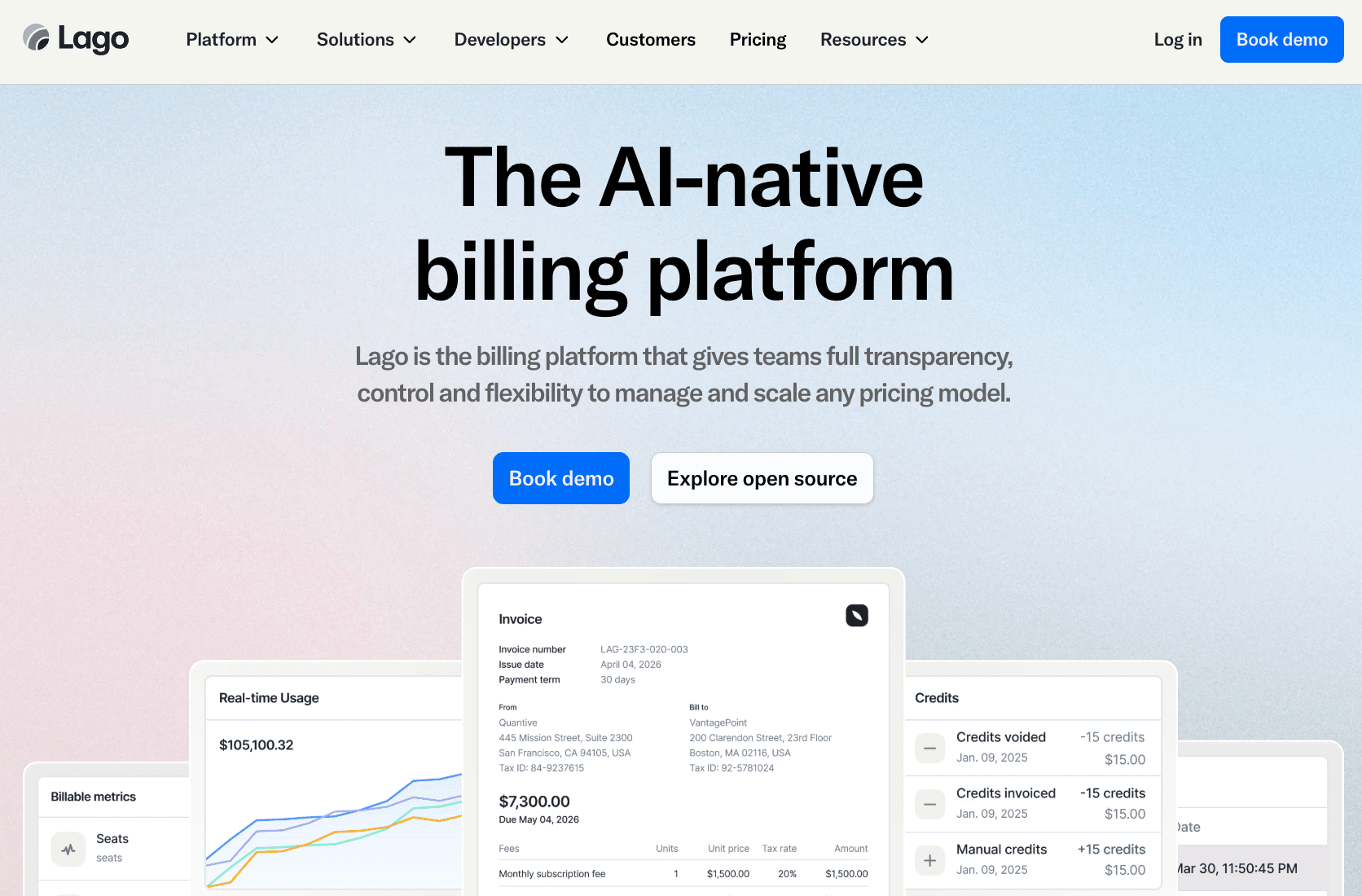
Built as an open-source billing layer, Lago is a subscription billing and usage-based billing platform for SaaS products.
Businesses operating recurring subscription models rely on Lago to calculate usage, apply pricing rules, and generate invoices from metered consumption.
Lago supports recurring billing workflows and connects usage data to billing outputs through built-in integration capabilities.
Engineering teams use the platform to handle billing automation logic, while pricing and RevOps teams configure rules for minimum commitments and usage overages.
Lago is popular among teams that want transparent billing components and direct control over how usage converts into charges for self-serve and sales-led accounts.
Key Features
- Usage-based billing and invoicing: Convert metered usage into accurate invoices.
- Metering and usage aggregation: Process consumption events for billing.
- Native integrations: Connect Lago to payment gateways, accounting software, customer relationship management (CRM) systems, and tax compliance tools.
- Open-source setup: Run and extend Lago's subscription management software in your own environment.
- Support for complex pricing models: Handle subscriptions combined with usage-based charges, including tiers, overages, and commitments.
5. Orb
Source: withOrb.com
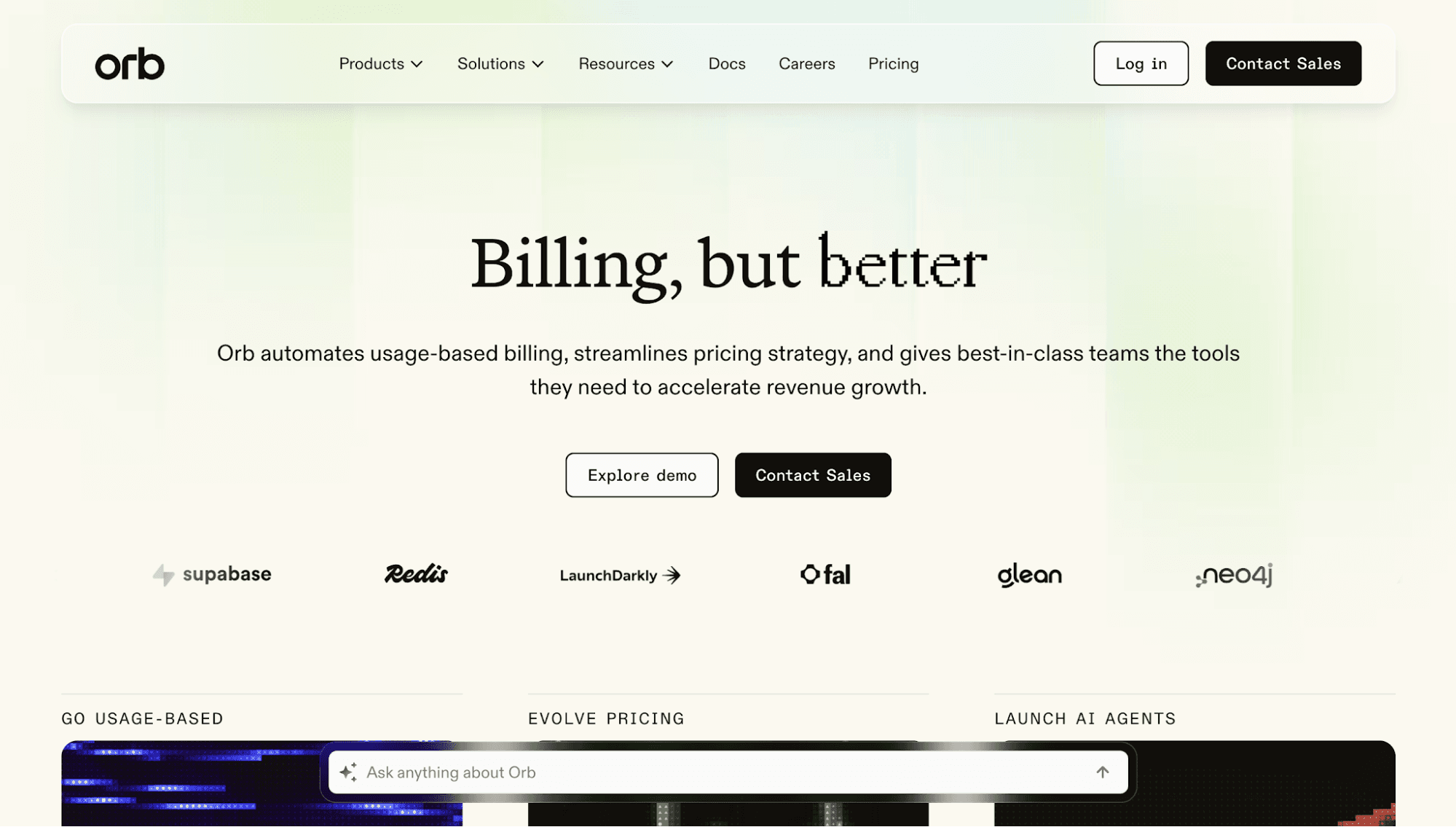
Orb focuses on usage-based pricing and billing infrastructure for SaaS products. Teams use it to track usage events, define pricing models, simplify subscription strategies, and calculate charges based on consumption.
It supports metering pricing workflows where usage data feeds directly into billing logic. The platform also connects to your event stream to handle pricing calculations and reporting, while teams configure plans, limits, and usage rules.
The built-in experience kit provides trust and transparency tools. Pricing changes automatically reflect in customer-facing systems, such as pricing calculators, checkout flows, and usage dashboards.
Orb is typically used by teams that need detailed usage tracking while keeping enterprise contracts, customer data, and teams in sync.
Key Features
- Usage tracking and metering: Collect and process consumption events at scale.
- Pricing model setup: Configure usage-based and consumption-driven plans.
- APIs for backend integration: Connect pricing logic to product and billing systems.
- Experience kit: Use pricing calculators, checkout flows, and advanced dashboards to help customers understand and predict costs.
- Billing component integration: Send calculated charges to billing platforms.
6. Chargebee
Source: Chargebee.com
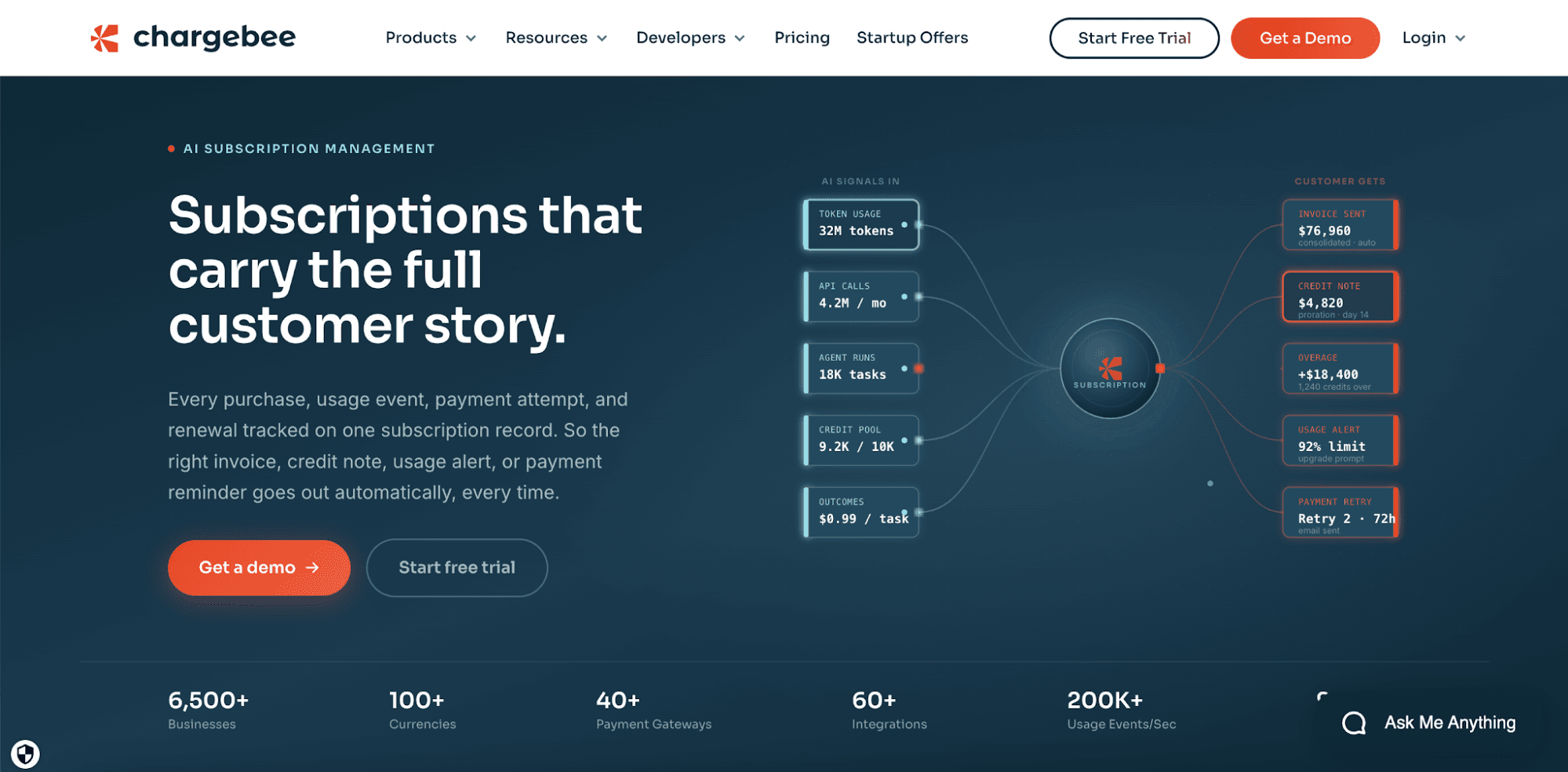
Chargebee combines subscription billing and recurring revenue management in one platform. Teams use it to manage customer subscriptions, generate invoices, and process recurring payments tied to fixed and usage-based pricing models.
Chargebee supports automated billing, subscription changes, and plan cancellations, while handling global payments through integrations with major payment gateways.
Supported payment methods include cards, direct debit, PayPal, Apple Pay, and other digital wallets. Chargebee also offers no-code provisioning tied to subscription state, such as trial access and plan changes.
However, entitlements inside Chargebee only reflect backend billing status rather than real-time in-product enforcement. Businesses often use the platform alongside entitlement systems to apply usage limits and gate features based on live access rules.
Key Features
- Subscription lifecycle management: Create, update, and cancel subscriptions for fixed and usage-based plans.
- Recurring billing and invoicing: Automate invoice generation, mid-cycle changes, and payment recovery workflows.
- Payment gateway integrations: Support multiple payment options and currencies in different regions.
- Revenue reporting: Track monthly recurring revenue, churn risks, unpaid invoices, and other revenue trends.
- Billing components and REST APIs: Connect Chargebee's billing data to your company's existing systems, such as Stripe Billing, HubSpot, and Salesforce.
7. Recurly
Source: Recurly.com
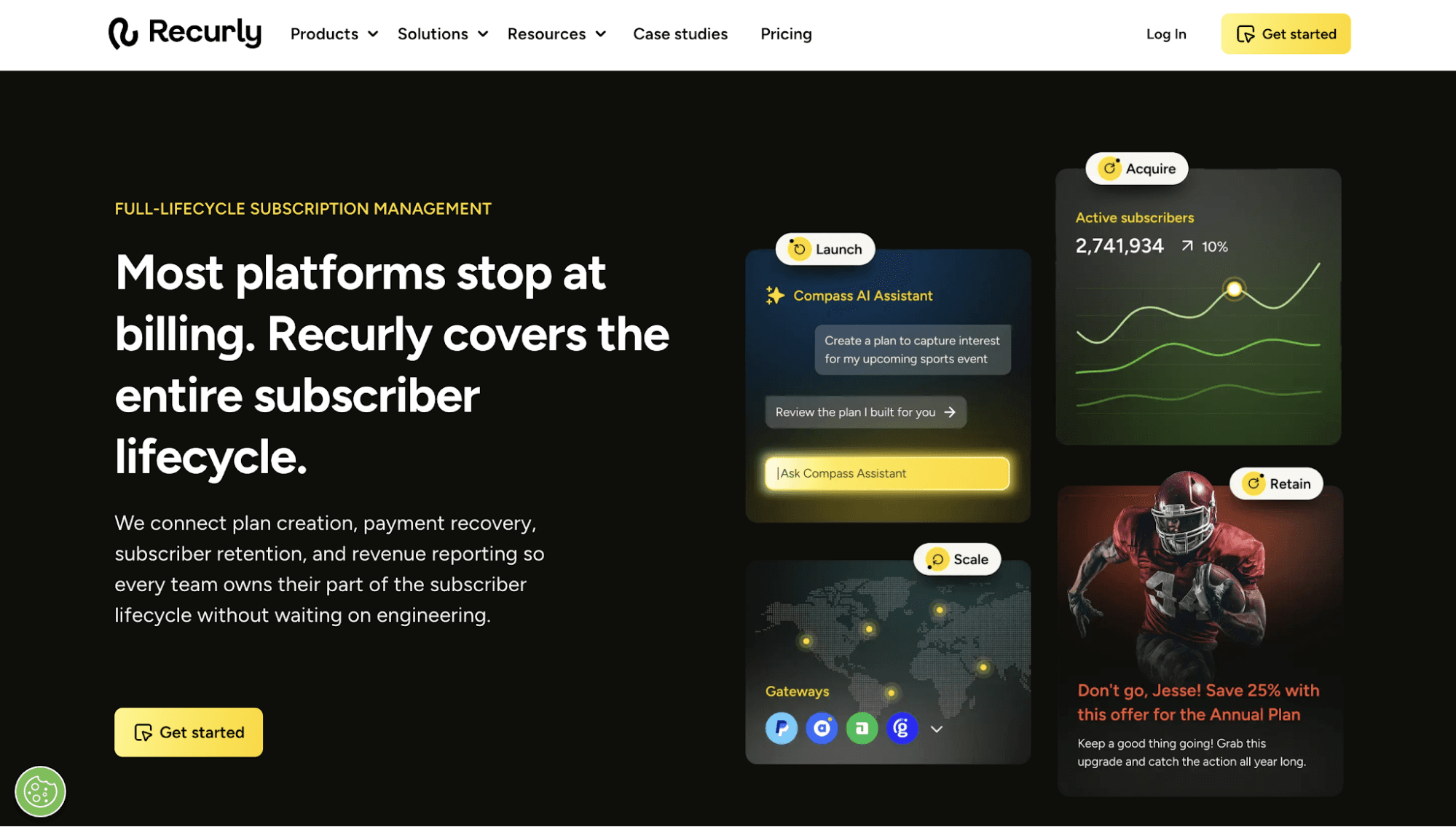
Recurly is a subscription management platform that helps SaaS businesses manage the full subscriber lifecycle.
Revenue operations teams can design and launch subscription plans, pricing models, trials, and promotional offers without filing an engineering ticket.
Recurly also automates recurring billing operations and includes custom invoice templates. These remove billing complexity as companies scale globally.
A multi-gateway setup can accept different payment methods and currencies to support growth. Meanwhile, a built-in fraud management tool protects customer data and ensures secure payment processing.
Recurly even supports churn management and failed payment recovery. Configurable dunning and machine-learning retry logic help teams recover declined payments and reduce involuntary customer churn.
Key Features
- Subscriber management: Store customer data in one place and manage plan changes, pauses, cancellations, and payment method updates.
- Flexible pricing engine: Create subscription plans, pricing models, free trials, and promotions without an engineering sprint.
- Global payments orchestration: Reach subscribers around the world by providing multiple payment gateways, currencies, and payment methods.
- Churn management: Use smart payment retries, account updates, dunning, backup payments, and subscription pauses to minimize churn.
- Revenue analytics: Track key metrics and pricing performance insights to inform decision-making.
Benefits of Using Subscription Management Software Tools
Subscription management tools can benefit SaaS companies in several ways.
Automate Recurring Billing and Minimize Errors
Subscription management software automates:
- Invoice creation
- Plan renewals
- Prorations
- Payment collection
- Subscription changes
This reduces the chance of missed charges, duplicate invoices, and incorrect billing amounts.
Automation also helps companies handle growing pricing complexity without tracking every account by hand. Predetermined rules can apply the right price, discount, or tax based on each customer’s plan.
Finance teams spend less time correcting invoices and more time reviewing pricing performance.
Prevent Churn and Recover Failed Payments
Subscription management software can track payment issues, renewal activity, usage patterns, and other customer behavior that may signal churn risk. Teams can act sooner when an account needs attention.
Many platforms also support failed payment recovery through automatic retries, card updates, dunning emails, and payment reminders. These features help recover revenue that might otherwise be lost because of expired cards, insufficient funds, or temporary payment failures.
Advanced tools can even support subscription pauses or retention offers before a customer cancels. According to Churnkey’s State of Retention report, pause options saw a 19% acceptance rate during cancellation attempts.
Support Flexible Pricing Models
The best subscription management tool supports more than simple recurring billing models. It helps companies launch usage-based pricing, credit-based pricing, subscription plans with overages, and custom deals with minimum commitments.
RevOps and product teams no longer need to file an engineering ticket to ship pricing changes. They can easily create new packages, update pricing rules, add discounts, or manage custom enterprise contracts from a configurable system.
Improve Revenue Forecasting
Subscription management platforms provide clear insights into the performance of subscription-based services and plans.
Key metrics, such as annual/monthly recurring revenue, churn, revenue expansion, cancellations, and renewal rates, can show how revenue may change over time.
Finance teams can use this data to estimate future revenue, plan budgets, forecast growth, and identify trends that may affect profitability.
Simplify Revenue Recognition
Subscription revenue is not always recognized at the same time a customer pays. Annual contracts, prepaid plans, discounts, and usage charges can create accounting work that complicates revenue recognition.
Subscription management software can track billing schedules and help finance teams match revenue to the correct accounting period. It can also track deferred revenue from payments received before the related service is delivered.
This provides more accurate records and reduces the amount of manual work needed when closing financial books.
Tips for Choosing the Right Subscription Management Platform
Choose a subscription management solution based on how pricing works inside your product. Start with your plans, entitlements, limits, trials, and add-ons.
The right subscription platform should enforce these rules at runtime throughout self-serve and sales-led flows.
If you have a product-led go-to-market strategy, backend control matters more than billing workflows.
Finance teams often focus on invoices and reporting. Product managers need to handle access, usage, and exceptions. The best subscription management tool should support both without splitting logic between systems.
When managing subscriptions, you should also be able to enforce access at runtime as customers upgrade, downgrade, or receive overrides.
This helps you handle monetization through configuration. Changes in pricing and packaging should not require code deployments or an engineering sprint.
If you want to move faster and start selling with confidence, backend enforcement should come before surface-level tooling.
Manage Subscriptions and Usage-Based Billing With Schematic
Schematic is more than just subscription management software. It provides the complete monetization platform for SaaS and AI companies selling usage-based plans.
Teams can meter credits, enforce usage, manage entitlements, and apply limits inside the product at runtime. One engine can run the entire customer lifecycle, from first checkout through renewal.
Native credit wallets give enterprise customers real-time usage visibility, spend forecasts, self-service controls, and configurable spending limits.
Your customers or your team can set the policy, gate the feature, and enforce rules from the ledger that handles billing. A single flag check works in React, Node, Python, and Go to make sure the user interface and the API always agree.
Meter events and entitlement checks update in milliseconds, so balances, limits, and usage stay current wherever the product reads them.
FAQs About the Best Subscription Management Software
What is the best subscription management software?
The best subscription management software depends on where you need control. For SaaS teams managing pricing and access inside the product, the leading tools handle plans, entitlements, usage limits, and exceptions at runtime. Platforms like Schematic focus on this backend control, helping teams support pricing changes while driving steady revenue growth.
Is there an app that manages all subscriptions?
Yes. Subscription management platforms can manage plans, renewals, billing changes, payments, usage limits, and customer accounts in one place.
What's the best way to keep track of subscriptions?
For a business, the best way to track subscriptions is to centralize plans, usage rules, and customer state rather than tracking payments alone. Invest in the best subscription management software that can track subscription changes, renewals, cancellations, consumption, and recurring revenue from one system.