 Ryan Echternacht

Zuora is a widely used subscription billing platform. It supports complex billing scenarios, revenue management, and global compliance. For many teams, it becomes the default billing solution early on.
Over time, some product and pricing teams outgrow Zuora. You introduce usage billing, custom pricing models, and sales-led overrides. Access decisions move closer to runtime. Billing data alone no longer reflects what customers should see or use.
That shift forces hard decisions. Traditional billing solutions focus on invoices and payments. Engineers end up hardcoding pricing logic. Product teams lose control over how plans and entitlements behave inside the application.
All of these force companies to search for Zuora alternatives. But not all options solve the same problem. Some focus on replacing billing volume and invoice automation, while others complement billing by managing subscription state and enforcing access in the product.
This article compares the best Zuora alternatives in 2026.
TL;DR
These are the top Zuora alternatives in 2026:
- Stripe Billing
- Chargebee
- Recurly
- Paddle
- Maxio
- Metronome
- Lago
How Is Zuora Commonly Used?
Zuora is a subscription billing and recurring billing software designed to help B2B SaaS companies manage billing operations at scale.
Teams use it to manage subscriptions, automate billing, and simplify revenue recognition through the full subscription lifecycle to reduce billing errors.
The platform focuses on finance and operations workflows. It supports invoice automation, payment processing, and payment collection through multiple payment processors and payment gateways.
Zuora also handles global billing, including multi-currency billing and global tax compliance, which helps SaaS companies sell in multiple regions.
Zuora works well for complex billing models that rely on tiered pricing, custom deals, and enterprise plans.
Finance teams use it to track billing data, monitor failed payments, and report on revenue trends using built-in reporting capabilities.
As companies adopt usage-based billing, hybrid pricing, and higher billing volume, Zuora Billing starts to show its limits.
Why SaaS Teams Look for Zuora Alternatives
Pricing changes rarely stay inside a billing solution. You add usage‑based pricing, tiered pricing, or prepaid credits, then discover pricing logic spread between application code and internal documentation.
Engineering ends up owning complex billing logic to support pricing changes because Zuora’s configuration can be cumbersome. It often requires custom fields, workflows, or integrations to model new pricing schemes.
Ownership friction grows as products scale. Finance and revenue operations (RevOps) teams manage invoices and revenue recognition in Zuora, while product teams need plans, limits, and trials enforced inside the app. It affects how customers experience access.
Hybrid go-to-market motions add more pressure. Self‑serve flows rely on flexible billing models and metered billing, while sales reps offer custom contracts that Zuora often treats as exceptions and requires manual overrides.
Subscription state fragments between Zuora, customer portals, customer relationship management (CRM) software, and enterprise resource planning (ERP) systems.
According to m3ter and PwC UK’s joint report, 9 in 10 businesses lacked integration between billing platforms and ERP systems. That forces teams to rely on manual workarounds to set prices and calculate charges.
Companies start looking for Zuora alternatives when basic subscription management no longer supports hybrid pricing, runtime access decisions, and in‑product enforcement.
8 Best Zuora Alternatives to Consider in 2026
Zuora is not the only way to manage subscriptions and billing at scale. Teams evaluate alternatives based on what they need to control between billing, pricing, and product behavior.
Some tools focus on billing execution and revenue reporting. Others support usage-based pricing or global operations. A few platforms connect pricing rules to how products behave at runtime.
The tools below are the most popular Zuora alternatives.
1. Schematic
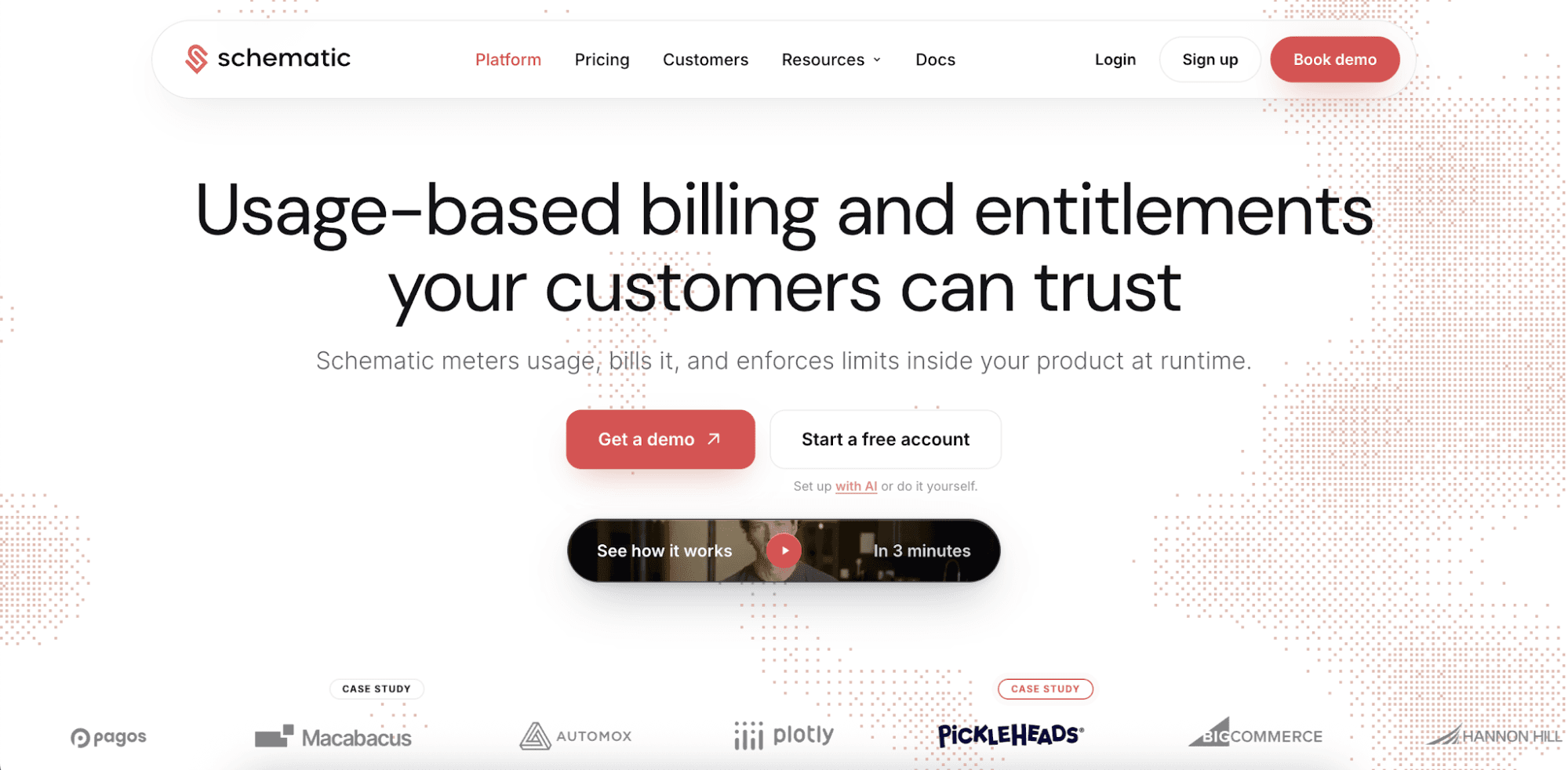
Schematic is the best Zuora alternative for software and AI companies that sell usage-based plans to enterprises.
It provides one engine for modeling, metering, and credits. Teams can ship any pricing model, version plans, preview changes, grandfather customers, and iterate on pricing through configuration instead of deploying code.
Max Ade from Pickleheads says, "Schematic lets us change plans in one place and cascade updates to everyone, migrate customers between plans, and run pricing experiments without any manual implementation."
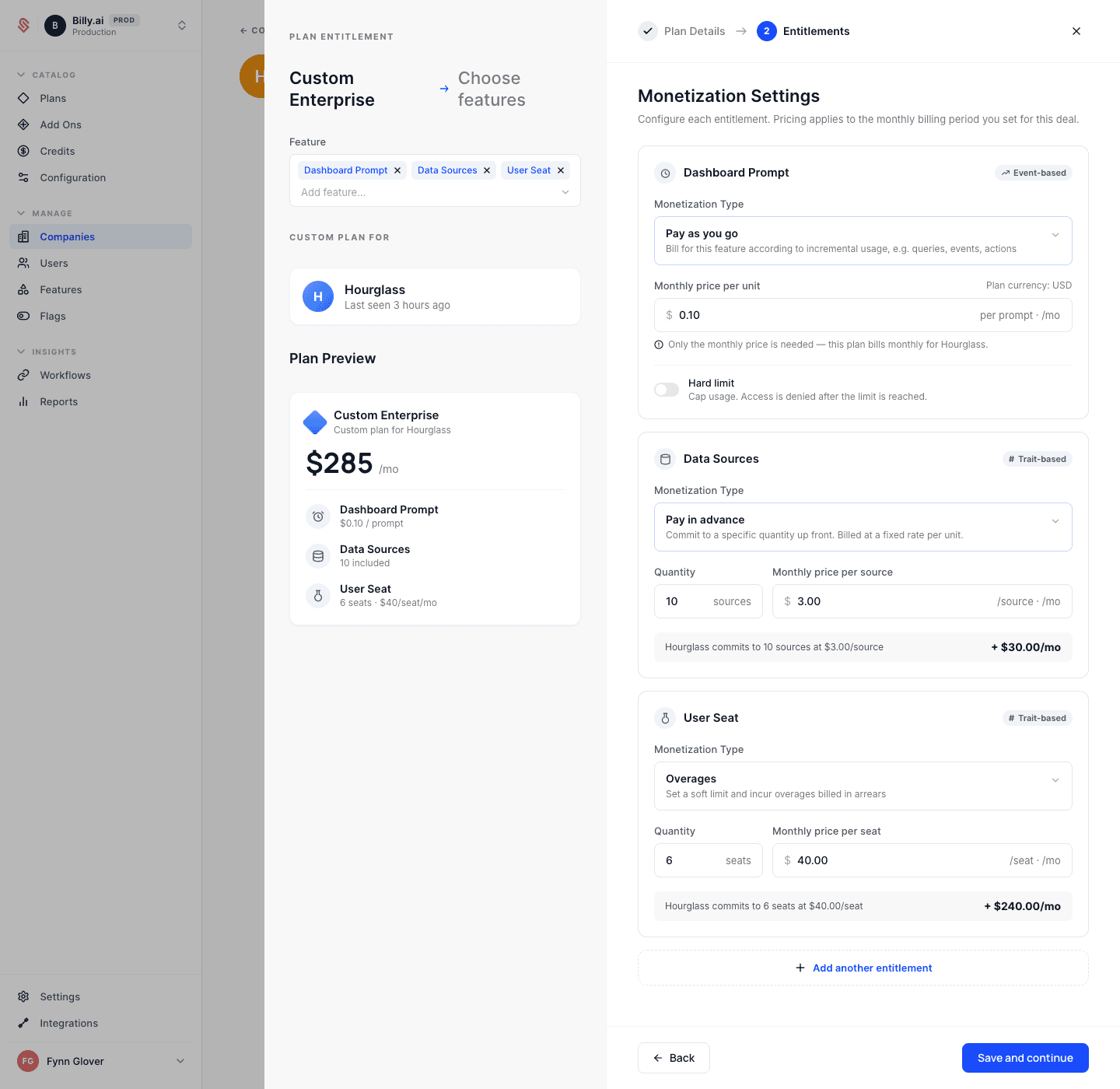
Native credit wallets show customers exactly what they use and owe in real time. Buyers can also use spend forecasts, self-service controls, and configurable spending limits to prevent runaway bills and unexpected access throttling.
Schematic's runtime entitlement engine enforces access the moment your customer or your team saves policies. Entitlement checks and metered events stream back to the same ledger used for billing. That means balances, limits, and usage stay current everywhere the product reads them.
Schematic even includes out-of-the-box billing tools to simplify subscription billing and usage-based pricing.
Credit rollovers let credits roll into the next billing cycle, while expiry windows and priority consumption rules ensure that promotional credits burn down first. Event logs record everything for faster implementation and debugging.
Key Features
- Usage metering that supports seats, API calls, tokens, credits, or any event metric
- One event stream to power software entitlements, invoices, and revenue analytics
- Enterprise credit wallets that give customers real-time visibility into usage
- Self-service controls for setting spend caps, changing auto top-up rules, and defining what happens at the limit
- Runtime entitlement enforcement for feature access and usage limits
- Full customer lifecycle management from first checkout to plan renewal
- Credit rollovers, expiry windows, and priority consumption to implement credit burndown pricing
- Support ASC 606 revenue recognition through an append-only, export-ready ledger
- Plan versioning, customer migration, and trial pricing management through configuration instead of code
- Model context protocol (MCP) for connecting AI agents to read Schematic billing data
Pricing Plans
- Starter (Free): Includes unlimited flags, unlimited companies, unlimited environments, 10 subscriptions, 2 company overrides, 500k monthly events, Stripe integration, and more.
- Growth ($400/month): Offers everything in Starter, plus 20 company overrides, 10m events per month, multiple custom plans, live add-ons, and more.
- Enterprise (Custom pricing): Comes with all Growth features, plus unlimited subscriptions, unlimited company overrides, unlimited events, unlimited webhooks, premium support, advanced integrations, and more.
2. Stripe Billing
Source: stripe.com
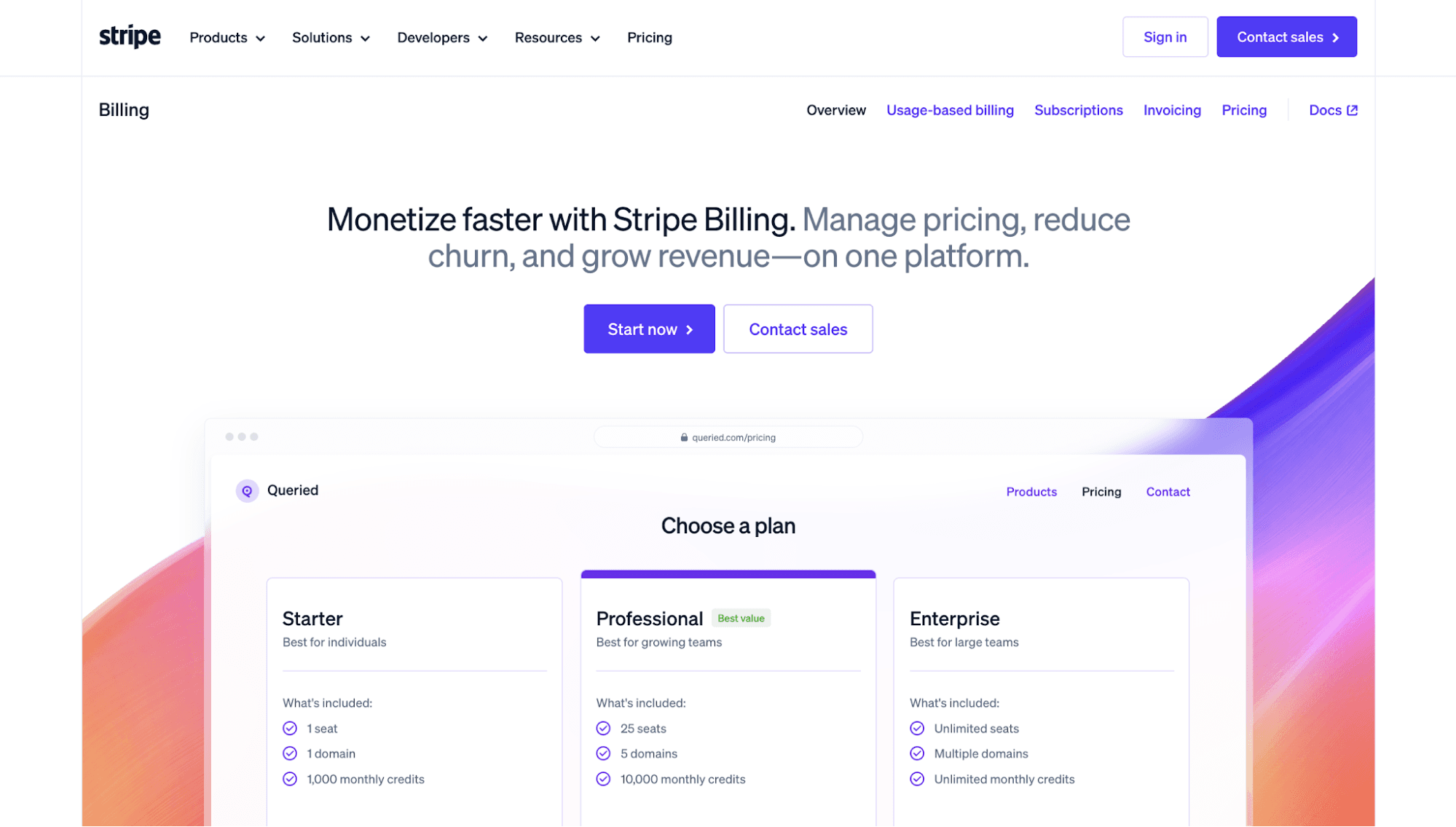
Stripe Billing is a developer-focused billing layer built on Stripe’s payment system. Teams often evaluate it as a Zuora alternative when they want direct control over subscription management without adopting a full enterprise revenue platform.
It supports simple recurring billing, metered usage, and custom checkout flows that integrate tightly with internal systems.
Compared to Zuora, Stripe Billing trades packaged revenue workflows for flexibility in code. It's similar in scope to tools that mirror Zoho Billing features or compete with Salesforce Revenue Cloud at the infrastructure layer.
Stripe Billing fits engineering-led teams that prefer building pricing enforcement rather than configuring it.
Key Features
- Usage-based and subscription billing
- Seamless integration with Stripe Payments and other Stripe products
- Flexible pricing configuration
- Developer-first APIs
- Global payment support
Pricing Plans
- Pay-as-you-go (0.7% of billing volume): No recurring fee. Suited for variable or early-stage usage.
- Monthly contract (starts at $620/month): Includes a billing volume allowance with lower effective rates at scale.
3. Chargebee
Source: chargebee.com
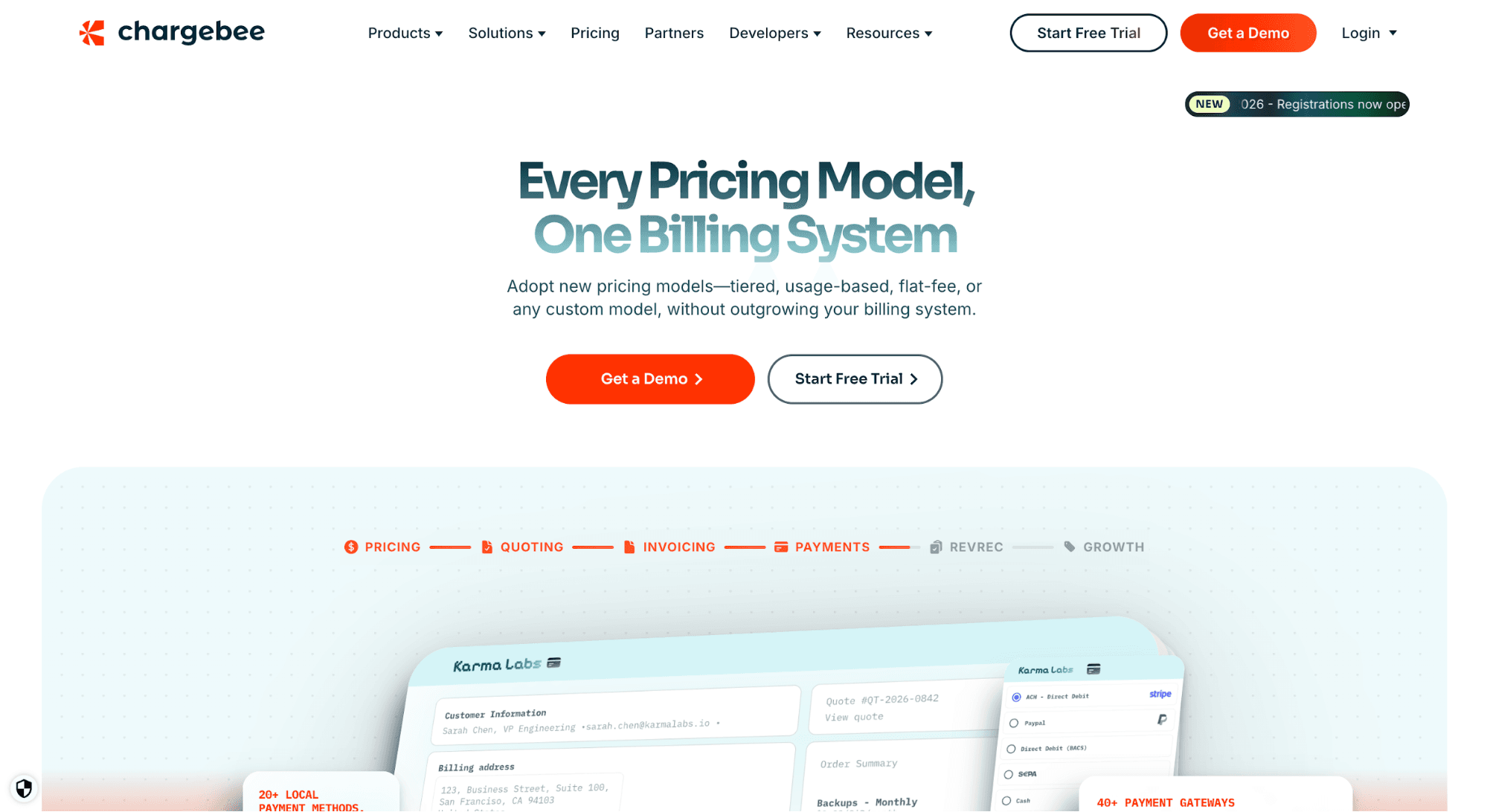
Chargebee is a subscription billing and invoicing platform designed for SaaS teams that need structured control over recurring revenue.
It is often evaluated as a more accessible alternative to Zuora for teams that want billing capabilities without the setup and admin overhead of large enterprise platforms.
You can use it to manage plans, billing cycles, invoices, taxes, and revenue recognition from a finance-first system.
Chargebee supports hybrid pricing patterns such as subscriptions with add-ons and usage-based billing, but product access and enforcement usually live outside the billing layer.
Teams choose Chargebee when finance needs a billing system for invoices, taxes, and revenue recognition, without the overhead of a larger enterprise platform. It integrates with Stripe and other payment gateways to support global customers.
Chargebee fits organizations where finance and RevOps own billing operations and pricing changes follow defined workflows. It's similar to Zuora, but it comes with a lighter setup, user-friendly interface, and faster adoption curve.
Product teams typically implement access rules separately when plans, limits, or trials need to affect behavior inside the app.
Key Features
- Subscription billing and invoicing
- Payment processing and tax handling
- Revenue recognition workflows
- Dunning and retry logic
- Finance and RevOps integrations
Pricing Plans
- Flow ($0/month): Free for the first 100m billing events, then 0.80% on billing.
- Enterprise (Custom pricing): Suits businesses with larger billing volume and advanced needs.
4. Recurly
Source: recurly.com
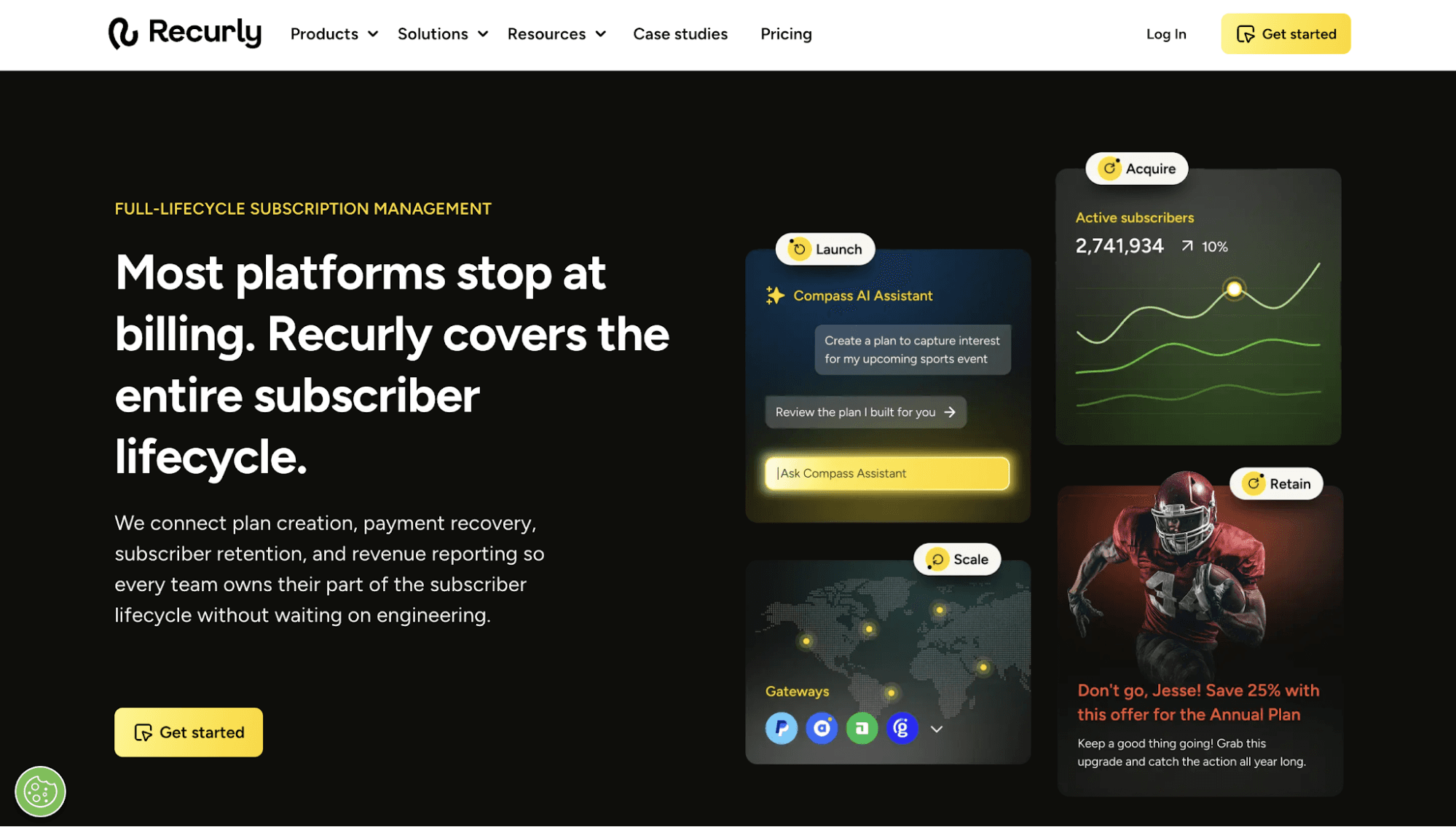
Recurly is a subscription billing platform often evaluated as a Zuora alternative by teams that prioritize payment reliability and high transaction volume over pricing flexibility.
You use it to manage subscriptions, automate recurring billing, and handle renewals on predictable billing cycles.
Compared to Zuora, Recurly focuses on operational simplicity and retention workflows rather than complex contract modeling. Teams adopt it when pricing stays standardized, and contracts follow consistent terms.
Recurly fits companies that prioritize payment recovery and retention workflows over complex contract modeling, while finance teams rely on its reporting for subscription performance.
Recurly does not control in-product access or runtime enforcement. Product teams usually manage entitlements, limits, and trials outside the billing system when those rules need to affect user behavior.
Key Features
- Subscription lifecycle management
- Automated recurring billing
- Churn prevention and revenue recovery tools
- Payment optimization and retries
- Subscription analytics and reporting
Pricing Plans
- Starter ($249/month + 0.9% of billing volume): Includes automated billing, flexible plans, churn prevention tools, a single dunning campaign, and multiple payment gateways.
- All-Access (as low as 1% of billing volume): Offers everything in Starter, plus AI-powered agents, multiple dunning campaigns, advanced plans, custom reporting, and more.
- All-Access for Shopify (as low as 1% of billing volume): Comes with customized bundles, prepaid and gift subscriptions, a self-serve bulk updater, a hosted subscriber portal, and more.
5. Paddle

Source: paddle.com
Paddle approaches subscription management through a merchant-of-record model.
Instead of acting purely as billing infrastructure like Zuora, Paddle becomes the legal seller and takes responsibility for payments, taxes, and compliance. This shifts operational burden away from internal finance and legal teams.
Teams use Paddle when selling software globally and needing built-in handling for VAT, sales tax, and cross-border payments.
The platform manages checkout, subscriptions, invoicing, and revenue reporting in one system. This setup reduces the need to integrate separate tax engines or payment providers.
Paddle focuses on financial execution rather than in-product pricing control. Feature access, entitlements, limits, and runtime enforcement remain outside the platform.
Compared to Zuora, Paddle trades configurability and internal control for simplicity and compliance coverage.
It fits SaaS companies prioritizing international expansion and reduced operational ownership over fine-grained pricing logic inside the product.
Key Features
- Merchant-of-record for advanced billing and payments
- Subscription billing and invoicing
- Global tax and compliance handling
- Checkout and payment processing
- Revenue reporting and payouts
Pricing Plans
- Pay-as-you-go (5% + $0.50 per transaction): Covers payments, billing, and cross-border tax compliance.
- Custom pricing: Contracted rates for higher volume or complex business models.
6. Maxio
Source: maxio.com
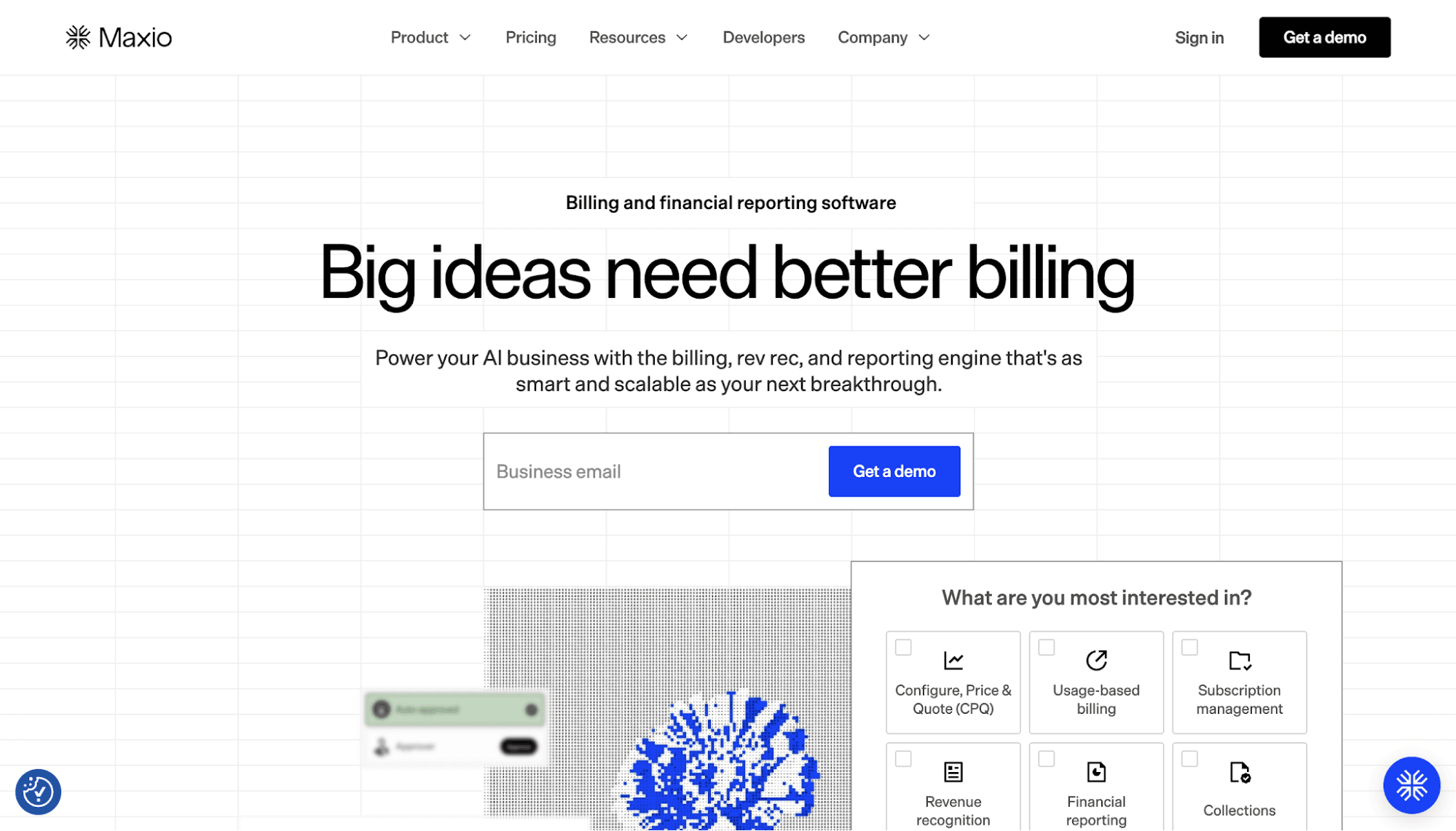
Maxio focuses on subscription billing combined with financial reporting and SaaS metrics. Finance teams use it to manage invoicing, revenue recognition, and MRR through the customer lifecycle.
Compared to Zuora, Maxio emphasizes reporting clarity and accounting alignment over complex billing configuration.
The platform supports recurring billing, collections, and revenue schedules, then surfaces that data through standardized financial reports.
Maxio fits finance-led teams that want clean revenue reporting and accounting alignment, not in-product entitlement enforcement. It also does not enforce in-product access or usage limits at runtime.
Product teams usually manage entitlements, limits, trials, and upgrades outside the billing system. Maxio acts as a financial system of record rather than a product control layer.
It fits organizations where finance owns billing workflows, audits drive requirements, and pricing changes follow structured internal processes rather than real-time product enforcement.
Key Features
- Subscription billing and invoicing
- Revenue recognition support
- SaaS metrics and reporting
- Financial analytics
- Accounting integrations
Pricing Plans
- Grow ($599/month): Supports billing up to $100k monthly volume with standard reporting.
- Scale (Custom pricing): Adds advanced revenue management and higher billing volume of over $100k per month.
7. Metronome
Source: metronome.com
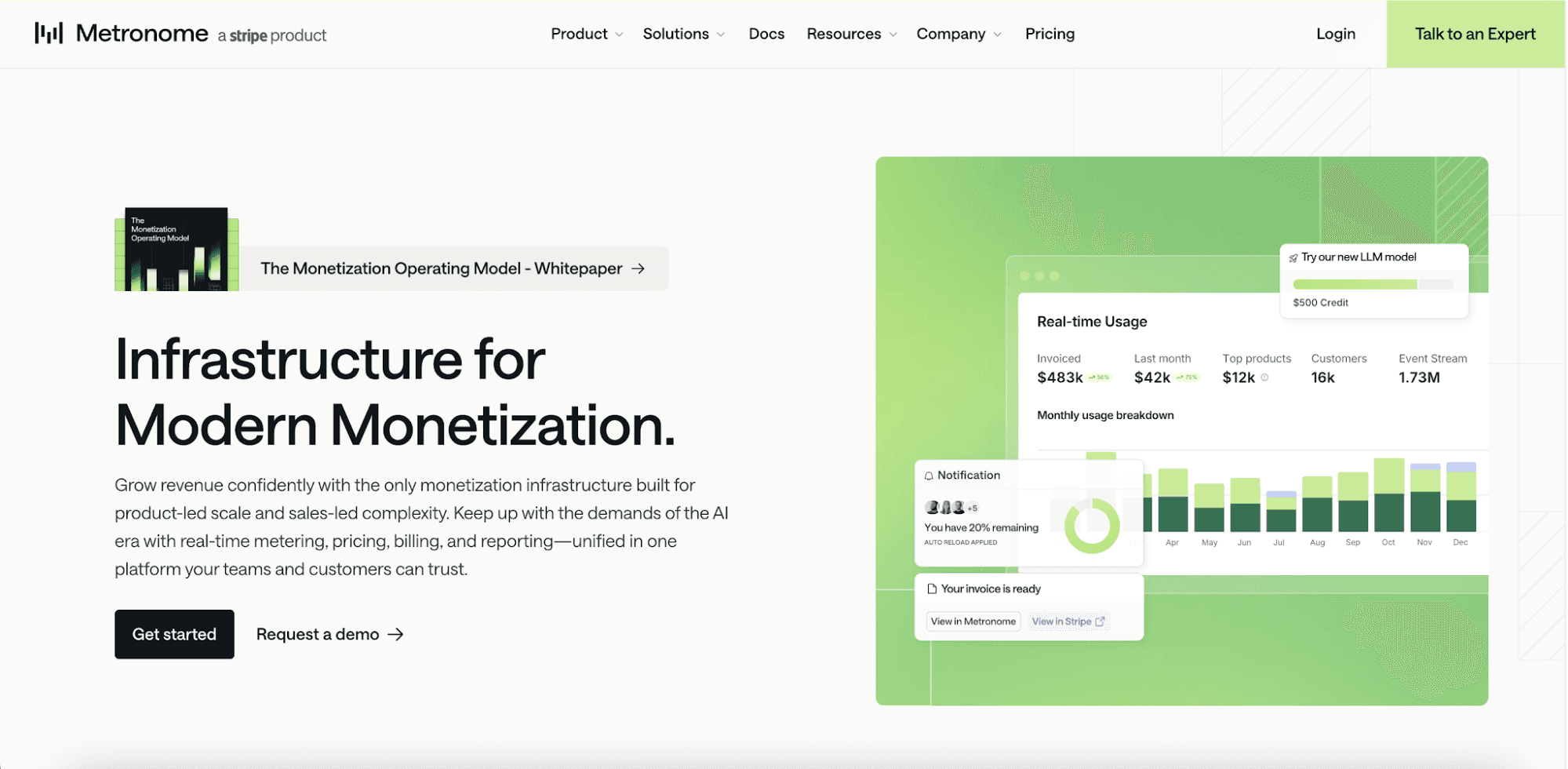
Metronome, now part of Stripe, provides usage-based billing and real-time metering for products where pricing depends on consumption.
Teams evaluate it when they already rely on Stripe and need more advanced usage rating and billing primitives than Stripe Billing alone provides.
The platform focuses on collecting usage data, rating events, and generating invoices that reflect actual activity. It fits products with variable usage patterns that extend beyond standard subscription billing.
Metronome handles billing calculation rather than subscription management or in-product access control.
Finance teams typically own Metronome for invoicing and revenue workflows. Product teams manage plans, limits, trials, and entitlements in application code or separate systems. Runtime enforcement and feature access remain outside the billing layer.
Metronome replaces parts of billing stacks where Zuora-style configurations become difficult to maintain. It does not act as a product control or monetization enforcement system.
Key Features
- Usage-based and metered billing
- Real-time usage tracking
- Flexible pricing configuration
- Automated invoicing tools
- Finance-focused reporting
Pricing Plans
- Startup: Entry plan for launching usage-based products with real-time event ingestion and native Stripe integration.
- Custom: Designed for high-volume usage, complex pricing models, and enterprise revenue workflows.
8. Lago
Source: getlago.com
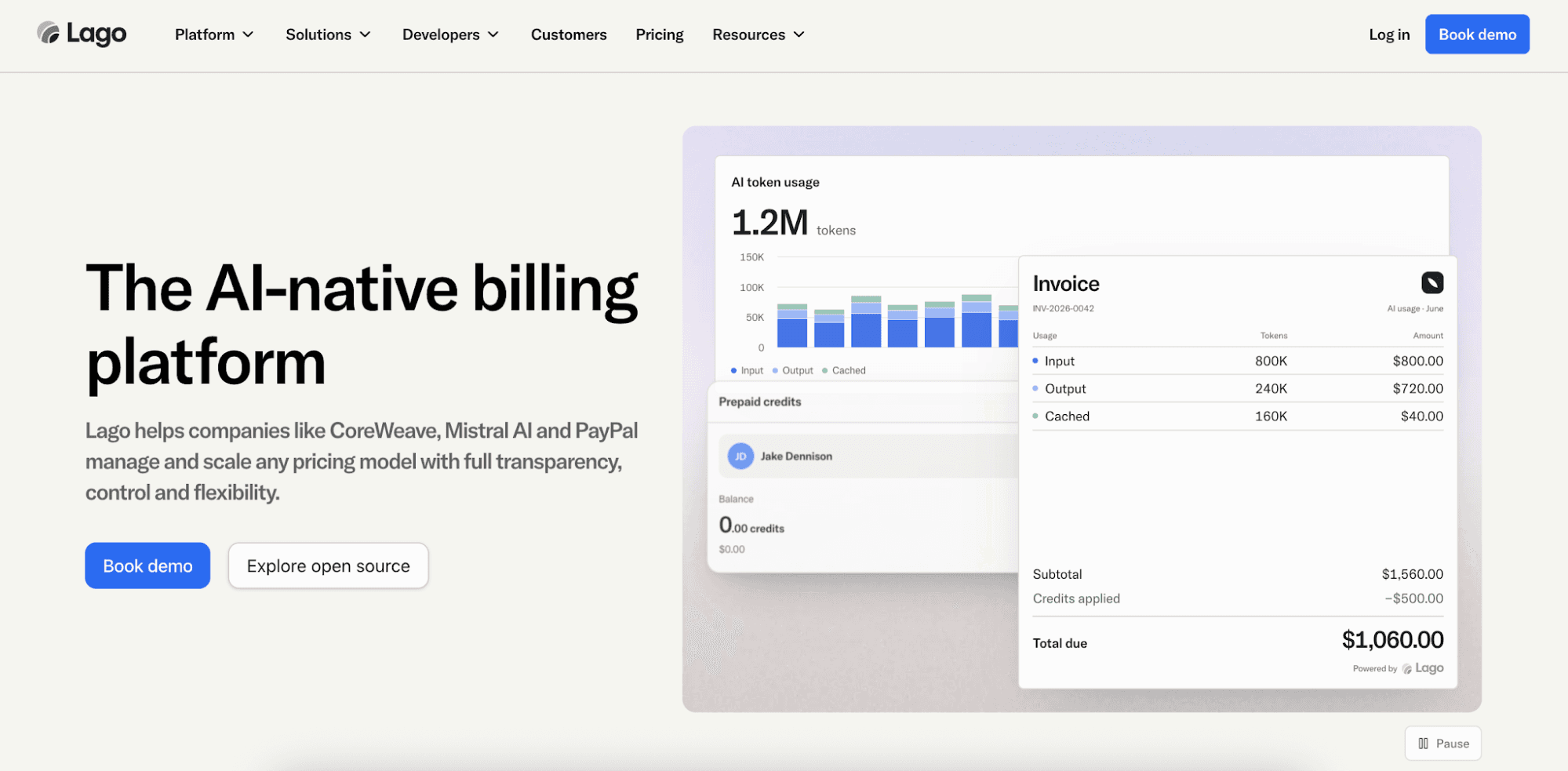
Lago is an open-source billing platform built for SaaS teams that need subscription billing and usage-based billing without adopting a heavy enterprise system like Zuora.
Engineering-led teams use Lago when they want direct control over billing logic, data flows, and infrastructure ownership.
The platform supports subscriptions, metered usage, and custom pricing logic through an API-first and modular architecture.
Lago handles usage calculation, rating, and invoicing, while product access, entitlements, limits, and runtime enforcement remain inside your application. It provides billing primitives rather than opinionated workflows.
Lago fits teams that want flexibility similar to building in-house billing, but with a maintained open-source foundation.
It requires engineering ownership to operate, scale, and maintain reliably, especially as billing volume grows or pricing models evolve.
Key Features
- Open-source billing platform
- Subscription and usage billing
- Flexible pricing logic
- API-first design
- Modular billing infrastructure
Pricing Plans
Pricing details for Lago Premium are not publicly available. However, the platform offers add-ons on demand, such as automated dunning workflows, tax integrations, custom branding, and more.
Tips for Choosing the Right Zuora Alternative
Choosing a Zuora alternative depends on pricing complexity and who owns billing.
Some teams want a financial operations platform that improves invoicing, payments, and reporting. Others need control over how pricing rules affect access inside the product.
Start with your GTM strategy. Hybrid pricing and hybrid selling create pressure that flexible pricing models and complex pricing models must support without slowing teams down.
Sales-driven custom contracts often collide with self-serve flows when subscription state lives only in billing tools.
Ownership shapes how teams operate. Finance and RevOps teams optimize payments, taxes, and reconciliation through global payment methods and multiple payment gateways.
Product teams care about limits, trials, and add-ons enforced at runtime. Mixing those concerns in one system often creates a steep learning curve and fragile workflows.
The right alternative separates billing execution from product control. Look for subscription management, predictable cost structure, and an intuitive interface that supports growth without becoming another constraint.
Switch to Schematic to Solve the Trust Problem in Usage-Based Pricing
Zuora works when billing is the primary system of record. That model breaks down once pricing decisions need to affect product behavior in real time.
Most Zuora alternatives improve one part of the stack, such as invoicing and payments, high-volume usage billing, and how pricing rules translate into access inside the product.
Schematic stands apart because it's the only billing platform that addresses customer trust structurally. It can meter usage, charge based on actual consumption, enforce limits at runtime, and give users complete usage visibility and self-service controls.
The app never needs to know the billing state of a customer. And engineering doesn't need to build the metering and entitlement infrastructure from scratch. Teams only use one call that returns allow or deny access decisions.
Rahul Gill from Macabacus shares, "We didn't want to burden our engineering team with building and managing a metering system, and Schematic solved that for us."
Schematic is the central source of truth for your monetization. It shows plan information, subscription features, prices, and customer entitlements across the entire product.
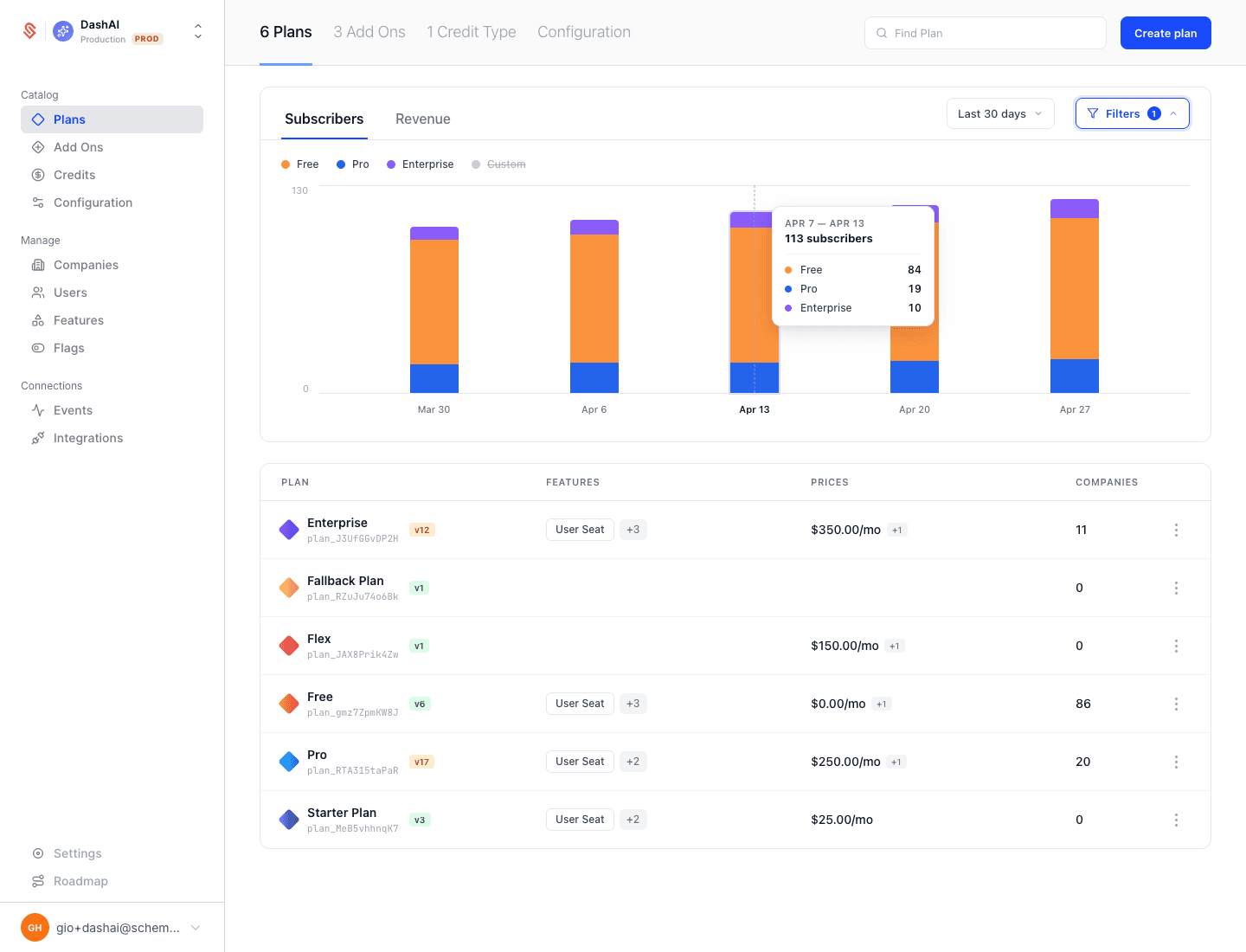
Credit wallets and configurable spending limits give both buyers and sellers confidence that usage will stay within budget. This leads to lower friction during procurement, faster sales cycles, and higher revenue.
FAQs About Zuora Alternatives
Who are Zuora’s competitors?
Zuora’s competitors include billing and subscription management platforms such as Chargebee, Recurly, Stripe Billing, Paddle, Maxio, Metronome, and Lago. Teams also evaluate monetization control layers like Schematic when billing systems alone cannot manage in-product access, usage limits, or contract exceptions.
Is Zuora being acquired?
As of now, Zuora has not announced an acquisition and continues to operate as an independent company. Any future acquisition activity would be disclosed through official company or regulatory announcements.
Is Zuora a CPQ?
Zuora offers Zuora CPQ, a quoting system purpose-built for subscription lifecycles, including renewals and usage pricing. While its core platform focuses on billing and revenue recognition, CPQ handles sales configuration and integrates with it. It complements standalone CPQ tools but specializes in recurring models.
Is Zuora HIPAA compliant?
Yes, Zuora is a HIPAA-compliant platform.