 Ryan Echternacht
Revenue leakage often starts quietly. A customer retains software access after a plan downgrade. A usage charge is not reflected in the invoice. A discount stays active after the deal ends.
Most SaaS companies don't realize they are losing revenue, but the amount adds up month after month and eventually affects cash flow.
To prevent revenue leakage, teams need to implement SaaS billing best practices. They should turn pricing into clear billing rules, automatically track usage, and conduct regular audits.
This guide explains what revenue leakage is, why it happens, and how SaaS businesses can stop it before it grows.
TL;DR
- Revenue leakage is the money a SaaS company should have earned but failed to collect because of billing gaps or missed charges.
- To prevent revenue leakage, SaaS teams should automate revenue operations, centralize the product catalog, improve pricing rules, review contracts, reconcile systems, run audits, and monitor revenue in real time.
- The main causes of revenue leakage are billing errors, subscription issues, pricing mistakes, poor discount implementation, contract mismanagement, revenue recognition mistakes, and manual work.
- Revenue leakage often occurs in pricing and packaging, usage tracking, entitlement enforcement, payment collection, and financial reporting.
- Schematic helps SaaS companies prevent revenue leakage by metering usage accurately, enforcing limits at runtime, and keeping product access tied to current pricing and billing rules.
What Is Revenue Leakage?
Revenue leakage is the expected revenue a SaaS company should earn or collect but does not receive because of human errors, inefficiencies, or mismanagement of billing processes.
It is often tied to billing gaps, such as unbilled usage, incorrect invoices, SaaS entitlement over-provisioning, or missed renewals.
At first, revenue leaks are unnoticeable and may seem insignificant. However, these small losses can accumulate over time, which can shrink margins and reduce actual collected revenue.
Revenue leakage is different from revenue loss. Revenue loss often comes from lost deals, market downturns, or competitive pressure. Revenue leakage refers to the money the company should have captured but failed to do so. It happens silently after closing deals.
Main Causes of Revenue Leakage
Revenue leakage often comes from small gaps in billing, pricing, contracts, payments, and overall revenue operations. Below are the main causes of revenue leaks.
Billing Errors
Billing errors happen when invoices do not match what the customer purchased, used, or agreed to pay. These may include wrong invoice amounts, missed line items, outdated billing details, and incorrect tax rates.
Usage billing mistakes can also cause SaaS companies to lose money. Teams may count the same usage event twice, connect usage data to the wrong account, or forget to apply overage pricing to the invoice.
Underbilling causes direct revenue loss. Meanwhile, overcharging can lead to billing disputes and delayed payment collection.
Revenue leaks also come from manual billing errors, such as copying the wrong plan price into an invoice. A single mistake may not seem serious, but when incorrect billing happens more often, it can create major revenue leakage.
Subscription-Related Problems
Subscription issues are a major cause of leakage because SaaS businesses depend on recurring revenue.
A customer may upgrade, downgrade, pause, or cancel their subscription, but the billing system may not reflect the change on time.
For example, a customer may keep premium access after moving to a lower plan, or a paid add-on may stay active without being billed.
Missed renewals also cause revenue leakage. If renewal dates are not tracked proactively, invoices may go out late or not at all. This delays cash collection and creates extra work for finance teams.
Pricing and Discount Implementation
Pricing errors, such as charging the wrong plan rate, missing overage fees, or applying the wrong usage pricing tier, are major sources of revenue leakage.
Discounts can also leak revenue when they run longer than planned. A one-time coupon may repeat every month. A renewal discount may stay active after the renewal term ends. A sales rep may offer a lower price that the billing system doesn't recognize correctly.
The risk of revenue leakage grows with custom pricing. Enterprise deals often include special rates, credits, ramps, add-ons, or minimum commitments. Each custom term needs a thorough review and proper monetization implementation to prevent pricing discrepancies.
Contract Management Issues
Contract mismanagement is another potential leakage point, especially when signed terms do not match billing records.
A customer contract may include a start date, renewal date, payment term, discount, add-on, or price increase. If you don't add those details to your billing software, you may undercharge the account.
Revenue leakage can also happen when contract changes are not shared with the right teams. Sales teams may offer a custom plan, but the finance department fails to send the correct invoice. Customer success may approve extra access for a strategic customer, but their account may not be charged.
Revenue Recognition Mistakes
Revenue leakage can appear when you record revenue too early or too late. Early recognition can overstate revenue, while delayed recognition can understate financial health and business performance.
Deferred revenue and unearned revenue can also be classified incorrectly when tracking is done manually.
These revenue recognition mistakes introduce financial risk because the company may not have a clear view of what was billed, earned, collected, or still owed. Over time, they can lead to poor reporting, non-compliance, and missed revenue.
Manual Processes
Manual processes can cause revenue leakage because teams must move data between systems by hand. They might manually copy contract terms, update invoices, add discounts, track renewals, or check usage totals in spreadsheets.
These steps create operational inefficiencies because every handoff increases risk and manual errors. A small typo can change a price. A missed email can delay an invoice. A late update can leave a customer on the wrong plan.
How to Prevent Revenue Leakage in SaaS Billing
Once you understand the causes, you can easily stop most revenue leakage before it affects financial operations. Here are seven ways to prevent revenue leaks.
1. Invest in Automated Software
Use automated software to prevent revenue leakage caused by manual errors, missed updates, and slow handoffs. It ensures billing accuracy even when customers upgrade, downgrade, renew, cancel, or change usage. It can also streamline revenue management.
Below are the key areas you can automate:
- Recurring billing: Automated recurring billing software ensures that you charge customers on the right schedule. It prevents missed invoices, wrong renewal dates, and delayed payment requests.
- Usage-based billing: Usage billing software can automatically track usage events, aggregate data, and apply the right rate, so you can avoid missed usage charges.
- Contract lifecycle management: Set up automated alerts to track start dates, renewal dates, discounts applied, and contract changes.
- Subscription management: Subscription management software can automate the SaaS subscriber lifecycle to prevent missed renewals and ensure consistent revenue streams.
- Dunning management: Use dunning tools to retry failed payments, send reminders, and recover unpaid invoices.
- Revenue recognition: Automated revenue recognition tools help match revenue to service delivery and contract terms.
2. Centralize the Product Catalog
A centralized product catalog gives SaaS teams one place to manage plans, pricing rules, add-ons, limits, software entitlements, discounts, and exceptions. This reduces leakage caused by teams using different versions of the same pricing data.
Without a single source of truth, sales teams may sell one package, product managers might change the packaging, and finance teams may generate invoices based on old data. All of these can lead to wrong charges, missed add-ons, or unpaid feature access.
3. Optimize Pricing Strategies
Pricing should be easy to understand and bill. Complex pricing can create revenue leakage when teams cannot track which rates, limits, discounts, or overage rules apply.
Start by reviewing how each plan maps to actual customer behavior. If customers often exceed limits, add seats, use AI credits, or trigger overages, your SaaS pricing model should account for that activity. If it does not, you may give away value without charging for it.
4. Review Contract Terms
Regular contract reviews help prevent leakage by making sure signed terms match billing setup.
Check every contract for its plan name, start date, renewal date, billing term, payment method, and price increase clause.
The goal is to compare contracted revenue with what billing will actually collect. If a contract includes an annual uplift, add-on, or usage minimum, that term must appear in the billing system before the invoice goes out.
This is especially important for enterprise SaaS deals. Custom terms often create billing edge cases. A thorough review process helps you catch missing fees, expired discounts, and renewal changes before they turn into lost revenue.
5. Reconcile Revenue in Different Systems
Reconcile revenue and financial data between your customer relationship management (CRM) software, billing platform, and accounting tools.
Each system should show the same customer plan, contract value, invoice amount, payment status, renewal date, discount, and add-on details.
Data mismatches often point to integration issues, late updates, or manual errors. For example, the CRM may show a signed expansion, but the billing system may not invoice it. Accounting software might show a payment, but billing might still mark the invoice as unpaid.
Compare records to catch billing issues and fix errors before they turn into missed revenue.
6. Conduct Regular Revenue Leakage Audits
Revenue leakage audits help SaaS teams find small issues before they become major revenue losses. Run audits monthly and conduct deeper checks after pricing updates, billing migrations, or major contract changes.
The audit should identify potential leakage points in invoices, payments, renewals, usage data, and product access.
Look for accounts with unpaid invoices, active access after cancellation, or missing usage events that don't appear on invoices.
Then, compare sales figures with actual revenue and collected payments. If sales reports show one amount but invoices show less, that billing gap needs a closer review.
7. Set Up Real-Time Monitoring and Alerting
Real-time monitoring helps you identify revenue leakage problems while there is still time to fix them.
Track plan changes, usage spikes, incorrect invoices, failed payments, and access mismatches.
You should also monitor annual or monthly recurring revenue (ARR/MRR), expansion revenue, downgrades, and customer churn. These key metrics help you see whether revenue is growing, delayed, or at risk.
Real-time alerts also help you detect revenue leakage faster. Alerts can flag when usage exceeds plan limits without an overage charge or when a canceled account still has active access. These lead to faster fixes and smoother billing operations.
Where Revenue Leakage Happens in the SaaS Billing Process
Revenue leakage does not happen in just one place. SaaS companies experiencing revenue leakage often find gaps in pricing, usage tracking, product access, payments, and reporting.
Pricing and Packaging
Leakage can start when plans, limits, add-ons, and overage rules are unclear. If the packaging does not match the billing setup, customers may get more value than they pay for.
This often happens when pricing changes are made in sales decks, spreadsheets, contracts, or product code, but not updated in billing systems.
Usage Tracking
Usage tracking is a common weak spot for SaaS businesses with usage-based billing.
If events are missed, duplicated, delayed, or tied to the wrong account, invoices will not reflect actual usage. This is where revenue slips away undetected because the product records activity, but billing does not charge for it.
Entitlement Enforcement
Entitlement billing gaps happen when customers can use features, seats, credits, or limits outside their paid plan.
A customer may downgrade but keep premium access. A trial may end, but the feature may stay active.
If access rules and billing rules do not match, revenue leakage can continue each billing cycle.
Payment Collection
Revenue can still leak even after sending the final invoice. Payment failures due to expired cards, bank declines, or wrong card information can leave earned revenue unpaid.
Baremetrics reports that subscription businesses lose about 9% of their monthly recurring revenue to failed payments.
Without clear dunning workflows, unpaid invoices may sit unresolved and reduce collected revenue.
Financial Reporting and Reconciliation
Revenue leakage can appear when invoices, payments, contracts, and accounting records do not match. The team may report expected revenue, but the actual revenue collected may be lower.
Regular reconciliation helps catch missing charges, unpaid invoices, billing gaps, and mismatched records.
How Schematic Prevents Revenue Leakage
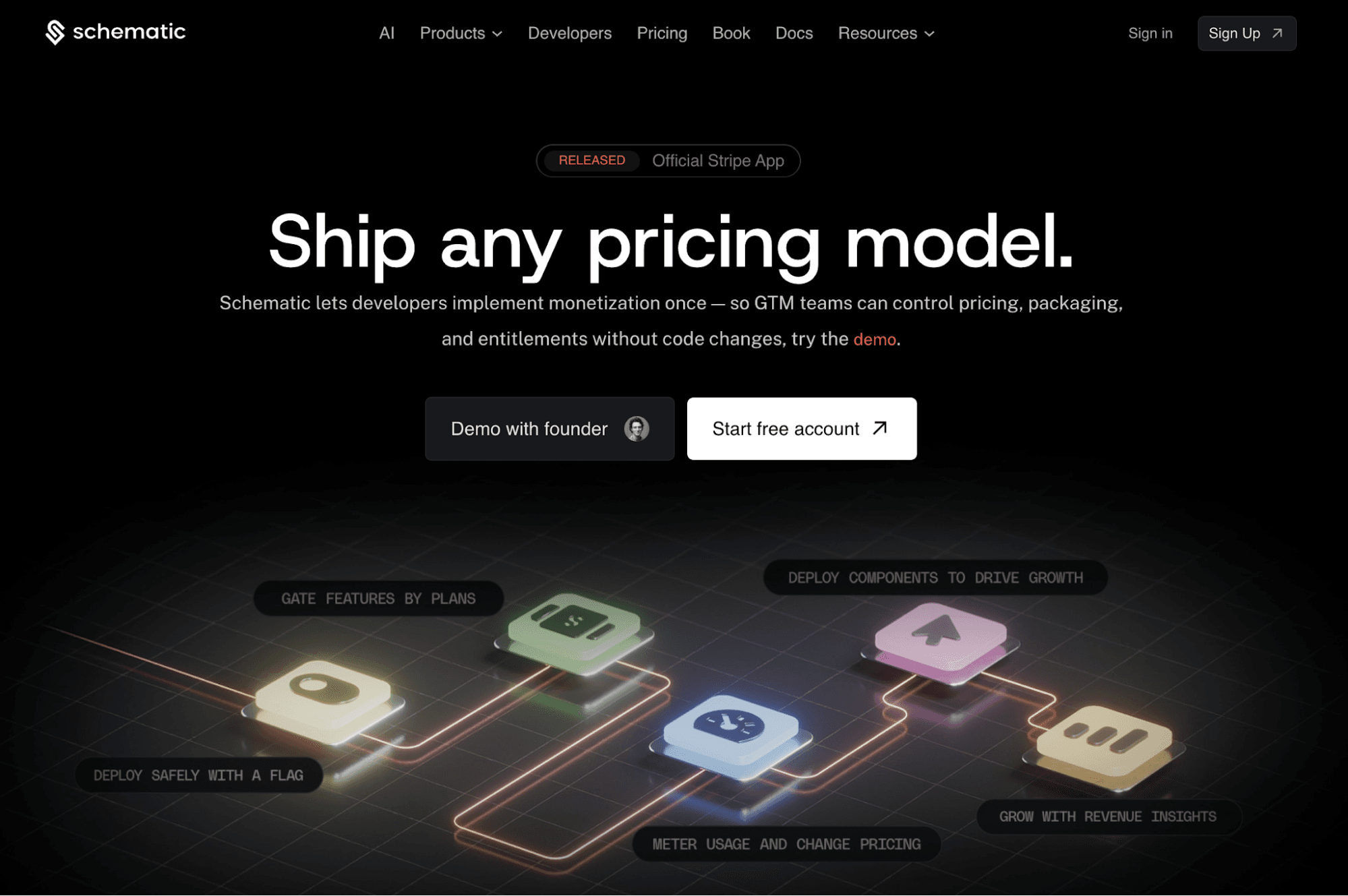
Revenue leakage often happens when pricing rules, product access, and billing data drift apart. Schematic helps close that gap by sitting between your product and billing system as the source of truth for all monetization operations.
Built on Stripe, Schematic helps you manage pricing plans, limits, trials, credits, entitlements, add-ons, and overrides directly from your billing software.
It evaluates and enforces access inside the product at runtime. This eliminates the gap between what you priced and what your product actually allows.
Schematic can also track usage in real time and sync usage data back to Stripe. It prevents missed usage charges, unpaid overages, and scattered cap checks in application code.
Plus, Schematic provides revenue insights that let you know who's overusing, underpaying, and ready to expand. Alerts or in-app prompts immediately notify the right person the moment an account crosses a threshold to ensure accurate billing.
FAQs About Preventing Revenue Leakage in SaaS Billing
Is revenue leakage the same as revenue loss?
No. Revenue loss usually comes from churn, lost deals, or low product demand. Revenue leakage is the money the company should have collected but missed because of billing errors, contract gaps, payment issues, or weak revenue protection controls.
How to identify revenue leakage?
To identify revenue leakage, you can compare contracts, invoices, payments, usage records, and product access. Look for unpaid invoices, unbilled usage, expired discounts, wrong plan access, failed payments, and CRM records that do not match billing or accounting data.
How to stop revenue leakage early?
To prevent revenue leakage, you can establish clear pricing rules, automate billing, reconcile financial data, and conduct regular audits. Use approval workflows for discounts, custom deals, credits, and overrides to review billing changes before they affect invoices or product access.
How much revenue do SaaS companies lose to leakage?
The exact amount of leaked revenue varies by company size, pricing model, and billing setup. SaaS teams with usage-based pricing, manual processes, or weak payment recovery methods tend to face higher risk. The best approach is to audit revenue leakage monthly.