 Fynn Glover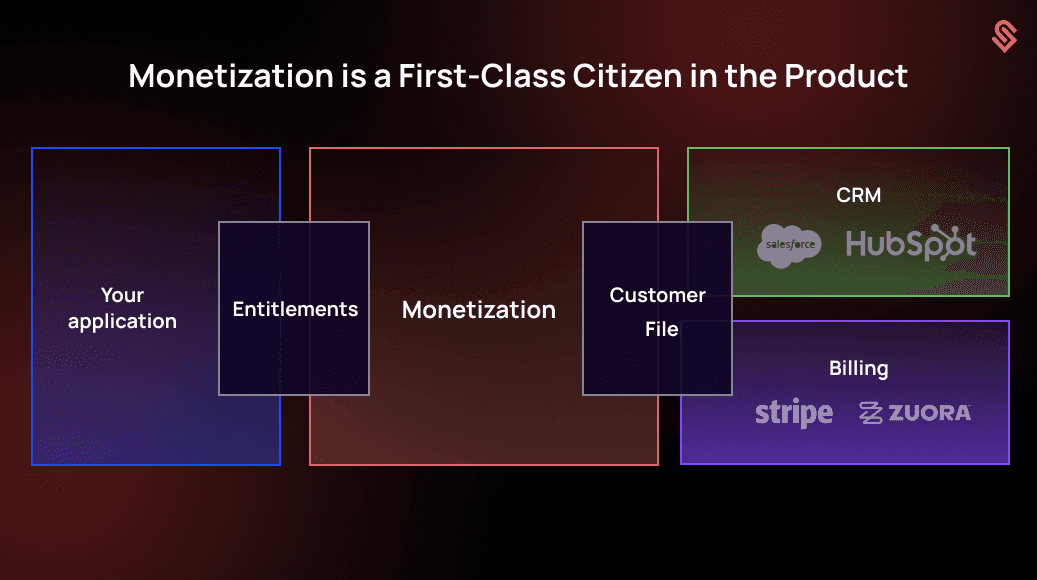
The stakes
The fastest-growing SaaS & AI companies can ship monetization changes in days, not quarters — new products, new packaging, new pricing models. That speed is why they out-compete competitors, capture market share, and grow faster.
Most companies can’t because monetization hasn’t been treated as a first-class citizen in the product. Instead, monetization is typically constrained by brittle, complex systems that destroy business agility and constrain product velocity.
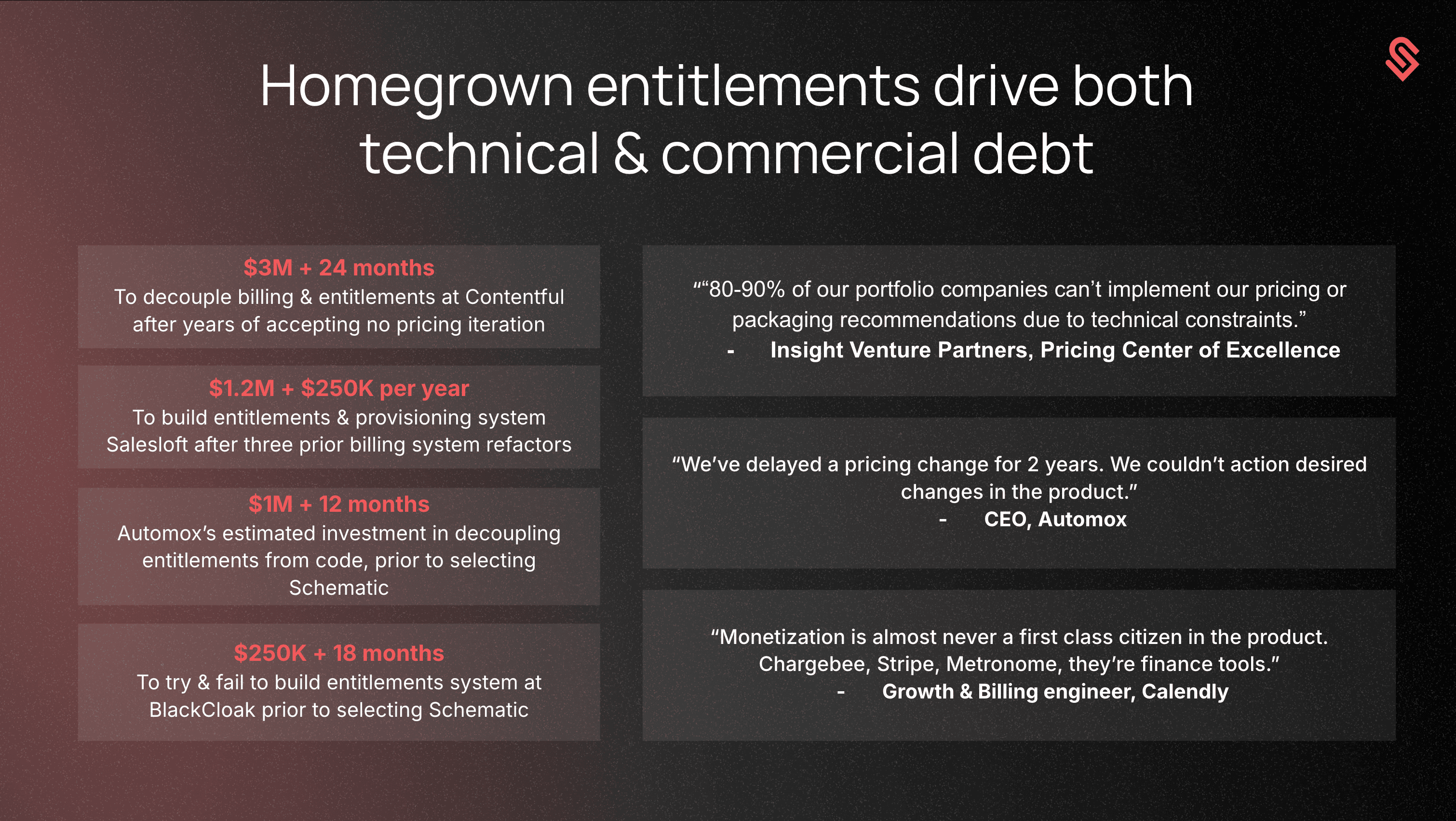
The cost to companies is enormous:
- Quarters and years to launch new pricing or packaging.
- Multi-million dollar engineering teams allocated to billing maintenance instead of product innovation.
- Missed expansion revenue from slow experimentation and poor in-app upgrade paths.
Two core problems
1. Hard-coded entitlements
Unlike Auth, there isn’t a standard for developers to leverage as architectural best practice to implement monetization. Because of this, many developers implement monetization the fastest way they know — hard-coding entitlements directly into the application.
It seems simple enough at first:
python
if company.plan in ['pro', 'enterprise']:
    allow_export = True
But then come the exceptions:
python
if company.id == 12345:  # special sales deal
    allow_export = True
elif company.plan in ['pro', 'enterprise']:
    allow_export = True
And soon, marketing runs a trial, product launches new tiers, and support needs overrides:
python
if (
    company.plan in ['pro', 'enterprise', 'growth']
    or company.id in [12345, 67890]
    or company.trial_flags.get('export')
    or company.custom_flags.get('export_enabled')
):
    allow_export = True
Now pricing and access logic is scattered throughout the code base — hard to audit, impossible to change quickly, and risky to touch.
The tax on the business:
- Long lead times — even simple changes require developer involvement and regression testing.
- High risk — changes can break entitlements for paying customers.
- Opportunity cost — top engineers tied up on monetization plumbing instead of core product.
A robust entitlement engine solves this.
python
if entitlements.check(company, 'can_export'):
    # proceed with export logic
    export_data(company)
2. Multiple product catalogs
As companies scale, Sales, Finance, and Product each maintain their own version of what’s sold — in the CRM or quoting platform, in the billing platform, and in the application itself.
The result:
- Months-long delays to update packaging because each system needs to be updated separately.
- Confusion across teams on what a customer is entitled to.
- Errors in fulfillment when catalogs drift out of sync.
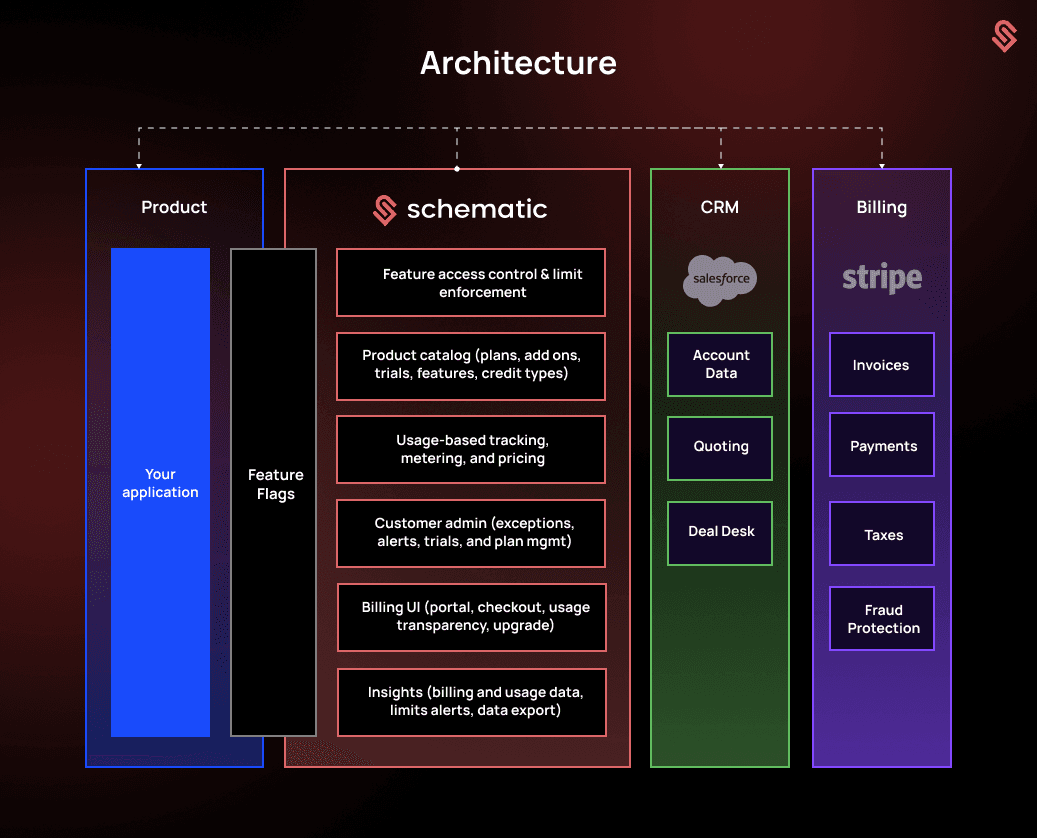
Our view: The product catalog should have a single source of truth in the product layer, defining every plan, feature, and limit, and automatically reconciling downstream with Salesforce, Stripe, and other systems. This ensures the product itself always knows what a customer can access — and every other system stays aligned automatically.
From Rollout to Revenue
The solution isn’t a new billing platform, because billing platforms don’t solve the entitlements problem. The solution is a reimagining of what feature flags can do to deliver scalable monetization architecture to high growth, complex SaaS companies.
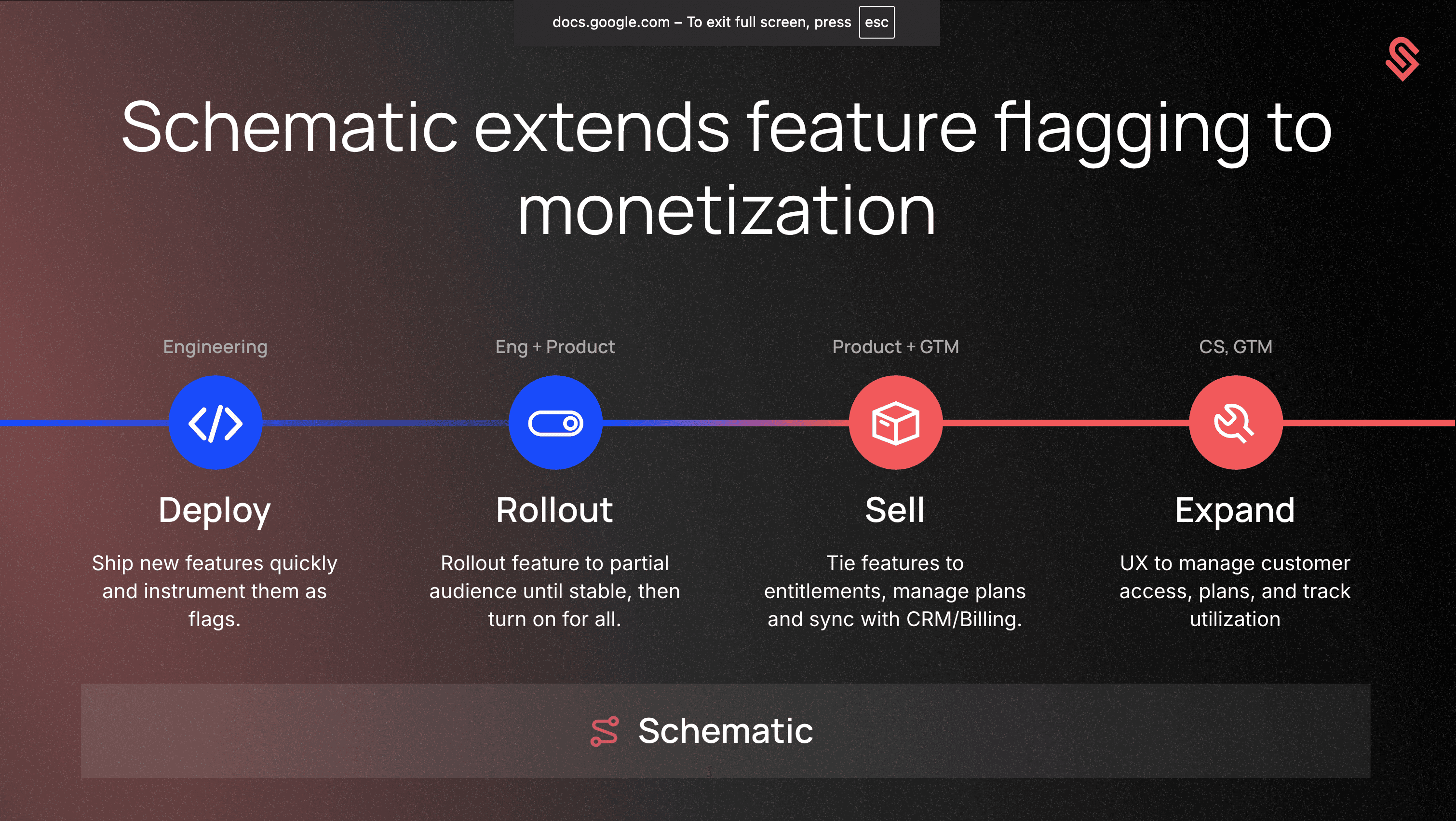
We believe feature flags present an exceptional primitive to decouple billing and pricing logic from code, and in so doing, prevent developers from being mired in billing projects and enable businesses to evolve monetization scalably and safely.
Instead of stopping at deployment and rollout, feature flags should extend into the full monetization lifecycle:
- Who can access a feature.
- Under what limits.
- For how long.
In Schematic’s Model
- Single Product Catalog — Plans, features, limits, and pricing defined once in the product layer.
- Entitlements via Feature Flags — Fully decoupled from code, enforced in the product.
- Usage Metering + Billing UI — Customers see usage in real time, understand limits, and have clear upgrade paths.
- Connected Systems — Salesforce, Stripe, and BI tools stay automatically in sync with product reality.
- Monetization Insights — With billing and usage data unified, GTM teams can see & act on expansion opportunities, detect churn risk, and feed actual customer behavior back into pricing decisions.
Our Vision: Monetization as a First-Class Citizen
With this architecture in place, our customers can:
- Launch new pricing models in days, not months.
- Experiment and iterate without engineering bottlenecks.
- Support hybrid GTM (self-serve + sales-led), hybrid billing (seats + usage + credits), and multi-product portfolios — without brittle, homegrown infrastructure.
- Give customers a transparent, self-serve experience that drives expansion.
Schematic is leading this conversation & driving awareness
We’ve shaped and helped make the world more aware of the need for this architecture with some of the sharpest operators in SaaS:
- Feature flags - theory vs. reality with StackOverflow — Conversation with Stack Overflow
- How to build flexible pricing & packaging infrastructure — Our blueprint for scaling monetization.
- Netto Farah on our podcast discussing the criticality of a robust entitlements layer — Podcast deep dive with one of the most respected engineering leaders in the space.
- Kevin Gruneberg, Lead Billing Engineer at Supbase, on our podcast discussing the need to decouple entitlements
- Shar Dara, billing at Vercel, on hard-coded entitlements and what you need from a scalable entitlements engine
- Bill Tarr of AWS SaaS Factory referencing Schematic as architectural best practice to support flexible pricing & packaging (minute 42)
If you’re facing multi-product growth, hybrid GTM motions, or usage-based pricing complexity — the cost of not fixing this is measured in millions of dollars and years of lost opportunity.