All posts
Full Guide to Flexible Pricing for Software and AI (2026 Guide)
Blog· Ryan Echternacht·Oct 1, 2026
Ryan Echternacht·Oct 1, 2026
Flexible pricing allows SaaS companies to adjust pricing tiers, usage limits, and packaging as products grow.
You might start with fixed pricing and a simple plan structure. Growth introduces new customer segments, different usage patterns, and enterprise contracts with custom terms.
AI features can also bring unpredictable costs, so pricing decisions begin to affect product logic, billing flows, and access rules.
Flexible pricing helps you adapt pricing structures without rebuilding billing systems or rewriting access controls each time something changes.
This guide explains what flexible pricing means for SaaS products, the common pricing models teams use, and how modern systems enforce pricing inside the product.
TL;DR
- Flexible pricing lets SaaS companies change plans, limits, credits, and packaging without rewriting product code.
- Common flexible pricing models include subscription + overages, seat pricing with limits, credit-based pricing, tiered plans with add-ons, and enterprise contract pricing.
- Flexible pricing breaks when pricing logic lives in application code, billing cannot enforce limits, and entitlements drift from billing and contract state.
- Schematic is the complete monetization platform that stores pricing data on a real-time ledger. Software and AI companies can quickly adjust plans and packaging through configuration.
What Flexible Pricing Means in SaaS
Flexible pricing in SaaS refers to a pricing method that allows companies to adjust plans, limits, and packaging as products and customer usage evolve.
Instead of relying on fixed pricing, modern pricing systems can support variable pricing components that change without rewriting application logic.
With flexible pricing, SaaS companies can update:
- Plans and pricing tiers
- Usage limits or usage-based pricing rules
- AI credits and metered consumption
- Add-ons or bundling services
- Enterprise contract overrides
Most subscription businesses no longer rely on a single structure. Many combine tiered pricing, per-user expansion, and usage-based billing within the same product to support various price points.
These models help companies support different customer segments, respond to changing customer behavior, and keep pricing aligned with the value they deliver to customers to build customer loyalty.
Teams can introduce new packaging options such as add-ons, volume discounts, or usage-based features.
Over time, it helps SaaS companies adapt pricing structures while maintaining healthy profit margins, supporting long‑term customer retention, and delivering maximum value for each customer segment.
Why SaaS Companies Move Toward Flexible Pricing
There are some changes in modern SaaS that push companies toward flexible pricing.
Many products now operate with a hybrid go-to-market strategy. Self-serve customers purchase through a pricing page, and enterprise buyers negotiate custom contracts through sales teams.
A single pricing structure often cannot support both motions.
Usage-driven products also reshape how pricing works. APIs, infrastructure platforms, and AI services scale with consumption, which makes usage-based pricing useful for aligning costs with product usage and perceived value.
Product teams often monitor key metrics, such as usage volume, average order value, and customer lifetime value, to understand how pricing should expand with product adoption.
Customer growth introduces another layer of complexity. Different customer segments adopt products at different speeds, and pricing should support multiple price points and price differences without forcing constant plan upgrades.
Companies often adjust pricing based on customer feedback, new market trends, competitor pricing, and what customers are willing to pay. These inputs can help companies attract customers while keeping prices aligned with changing market conditions and product value.
Eventually, rigid pricing creates operational and revenue pressure. A successful flexible pricing strategy allows SaaS companies to introduce new pricing structures, respond to customer demands, and adjust pricing when product usage or market conditions change.
Common Flexible Pricing Models in SaaS
Most SaaS products structure pricing around a few core flexible models, and these models aren’t mutually exclusive. Platforms often combine them into a single pricing system that supports different customer groups and use cases without code deployment each time pricing changes.
Subscription With Usage Expansion
A base subscription provides access to the product with defined usage limits, such as API calls, compute hours, or storage. Customers pay a recurring fee for this baseline level of usage.
When usage exceeds those limits, additional consumption triggers overage charges. This model aligns price with actual usage, which works well for APIs, infrastructure tools, and developer platforms like Vercel.
It also keeps entry pricing accessible for smaller accounts while high-volume users pay more as consumption increases.
Seat-Based Pricing With Usage Limits
Seat-based pricing charges customers per seat, or per user, while each plan still includes usage limits or feature access. A collaboration tool, for example, might charge per seat but limit projects, storage, or AI-powered capabilities.
This structure provides predictable pricing for teams while helping companies manage resource-intensive features. Product teams can control compute costs and still offer bulk purchases at higher tiers, maintaining a clear value proposition for each pricing tier.
Credit-Based Pricing
Credit-based pricing allows customers to purchase credits that represent units of product usage, such as tokens, compute time, AI tasks, or processing jobs.
Many AI platforms use this model because it makes consumption visible and easier to manage. Credits may be included in subscription plans, purchased in bundles, or added through automatic top-ups when usage increases.
Tiered Plans With Add-Ons
SaaS platforms organize pricing into tiered plans. Each tier provides a different set of capabilities, usage limits, or service levels.
Add-ons extend those tiers by unlocking extra storage, higher limits, or premium features that justify higher price points. Customers can expand gradually instead of upgrading to a higher-priced plan before they need it.
Enterprise Contract Pricing
Enterprise pricing often introduces custom contracts negotiated by sales teams. These agreements usually include tailored limits, pricing terms, or bundled services, which can lead to price variations between accounts.
This model is common in business-to-business transactions where large customers require tailored solutions. Custom plans can include different limits, entitlements, and pricing rules for each account.
Flexible pricing models only work when those rules connect directly to product behavior, so plans, credits, add-ons, and overrides can be enforced inside the product.
Core Components Behind Flexible SaaS Pricing
A flexible SaaS pricing system relies on several main components that allow teams to adjust pricing structures without rewriting product logic. These components connect pricing, billing, and usage so teams can adjust packaging and limits without constant code changes.
Plans
Plans define pricing tiers, packaging, and base access. Each plan sets what customers receive at a specific price point and which features or usage levels they can access. Plans anchor the pricing configuration and create clear upgrade or expansion paths.
Software Entitlements
Software entitlements control which features, limits, and capabilities an account receives. They map plans, contracts, or overrides to concrete permissions at runtime. When a plan or contract changes, entitlements update the product access associated with that account.
Usage Metering
Usage metering tracks consumption such as API calls, compute usage, storage, or events. Each usage event becomes a record that feeds billing calculations and enforcement rules. This data helps product teams understand how customers use the product and how pricing should scale with usage.
Credits
Credits convert usage into prepaid units that represent compute, tokens, or AI tasks. Customers can receive credits in plans, purchase bundles, or add more as usage grows. Credits help manage variable workloads and keep pricing transparent.
Add-Ons
Add-ons expand capacity or unlock premium capabilities without requiring a plan upgrade. Each add-on introduces a new limit or feature that can be enabled independently. It supports gradual expansion and keeps pricing flexible for the existing customer base.
Contract Overrides
Contract overrides support enterprise agreements that modify limits, pricing terms, or feature access for specific accounts. These overrides may adjust price points, raise usage caps, or bundle services differently. The product can then enforce those account-specific terms through entitlements and usage limits.
How SaaS Teams Implement Flexible Pricing
A flexible pricing system connects several product services that evaluate pricing rules, usage, and access in real time. Most SaaS products link multiple components, so pricing changes do not require constant engineering work.
The product catalog defines pricing plans, usage limits, and packaging rules. It stores the structure of pricing tiers, add-ons, and contract terms so teams can adjust pricing without modifying application logic.
An entitlement management system determines which features, limits, and capabilities apply to each account. Plans, trials, credits, and contract overrides translate into specific permissions inside the product.
Usage tracking records consumption such as API calls, compute time, or storage. These usage events allow pricing rules to respond to actual product usage and support consumption-based models.
Billing integration synchronizes subscription state with payment solutions like Stripe. Payment status, contract terms, and subscription changes update the product so that access reflects the current account state.
Finally, the product performs a runtime evaluation of pricing rules whenever a user action occurs. Without runtime evaluation, pricing decisions and product behavior drift apart.
Flexible Pricing Infrastructure for SaaS
Modern SaaS platforms often separate pricing logic from application code. Instead of embedding pricing rules inside services, companies use a dedicated monetization operating system that can manage pricing data and enforce it at runtime.
These systems coordinate several core components. They manage plans and packaging, evaluate SaaS entitlements, track usage limits, apply credits, and synchronize billing state with payment systems. When these components work together, the product can evaluate pricing rules in real time.
Runtime evaluation makes sure that product access always reflects the current pricing model. Any changes to plans, limits, or contract terms update the system without requiring engineering releases.
This architecture supports a flexible pricing policy that adapts as products and markets change. Teams can introduce lower prices for specific segments or raise prices as costs and market conditions change.
It’s also simple to experiment with different price points and launch new pricing structures using dynamic pricing algorithms and market‑based pricing as a guide.
A dedicated pricing infrastructure also helps companies respond to external factors and test packaging for price-sensitive customers. Teams can then implement a dynamic pricing strategy as customer behavior and market conditions change.
How Schematic Supports Flexible Pricing
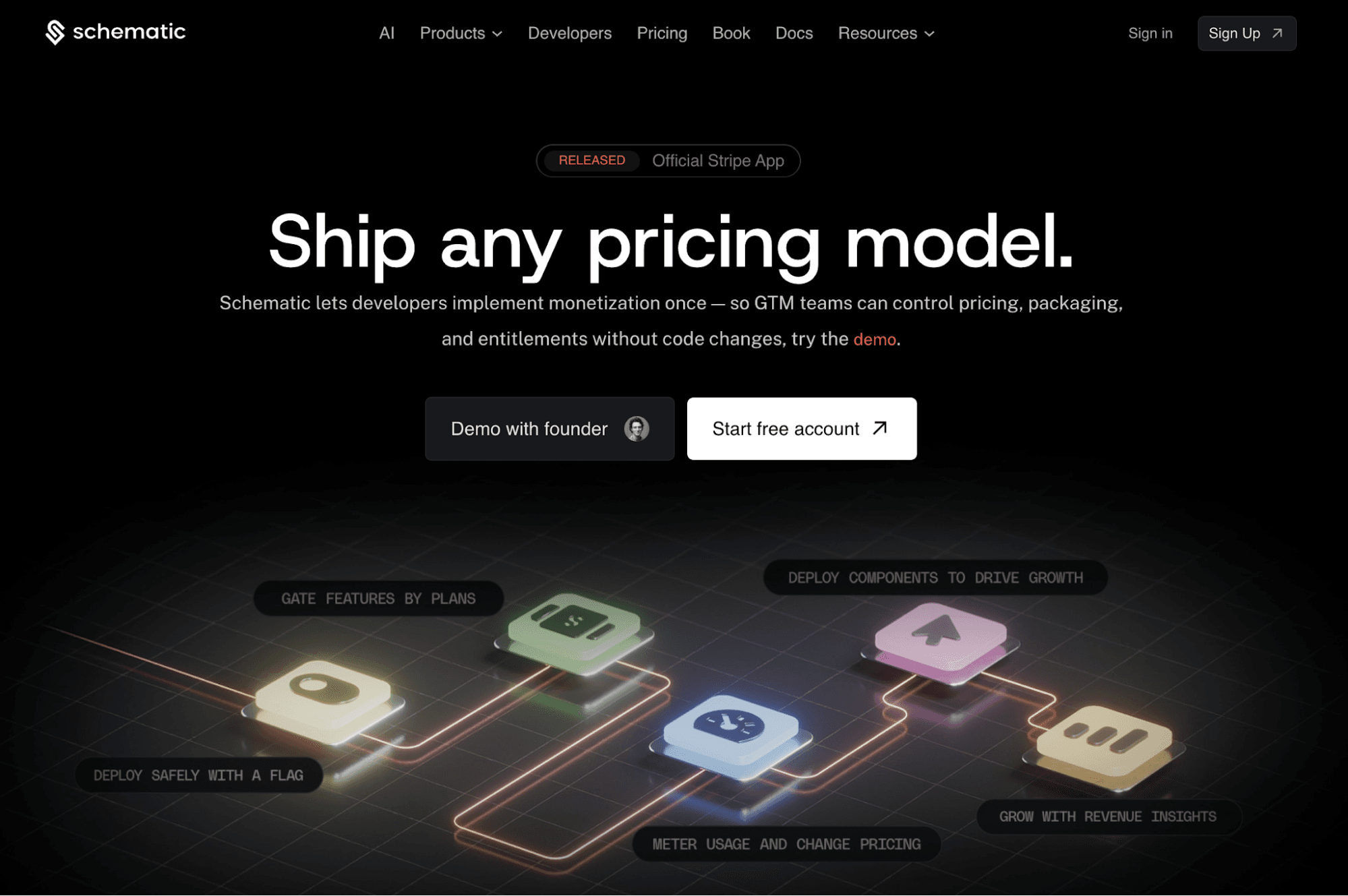
Schematic provides a complete usage-based billing platform for software and AI companies selling to enterprise customers.
It stores pricing as data on a real-time ledger. This enables commercial teams to change pricing through configuration, not code.
Schematic also provides out-of-the-box controls for the following:
- Any software monetization model (usage, credits, seats, tiers, and hybrid pricing)
- Credit rollovers that let unused credits roll into the next billing period
- Expiry windows and priority consumption to burn down promotional or the oldest credits first
- Concurrency-safe holds that reserve credits before committing or releasing them
- Plan versioning for plan changes, customer migration, and trial runs
- ASC 606-compliant revenue recognition using an append-only ledger
- Self-serve top-ups and metered billing for usage beyond the limit
What sets Schematic apart is its real-time entitlement engine and robust enterprise credit wallets. These allow customers to set usage caps, change top-up rules, receive notifications before usage stops, and decide what happens at the limit.
Schematic automatically enforces product access from the same real-time ledger used for billing. It ensures that balances, limits, and usage stay updated everywhere your product reads them. That makes it easier to trust usage-based pricing.
FAQs About Flexible Pricing
How is flexible pricing different from traditional subscription pricing?
Flexible pricing lets SaaS companies adjust plans, usage limits, add-ons, and credits without rewriting product code. Traditional subscription pricing usually locks customers into fixed tiers that rarely change as usage or product capabilities expand.
Flexible pricing supports hybrid models, usage-based expansion, and enterprise overrides, which makes it easier for teams to adapt pricing configuration as products change.
When should a SaaS company move from fixed pricing to flexible pricing?
A SaaS company should move from fixed pricing to flexible pricing when new customer segments, changing usage patterns, or AI-driven workloads require frequent adjustments to plans and limits.
The shift often happens when rigid pricing creates operational pressure or when teams need to respond to price sensitivity, changing sales patterns, or new market conditions without engineering releases.
What metrics should teams monitor when running a flexible pricing model?
Teams running flexible pricing typically monitor usage volume, average order value, and customer lifetime value to understand how customers respond to pricing changes.
Product and revenue teams also analyze sales patterns and price sensitivity across different segments. These signals help identify opportunities to introduce new pricing models, respond to demand drops, and increase revenue as customer usage grows.
How can flexible pricing help teams avoid price wars and maintain healthy margins?
Flexible pricing aligns price with real product usage, helping companies avoid competing solely on discounts. When pricing reflects customer value and usage patterns, teams can maximize revenue without entering price wars.
It becomes important in usage-driven markets that behave similarly to commodity markets, where demand fluctuations and competitive pressure often influence pricing decisions.
How can flexible pricing help teams align pricing with market demand and average revenue?
Flexible pricing lets teams align price with market demand by adjusting plans and usage‑based rules when average revenue per segment increases or decreases.
This keeps pricing tied to real‑time usage and demand signals, showing how flexible pricing works in practice and helping teams maintain healthy margins without relying on static tiers.