 Ryan Echternacht
Usage-based billing software helps startups charge customers based on actual consumption. It could be API calls, tokens, storage, or compute time, and you could price with a pay-as-you-go model, a credit model, or a hybrid model.
Consumption billing matches how many SaaS and AI companies deliver value because customer usage can vary over time. Charging based on actual usage can keep pricing fair and connect revenue more closely to product adoption.
In this guide, we'll cover the best usage-based billing software for startups, the features to consider, and the benefits of usage-based pricing.
TL;DR
These are the top usage-based billing systems for startups:
- Maxio
- Lago
- Chargebee
- Orb
- Zenskar
What Startups Should Look for in Usage-Based Billing Software
Not all billing tools are built for launching usage-based pricing. Startups need platforms that match how their product works and scales. Here's what you need to consider:
Flexible Pricing Models
AI and SaaS startups rarely stick to one pricing model.
You start with simple metered billing. Later, you may add pricing tiers, AI credits, or hybrid pricing models as your product matures and your customer base expands.
Some users might want volume discounts. Enterprise customers may need custom pricing.
Check if the billing platform can support multiple pricing models, including:
- Pay-as-you-go model
- Tiered pricing model
- Prepaid credits
- Hybrid model (subscription billing + overage pricing)
- Flexibility for Enterprise deals (e.g. custom pricing, plans, and term lengths)
This flexibility makes it easier to optimize pricing for different audience segments and customer usage patterns.
Real-Time Usage Metering
You should be able to track accurate usage data in real time. Look for billing software that can process usage data from high-volume events, such as millions of API calls or tokens, and update billing totals quickly.
AI and SaaS products often have unpredictable usage. A single customer can spike usage in minutes. If your system lags, you risk billing data inaccuracies.
You also need an intuitive usage dashboard for customers. They should see what they’ve used and how much they owe at any time.
Without real-time usage metering, customers may question invoices or limit usage because they lack visibility into their charges.
Scalability
Startups should choose a solution that can handle future increases in customers and billing volume.
Invest in billing infrastructure that can manage high-volume transactions and scale without performance issues.
You should also plan for global expansion early. Even if you're just starting, check for multi-currency support and international customers.
If you pick a billing solution that cannot scale, you may need to replace it later. That takes valuable time and engineering effort and can disrupt your billing operations.
Integration Capabilities
Billing does not work in isolation. It needs to connect with your existing tech stack.
Usage data comes from your product. Payments go through another system. Sales and finance teams need access to the same data. If these systems don’t connect well, things break.
Look for usage billing software that can integrate with:
- Product or event pipeline
- Payment gateways (e.g., Stripe or PayPal)
- Enterprise resource planning (ERP) software and accounting tools
- Customer relationship management (CRM) systems
Strong integrations reduce manual processes and eliminate the need to build custom pipelines. They also keep pricing logic, usage, and finance in sync, which reduces errors.
Transparent and Predictable Cost
You need to understand how much the usage-based billing solution will cost your startup.
Some platforms charge a percentage of every transaction. Others bill per invoice or per usage event. As your product grows, these costs can add up fast.
Choose a billing platform with transparent pricing and no hidden fees. It should also have a predictable cost as usage increases.
This is especially important for AI and SaaS startups, where usage can grow quickly. If billing costs are not clear, you may lose profit margins without realizing it.
You should know what you will pay at each stage of growth. Doing so helps you control costs, protect revenue, and avoid switching tools later.
Reporting and Analytics
Your billing system is not just for sending invoices. It should provide insights into revenue, usage, and customer behavior.
Choose a billing platform that can break down revenue by customer, plan, or pricing model. You should also know who's overusing or underpaying for your AI or SaaS product.
This data helps you answer the following questions:
- Which features drive usage?
- Where does revenue come from?
- Which customers are growing or churning?
With accurate usage and financial reporting, you can identify upgrade opportunities and reduce churn risks.
6 Best Usage-Based Billing Software for Startups
Here are the best usage-based billing platforms for startups.
1. Schematic
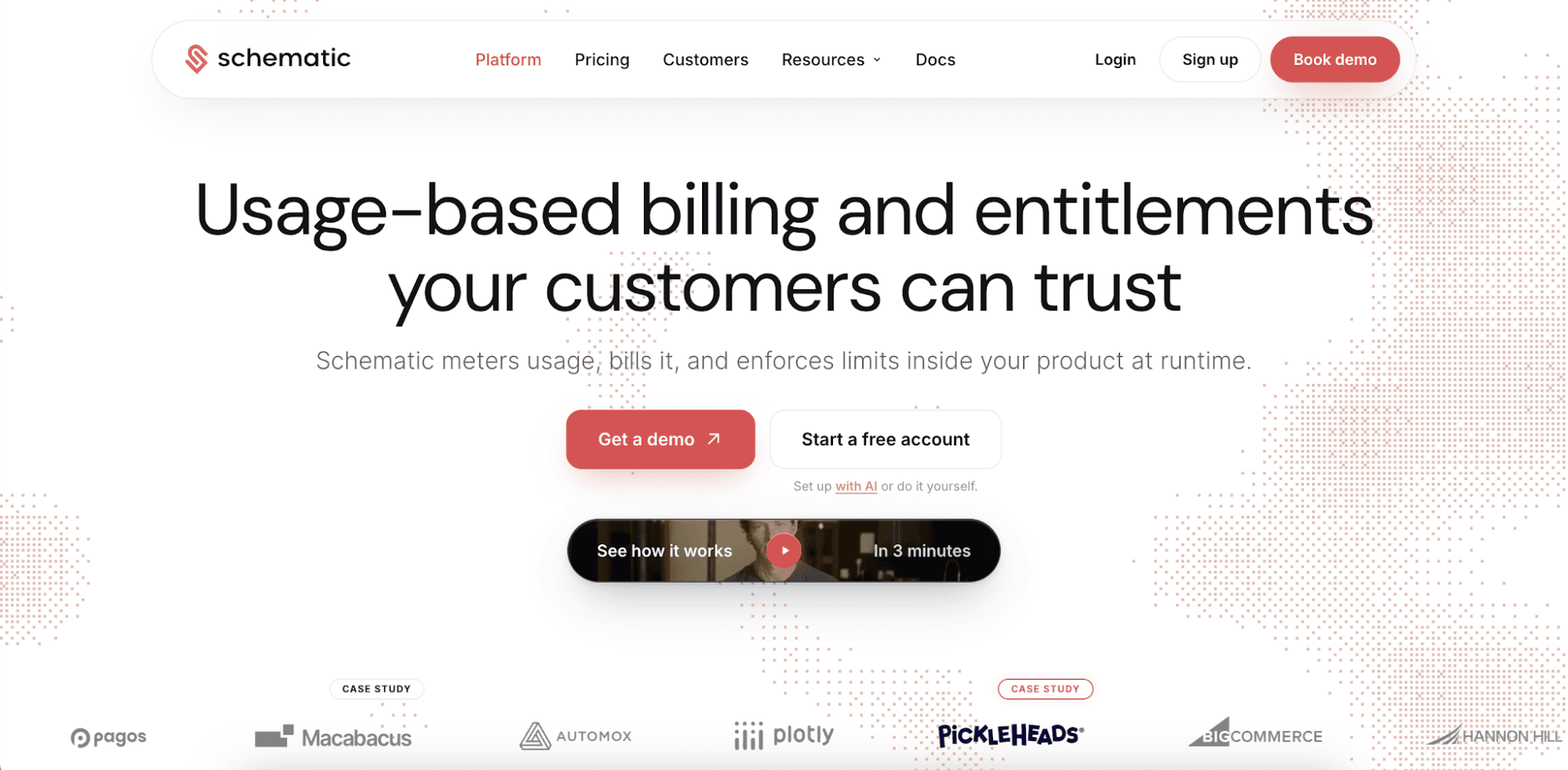
Schematic is a complete usage-based billing platform for modern SaaS and AI startups that want to close deals faster, drive expansion, and earn more revenue.
Robust credit wallets give customers real-time usage visibility and usage controls. Buyers can set spend caps per seat or per agent, receive a warning before usage stops, change credit top-up rules, and control what happens at the limit.
Runtime enforcement automatically applies the policy you or your customer have setupwithout asking your best engineers to build complex credit and entitlement infrastructure – a common drag on engineering velocity for companies using traditional billing vendors..
With Schematic, pricing is stored as data on a real-time ledger. Commercial teams can model usage-based pricing, meter events, and grant credits as part of a subscription. If a plan needs to change, it only requires configuration instead of hardcoding billing logic inside the product.
Schematic also provides out-of-the-box controls for most credit pricing setups, including credit rollovers, expiry windows, priority consumption, and concurrency-safe holds. These allow unused credits to roll over to the next billing cycle, burn down promotional credits first, and reserve credits before committing or releasing them.
Plus, teams can use Schematic to version pricing changes, preview them, and decide which customers migrate when a new version is published.
Schematic solves the trust problem in usage-based pricing by making sure that consumption stays within budget.
Key Features
- Unified pricing engine: Model seats, usage, credits, add-ons, trials, overages, and hybrid pricing.
- Usage metering: Send each usage event once and use the same event stream for invoices, software entitlements, and analytics.
- Credit wallets: Manage grants, burn-down, rollover, expiry, SaaS auto top-ups, and budgets for users or autonomous agents.
- Runtime entitlement engine: Track customer usage against the cap and grant overrides for custom deals.
- Self-service controls: Let customers set per-company, per-user, or per-agent caps, receive warnings before usage stops, change top-up rules, and decide what happens at the limit.
- Plan versioning and simulation: Replay actual usage against a draft plan, review the revenue change, and choose which customers migrate.
- AI and agent access: Let Claude or Curson query plans, balances, usage, and entitlement data through Schematic's MCP server.
2. Maxio
Source: maxio.com
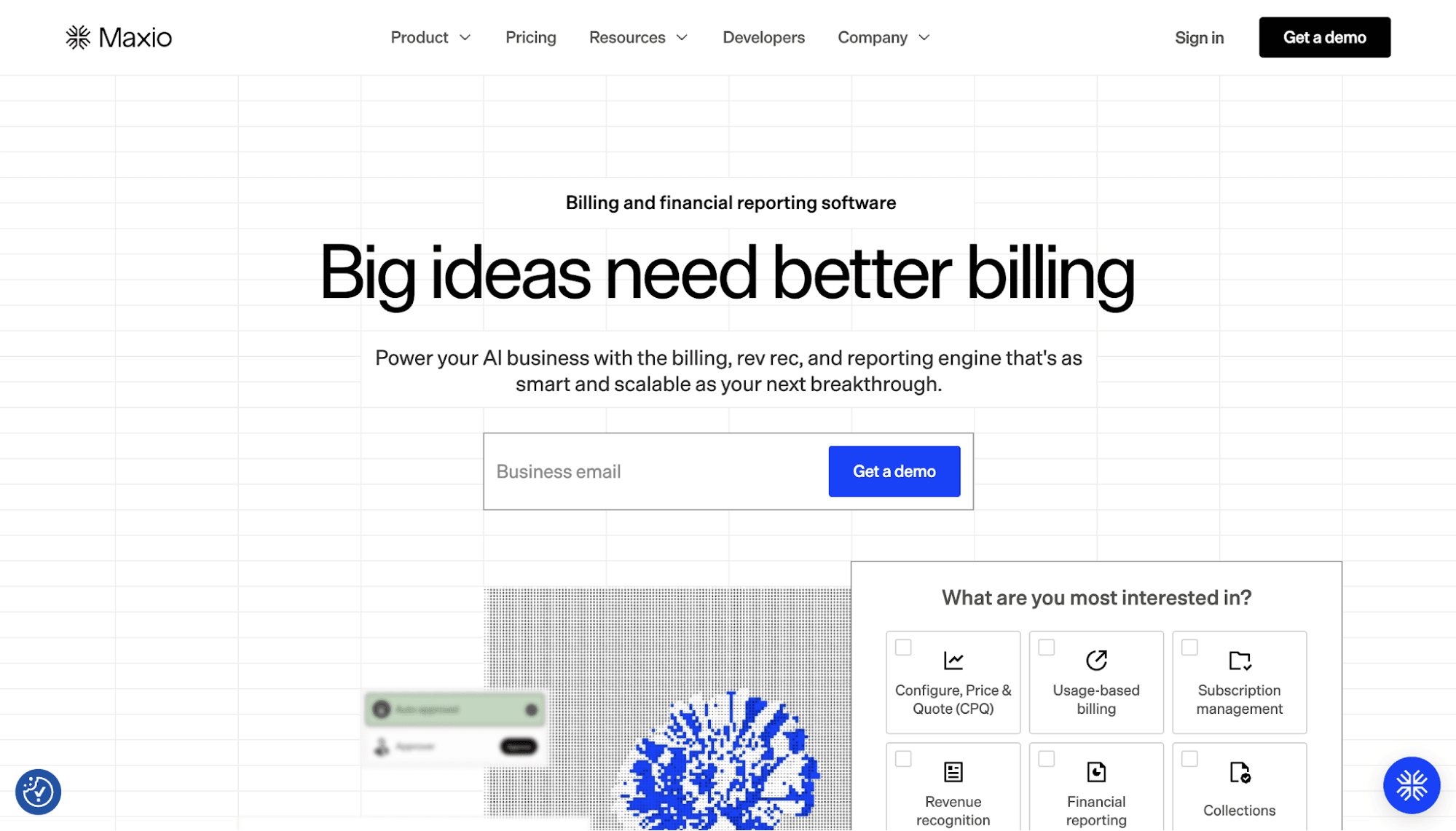
Maxio's usage-based billing software is designed to scale with startups. It supports flexible billing models, including per-unit, tiered, volume, and hybrid, without maintaining complex infrastructure.
The platform connects usage tracking directly to automated invoicing. This billing automation reflects actual consumption in each invoice, reducing billing errors and removing manual steps from the billing cycle.
One of its key benefits is centralized financial operations. Prorations, upgrades, downgrades, payment collections, and revenue management can all be handled within the platform.
Maxio also integrates with customer relationship management software, your accounting system, and payment gateways. This reduces the need to copy and paste financial data across different systems.
Key Features
- Usage metering: Track product usage data via API or upload key metrics in batches.
- Flexible pricing models: Support per-unit, volume, hybrid, and other complex billing scenarios.
- Automated billing and invoicing: Convert usage data into accurate invoices without manual work.
- Subscription management: Manage upgrades, downgrades, refunds, and more in one system.
- Built-in analytics and backtesting: Learn how pricing affects revenue and implement changes without recoding.
3. Lago
Source: getlago.com
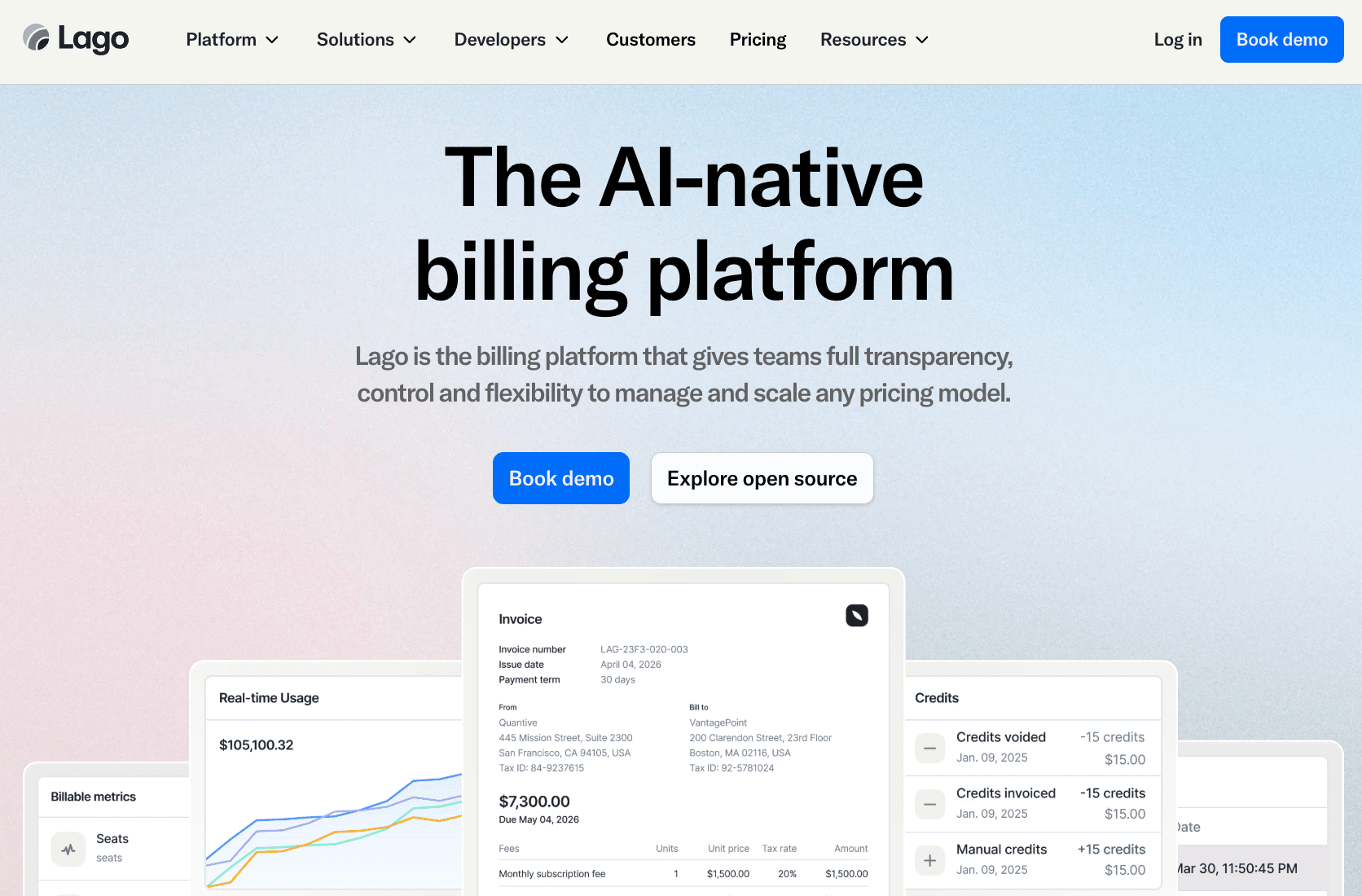
Lago is a usage-based billing platform designed for SaaS and AI startups that want to solve complex billing.
It uses event-based architecture. You send usage events from your product, and Lago turns them into billable metrics. You can invoice customers for anything you can track, such as API calls, compute hours, or tokens.
With Lago, you can easily create hybrid plans. Combine a usage-based billing model with subscriptions, pay-as-you-go, prepaid credits, and custom pricing rules.
Your engineering team can update usage charges and customize overrides using Lago's no-code UI or via API.
Lago also offers flexible deployment options. You can host it on your own servers or use the fully managed, cloud-based platform.
The open-source, self-hosted version suits scaling startups that want full control over their billing system.
Key Features
- Metered billing and invoicing: Aggregate usage throughout each billing period and turn raw usage data into clear and accurate invoices.
- Hybrid and usage-based pricing models: Integrate usage-based pricing with subscriptions, self-serve, and enterprise sales-led motions in one platform.
- Open-source code: Deploy Lago on-premises or in managed hosting environments.
- Customizable overrides: Apply complex pricing rules, discounts, or exceptions for enterprise customers.
- Revenue analytics: Monitor usage patterns and review revenue data generated from billing activity.
4. Chargebee
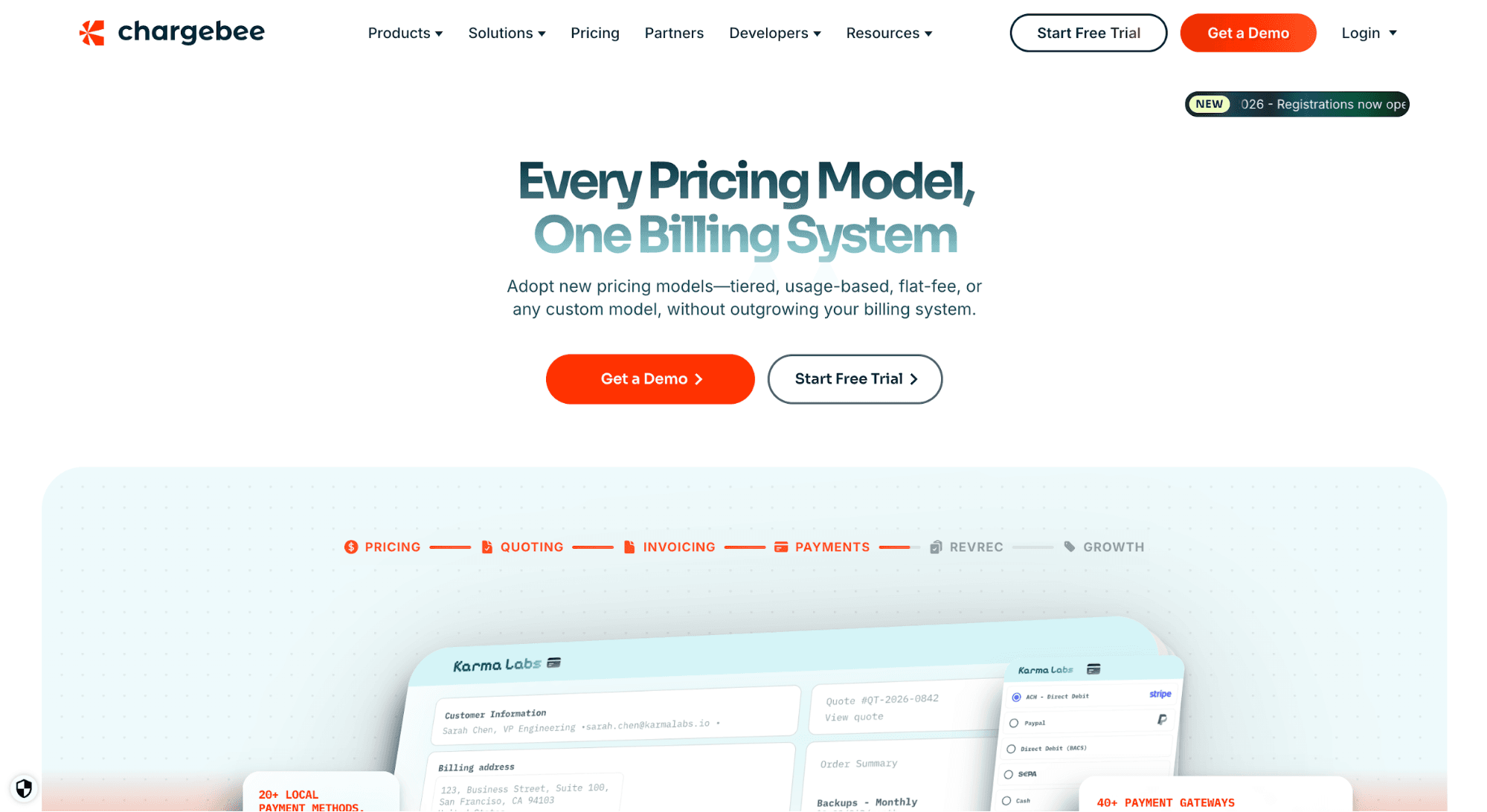
Source: chargebee.com
Chargebee is designed for both usage-based monetization and recurring billing. It offers flexible metering for calls, tokens, workflows, and outcomes without code rewrites.
The platform helps you set limits, thresholds, and entitlements. Customers pay overage fees when their actual usage exceeds predefined limits.
Chargebee also handles the entire billing process. It ingests raw or aggregated usage data, calculates charges, and generates invoices automatically at the end of each billing cycle.
Finance-grade controls, such as automated usage capture and accurate invoicing, can help reduce billing errors and revenue leakage. Revenue recognition is available separately through Chargebee RevRec.
Chargebee connects billing, invoicing, subscription management, and finance workflows within the same product suite.
Key Features
- Flexible billing: Supports usage-based billing, recurring fees, and one-time charges.
- Custom usage metering and aggregation: Track and aggregate usage data into billable units based on your pricing logic.
- Revenue recognition: Add Chargebee RevRec for automated revenue recognition and financial reporting.
- Subscription management: Handle plans, add-ons, upgrades, and billing cycles from a central dashboard.
- Advanced analytics: Analyze usage and revenue trends, customer lifetime value, and other subscription metrics to guide your pricing strategy.
5. Orb
Source: withorb.com
Orb is a usage billing software solution designed for startups that need fast, flexible, and customer-centric billing.
It tracks usage metrics at scale, turning raw events into a billable quantity. Then, it lets you define pricing based on this data.
Create usage-based, seat-based, volume, or tiered pricing models within Orb. You can also package prices together into plans and manage your billing setup as pricing changes.
The platform is built to handle high data volume. It can process large streams of events in real time and generate invoices based on actual usage.
Orb also offers usage dashboards, pricing simulations, alerts, and revenue recognition tools. These give finance and product teams more control over pricing and billing execution without relying on engineering for every change.
Key Features
- Real-time event ingestion: Track product usage at scale without additional engineering overhead.
- Flexible pricing engine: Change prices, deploy rollout plans, and activate changes across the entire stack.
- Backfills and corrections: Price changes and renegotiated contract terms are automatically reflected in invoices.
- Pricing simulations: Experiment on data and find the right pricing model for every product.
- Customer visibility tools: Provide usage dashboards and alerts so customers can track usage and expected charges.
6. Zenskar
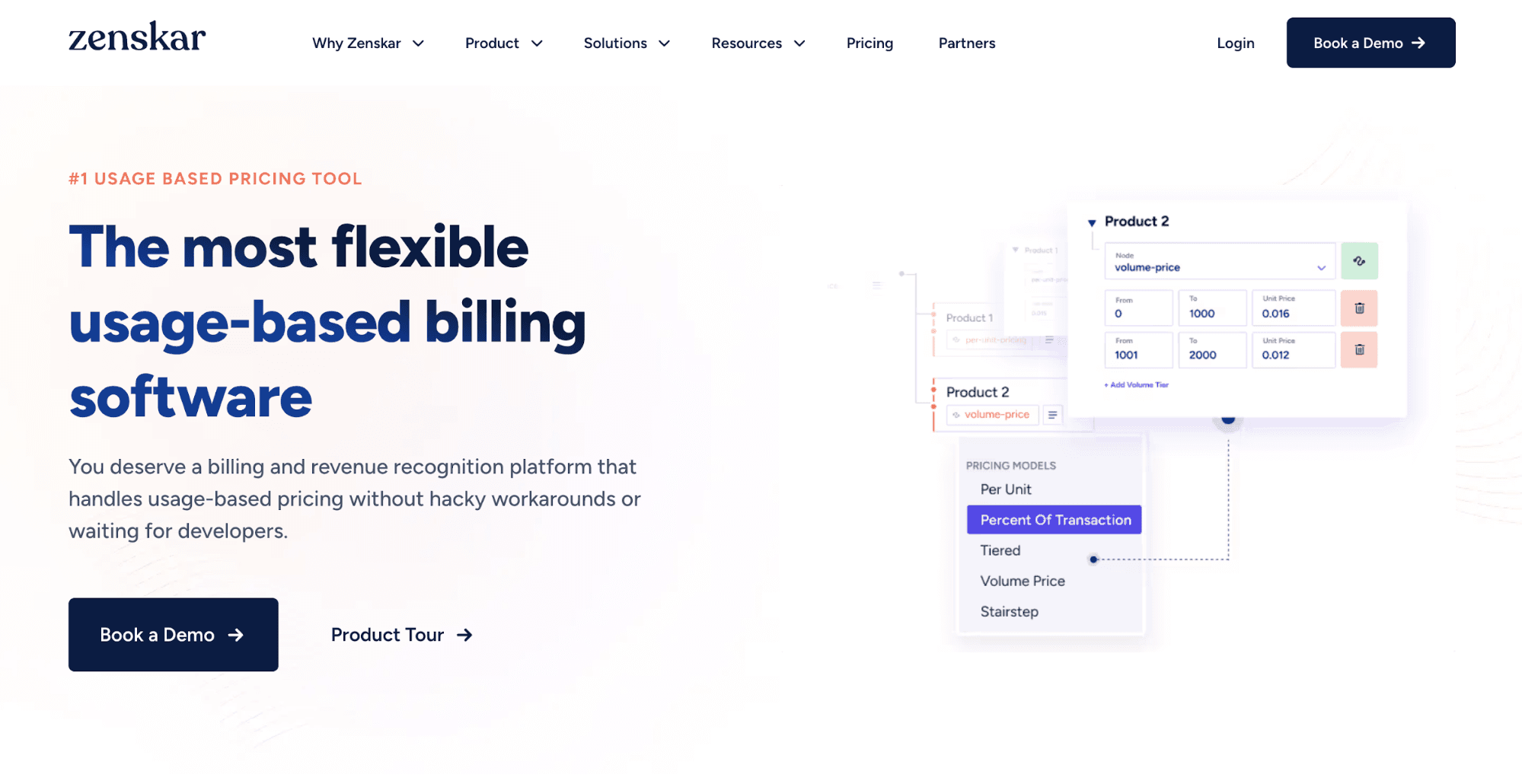
Source: zenskar.com
Zenskar helps startups implement usage-based billing through no-code workflows or developer-friendly APIs.
It captures and bills for any usage data, including API calls, licenses, seats, SKUs, or usage credits. The platform ingests this data using native integration capabilities, CSV uploads, or remote connections.
With Zenskar, startups can launch simple pricing models such as pay-as-you-go, as well as tiered, prepaid, and dynamic pricing. It's also easy to allocate entitlements per user, account-wide, or feature-specific.
Finance and product teams can manage billing logic, run adjustments, and handle edge cases like discounts or contract-specific terms without relying on developers.
Key Features
- Usage metering: Track usage data metrics from multiple sources to generate accurate billing.
- Entitlement management: Define feature access and enforce usage limits.
- Automated revenue recognition: Generate revenue reports automatically based on usage and billing events.
- Self-serve billing portal: Let customers view usage, invoices, and invoice details.
- AI-powered contracts: AI ingests and processes contracts at scale to accelerate billing and revenue recognition.
Benefits of Usage-Based Billing for Startups
Usage-based billing is an alternative to traditional subscription models. It offers several advantages to startups and their customers:
Align Pricing With Customer Value
Costs scale with usage. Customers pay based on how much they use the product.
Light users are not forced to pay the same as heavy users. This eliminates the problem where some customers subsidize others.
Startups can charge for actual customer value delivered, rather than a fixed monthly fee that may overcharge or undercharge. This keeps pricing fair and easy to understand.
Lower the Barrier to Entry
Usage-based pricing makes it easier for startups to acquire new customers.
Users do not need to commit to a high upfront subscription cost. They can start small and increase usage over time when they're ready. They also feel more comfortable upgrading to feature-rich plans, which creates a natural path to higher revenue.
As users find value in your product, they move from free to paid without friction.
Increase Customer Satisfaction and Retention
Transparent and fair billing improves how customers feel about your product.
Customers can see what they use and what they pay for. This builds trust and can reduce customer disputes over billing.
They can also scale usage up or down based on their needs. If usage drops, costs go down, so they avoid paying for unused capacity.
Satisfied customers are more likely to stay longer, which can improve retention and lower churn.
Support Product-Led Growth
Usage-based billing works well for AI and SaaS products that grow through product adoption. According to Digital Applied, roughly 58% of B2B SaaS companies now run some form of product-led growth (PLG).
Customers can start using your product right away without lengthy sales conversations. As they get value, they can naturally increase usage.
For startups, this can reduce dependence on heavy sales processes. More adoption can happen through the product itself.
It also makes expansion easier. Teams can focus on improving the product while revenue increases alongside usage.
Ship Usage-Based Pricing That Customers Trust With Schematic
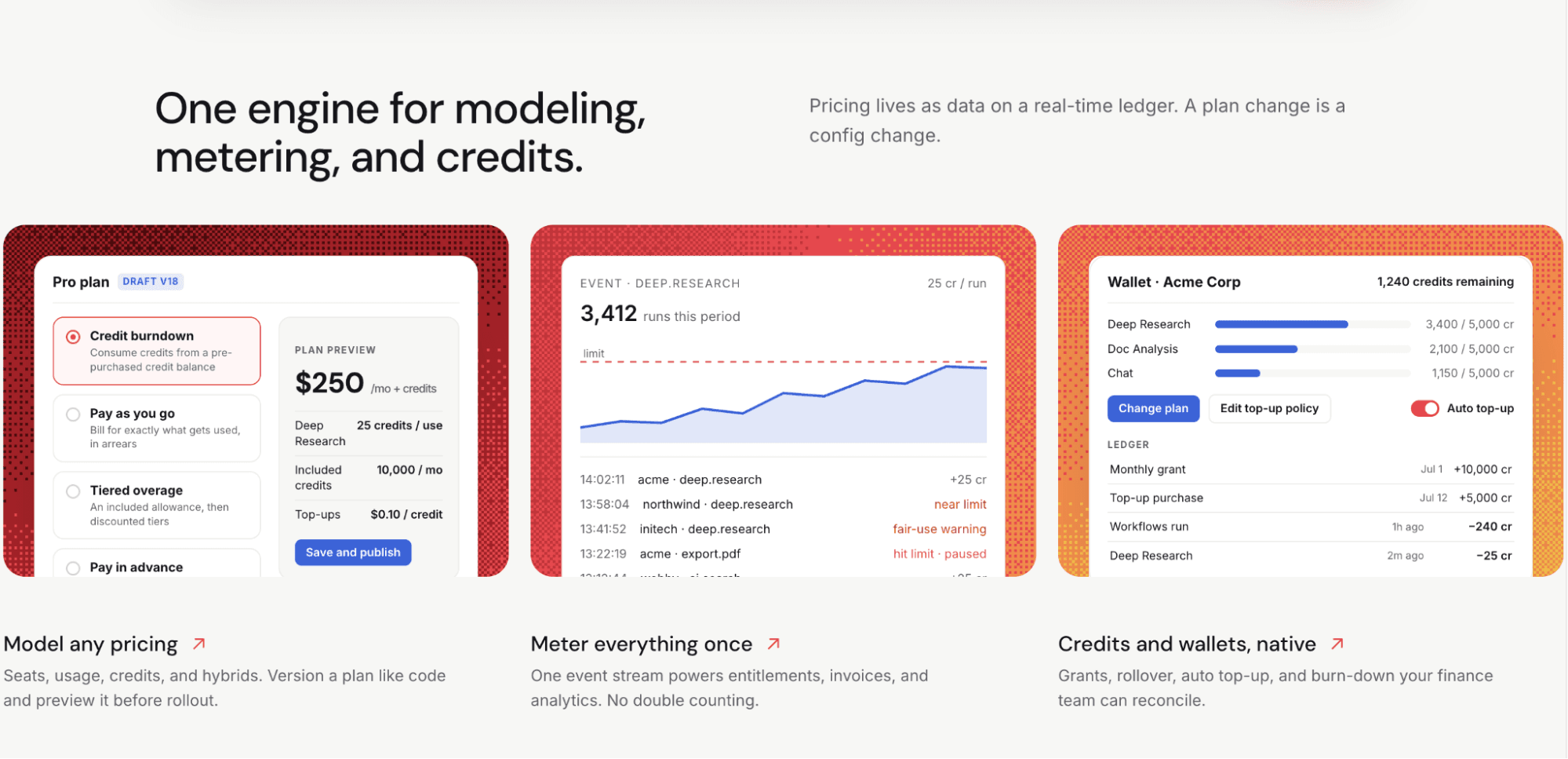
Schematic provides a complete usage-based billing platform for software and AI companies.
Unlike traditional usage billing software, Schematic gives enterprise customers real-time usage visibility, spend forecasts, self-service controls, and configurable spending limits. By showing users exactly what they consume and owe, Schematic solves the trust problem in usage-based pricing.
Another standout feature is the runtime entitlement engine. Schematic helps teams track customer usage against caps, meter credits, enforce limits at runtime, and update balances everywhere the product reads them.
Schematic also stores pricing data on a real-time ledger. For startups, this means product and RevOps teams can adjust packaging, limits, credits, SaaS entitlements, and access policies through configuration, not code.
Plus, commercial teams can version changes, preview a plan before publishing it, and roll it out to the entire customer base without engineering time.
FAQs About the Best Usage-Based Billing Software for Startups
What is usage-based billing software?
Usage-based billing software helps startups charge customers according to actual product use, such as API calls, tokens, storage, or transactions. It tracks usage, applies pricing rules, and generates invoices.
This makes it useful for SaaS companies and AI products where usage varies between customers.
Is usage-based billing suitable for startups?
Yes. Consumption-based pricing can suit startups because customers can begin with lower usage and spend more as adoption increases.
Because revenue can vary from one billing period to another, startups should also consider how usage patterns affect cash flow.
Who offers the best usage billing system?
The best usage billing software depends on your product, chosen pricing model, and operational complexity.
Schematic stands out as a strong option for startups that need more than basic invoicing tools. It lets AI and SaaS companies manage usage-based pricing, packaging, limits, and entitlements without hard-coded logic.
What is the best billing software for small businesses?
The best billing software depends on how the business charges customers. Standard subscription software may be enough for simple recurring fees.
Businesses with variable usage should look for software that can meter activity, apply pricing rules, and generate invoices automatically.