Usage-Based Billing Explained for SaaS Teams (2026 Guide)
Learn how usage-based billing works for SaaS companies, including common pricing models, benefits, risks, and strategies for evolving your model over time.
 Ryan Echternacht
On this page
- Overview
- TL;DR
- What Is Usage-Based Billing?
- Core Usage-Based Pricing Models
- Pay-As-You-Go
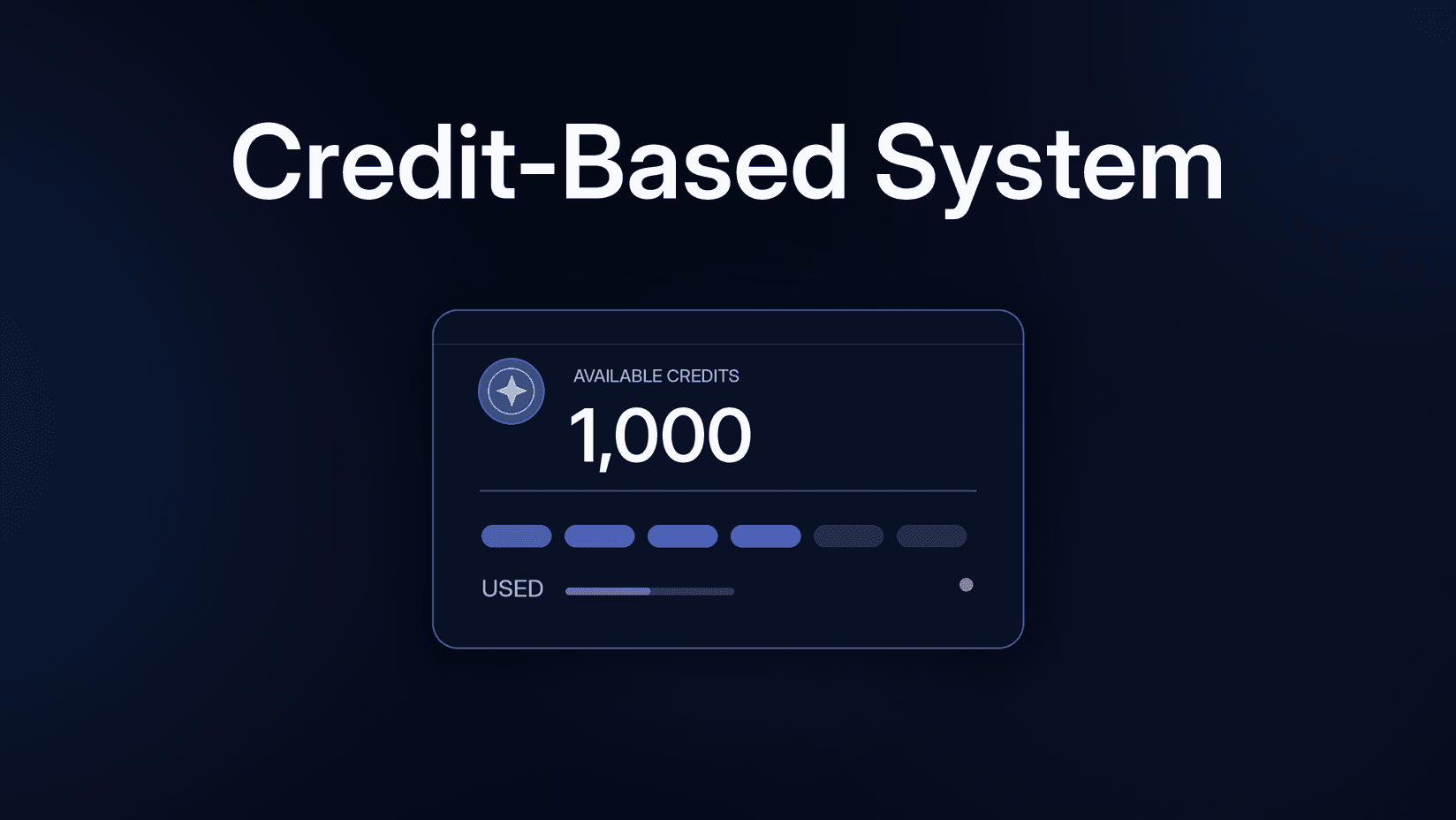
- Prepaid Credits
- Tiered Usage Plans
- Overages on Top of a Base Plan
- Commitments With Usage Flexibility
- Why Usage-Based Billing Works for SaaS
- It Grows With the Customer
- It Aligns Price With Value
- It Lowers the Barrier to Entry
- It Encourages Responsible Usage
- It Supports Long-Term Expansion of Revenue
- Risks and Tradeoffs of Usage-Based Billing
- Runaway Spend and Bill Shock
- Confusing Pricing Models
- Revenue Unpredictability
- Complex Implementation and Operations
- Harder to Sell or Budget
- When Usage-Based Billing Makes Sense
- Products With Real Marginal Costs
- Integrated or API-First Platforms
- Freemium, PLG, or Marketing-Led Funnels
- Supporting Different Customer Segments
- Refining Your Usage-Based Model
- Improve Visibility and Control
- Revisit How You Measure and Package Usage
- Iterate With Care
- The Future of SaaS Pricing
- Launch Usage-Based Billing Your Enterprise Customers Can Trust With Schematic
- Give Customers Real-Time Visibility and Control Over Spending
- FAQs About Usage-Based Billing
- What is a usage-based billing plan?
- What is an example of usage-based billing?
- What is a usage-based billing platform?
- Can I bill customers based on usage?
- What is usage-based network billing?
Traditional SaaS pricing models are starting to feel limiting. Modern products built around APIs, infrastructure, and product-led growth often need more flexible ways to charge customers.
Many SaaS companies are rethinking their pricing strategy and shifting toward usage-based billing and consumption-based pricing.
In a usage-based model, users pay for what they consume, whether that's API calls, messages sent, data processed, storage used, or contacts reached. It's a natural fit for modern SaaS products, from developer tools to analytics and productivity platforms.
When implemented well, usage-based billing can create strong expansion revenue and long-term growth. Poor implementation, on the other hand, can confuse customers and damage trust.
This article explains how usage-based billing works, the most common pricing models, their benefits, and the risks SaaS teams should consider.
TL;DR
Usage-based billing charges customers based on actual consumption during a billing period, using metering, aggregation, and pricing logic.
Common usage-based pricing models include pay-as-you-go, prepaid credits, tiered pricing, overages, and committed usage agreements.
Usage-based pricing connects costs to customer value, lowers adoption barriers, and creates opportunities for expansion revenue.
Accurate usage tracking, billing transparency, and spending controls help prevent bill shock and maintain customer trust.
Schematic is a complete usage-based billing platform that helps SaaS and AI companies meter usage, bill accurately, enforce limits, and give enterprise customers visibility and control over spending.
What Is Usage-Based Billing?
Usage-based billing is a pricing model that charges customers based on how much of a product or service they consume.
Unlike a fixed monthly fee, charges reflect actual usage during a billing period. This structure is also called a usage-based billing model or metered billing.
At a foundational level, usage-based billing software relies on a metering system that records usage events inside the product. These events capture activities such as API calls, storage consumed, or messages sent.
The billing system tracks consumption and applies pricing rules to calculate charges.
What counts as usage depends on the product. Common usage metrics include:
API calls, data processed, or cloud storage used
Contacts reached, emails delivered, or CRM records enriched
Minutes of video processed or events tracked
Prompts submitted or tokens consumed in AI workloads
To generate accurate invoices, companies must collect reliable usage data. The key components typically include metering, rating, aggregation, and invoicing.
Core Usage-Based Pricing Models
Usage-based billing can follow several pricing structures. SaaS companies choose different models depending on their product costs, customer usage patterns, and pricing strategy.
Here are the most common usage-based pricing models and where they fit.
Pay-As-You-Go
Customers are billed for actual consumption within a given billing period. There are no upfront usage commitments.
Pure usage-based pricing is simple and transparent, particularly for products built on cloud computing or API-driven infrastructure.
However, pay-as-you-go can create revenue swings and uncertainty about future costs, particularly for high-usage customers. Spending controls can help address these concerns.
Example: Twilio offers usage-based pricing for messaging APIs, charging customers according to the messages they send.
Prepaid Credits
Customers purchase credits in advance and consume them over time through a structured credit system.
Credits can simplify complex usage metrics, such as GPU time or AI tokens, and give customers more control over spending.
They also help vendors collect cash upfront and make consumption spending easier to plan.
Example: OpenAI offers prepaid API credits that customers can use for different models and endpoints.
Tiered Usage Plans
Usage is divided into defined tiers, such as 0–10,000 units and 10,001–100,000 units, with different per-unit pricing in each band.
A tiered pricing model helps SaaS companies handle more complex pricing structures while offering volume discounts as usage increases.
Clear pricing rules determine how charges change between tiers, reducing the need for manual adjustments.
Example: Mixpanel uses volume-based pricing for tracked events, with lower effective costs at higher usage levels.
Overages on Top of a Base Plan
A common hybrid pricing model combines a fixed monthly fee with additional usage charges.
Customers pay for a defined amount of usage under their pricing plan. Any consumption beyond that allowance is billed at a specified overage rate.
A pricing engine calculates additional charges based on the customer's actual usage.
This pricing structure offers a predictable base cost while allowing revenue to grow as customers consume more.
Example: Customer.io includes a set number of messages in its plans and can apply overage fees for additional sends.
Commitments With Usage Flexibility
Larger customers often negotiate usage commitments in exchange for discounts.
These agreements may include minimum spending requirements, tiered pricing, or prepaid usage blocks. Pricing rules determine how committed spending applies to future consumption.
The arrangement introduces greater predictability while still connecting charges to actual usage.
Example: Stripe offers negotiated pricing arrangements for some enterprise customers, often based on projected transaction volume and agreed rates.
Why Usage-Based Billing Works for SaaS
Usage-based billing has gained traction because it connects revenue to actual product value using measurable usage metrics.
As customers use more of a product, their spending can grow alongside consumption. For SaaS companies, this creates opportunities for expansion revenue and more flexible monetization.
McKinsey analyzed pricing models from 150 software vendors in its 2025 research on AI and SaaS business models. The research highlights the growing role of consumption-based pricing and the importance of giving customers predictable costs.
Here are a few reasons usage-based billing may make sense for your product.
It Grows With the Customer
As customers adopt more of your product or integrate it more deeply into their workflows, their usage naturally increases.
Usage-based billing captures that growth through actual consumption, reducing the need for constant upsells or contract renegotiations.
This supports revenue expansion tied directly to customer activity and product adoption.
It Aligns Price With Value
Customers pay based on how much they use your product. This can feel fair to early-stage users and smaller teams that aren't ready for a large subscription commitment.
As usage increases, so does the value customers may receive from the product.
An effective usage-based pricing strategy connects the pricing metric to meaningful customer outcomes, making higher charges easier to understand.
It Lowers the Barrier to Entry
Usage-based models often allow for low or no upfront costs, making it easier for new customers to get started.
This works well with freemium and product-led growth strategies, where companies encourage product adoption before SaaS monetization.
Customers can begin with limited usage and gradually increase spending as they see value.
It Encourages Responsible Usage
For products with meaningful marginal costs, such as infrastructure, AI, or communications, usage pricing helps customers monitor consumption.
Usage-based billing also gives SaaS companies better visibility into customer behavior and product adoption.
Teams can review usage patterns, improve forecasting, and identify opportunities to reduce unnecessary consumption.
Real-time usage visibility can help customers manage their budgets and avoid unexpected charges.
It Supports Long-Term Expansion of Revenue
As customers derive more value from your product and increase their usage, revenue can grow in parallel.
Heavy adopters and power users naturally contribute more over time.
This dynamic can support strong net revenue retention in SaaS categories, from infrastructure and analytics to marketing and collaboration.
It also creates opportunities to strengthen customer relationships through flexible pricing and expansion.
For enterprise customers, confidence in variable spending can influence purchasing decisions.
Risks and Tradeoffs of Usage-Based Billing
While usage-based billing can support growth and connect pricing to customer value, it also introduces operational complexity.
Accurate usage tracking is important for maintaining customer trust, generating accurate invoices, and supporting long-term customer satisfaction.
Here are some common challenges to watch out for.
Runaway Spend and Bill Shock
If customers aren't aware of how quickly usage can accumulate, they may receive unexpected charges at the end of a billing cycle.
Bill shock can damage trust, increase support requests, and affect retention, particularly when customers have limited visibility into consumption.
Tip: Set usage alerts, offer soft usage limits or caps, and display real-time usage data inside your product. Spending forecasts and configurable limits can also help prevent bill shock before invoices arrive.
Confusing Pricing Models
Usage pricing often introduces unfamiliar units, such as tokens, API calls, events, or rows processed.
Customers may struggle to understand how these metrics translate into actual costs. Complex pricing structures can also make comparing plans more difficult.
Tip: Use plain language to explain usage metrics and pricing rules. Include examples showing how consumption translates into costs and outcomes customers care about.
Revenue Unpredictability
As customers scale usage up or down, your revenue can change in ways that are difficult to forecast.
Variable pricing can make planning harder for finance teams, particularly when they need to forecast recurring revenue or support revenue recognition.
Tip: Consider hybrid pricing models with minimum commitments, prepaid credits, or base plans. These arrangements can support more predictable revenue while preserving the flexibility of consumption-based pricing.
Complex Implementation and Operations
Metering usage accurately requires coordination between product, engineering, and finance teams.
Poor usage tracking can lead to underbilling, overbilling, or missing consumption records. These issues complicate the broader billing process and can damage customer relationships.
Tip: Consider a complete usage-based billing platform like Schematic, which handles metering, billing, and real-time usage enforcement. If you're evaluating different vendors, this guide to Chargebee alternatives can help you compare available options.
Harder to Sell or Budget
In sales-led environments, enterprise buyers often want predictable costs before committing to a product.
If a usage-based pricing model feels difficult to forecast, it can slow procurement and create uncertainty for finance teams.
Tip: Offer modeled spending scenarios during sales conversations. Hybrid pricing, committed usage, and volume discounts can make budgeting easier for high-usage customers.
Usage-based billing requires more than accurate calculations. Customers also need confidence that consumption will remain within their budgets.
When Usage-Based Billing Makes Sense
Usage-based pricing isn't the right fit for every SaaS product.
For products with growing or variable consumption, it can help revenue scale alongside customer usage and adoption.
Maintaining that connection requires a billing platform that can adapt as products, pricing, and customer behavior change.
Usage-based billing also requires careful planning, accurate usage tracking, and visibility into real consumption patterns.
Here are a few situations where it tends to work well.
Products With Real Marginal Costs
If your product has meaningful per-unit costs, such as compute usage, storage, or messaging volume, usage-based pricing helps connect revenue to those costs.
For example, a cloud storage provider might charge customers based on the amount of data stored or transferred.
Usage pricing also encourages customers to monitor consumption and can offer greater flexibility than flat-rate pricing.
Integrated or API-First Platforms
When your product is embedded in customer workflows or applications, usage often tracks directly with business value.
Charging per event, API request, or object processed can be intuitive and scale alongside adoption.
In these cases, accurate usage tracking and aggregation are necessary for the consumption-based pricing model to function properly.
Freemium, PLG, or Marketing-Led Funnels
Usage-based pricing lowers the barrier to entry and supports gradual monetization.
Free or low-cost plans can include limited usage, while paid tiers provide higher allowances or additional functionality.
This approach helps convert active users into paying customers as usage grows and customer behavior becomes more predictable.
Supporting Different Customer Segments
If you serve both startups and enterprises, usage-based pricing can adapt more naturally than flat-rate or seat-based models.
Smaller customers can start with minimal usage, while larger accounts can scale consumption under flexible pricing arrangements.
A usage-based model also gives SaaS companies room to support different customer needs through custom commitments, volume-based pricing, and hybrid plans.
Refining Your Usage-Based Model
The first version of a usage-based pricing model is rarely the final one.
As your product matures and customer needs become clearer, adjusting the pricing model can help build trust, reduce friction, and create opportunities for growth.
Regularly reviewing your billing model and usage-based pricing strategy is important because customer behavior, consumption costs, and product value can change over time.
Improve Visibility and Control
As usage grows, customers need to understand what they're consuming during each billing cycle.
Make usage data available inside your product and offer spending controls such as alerts, soft limits, and usage estimators.
Real-time usage visibility helps customers track costs, plan their budgets, and prevent bill shock.
For enterprise buyers, configurable spending limits and forecasts can also reduce uncertainty during purchasing decisions.
Revisit How You Measure and Package Usage
Over time, your original usage metrics may stop reflecting how customers perceive value.
You might need to reframe pricing around outcomes rather than raw consumption or introduce bundles, updated pricing plans, or prepaid credits.
For example, an AI product might initially charge per token but later offer credit bundles that make spending easier to understand.
These adjustments can simplify usage pricing and help customers scale.
Iterate With Care
Usage-based pricing works best when changes are gradual and clearly communicated.
Consider existing customers when making major pricing updates. You may need to preserve older plans or offer transition periods.
Treat significant changes to how your product is packaged and priced like product launches: test them, gather customer feedback, and explain the reasoning behind new rates or usage limits.
Monitor adoption, customer satisfaction, and revenue performance to see how well the updated pricing strategy works.
The Future of SaaS Pricing
The future of SaaS pricing is being shaped by growing interest in usage-based billing models.
As customers expect to pay for what they actually consume, SaaS companies are exploring more flexible, customer-focused pricing structures.
Hybrid pricing models that combine subscriptions, usage-based charges, and credits are becoming more common. They offer businesses a way to balance predictable revenue with the flexibility of consumption-based pricing.
But launching a usage-based billing model is only the beginning. The ongoing work involves giving customers visibility and control over spending, refining how value is packaged, and adjusting pricing as products and customer needs change.
Usage-based billing can be a strong monetization strategy for SaaS and AI companies. When implemented carefully, it connects pricing to actual value while creating opportunities for sustainable revenue growth.
Launch Usage-Based Billing Your Enterprise Customers Can Trust With Schematic
Usage-based billing connects revenue to real customer activity. It can lower adoption barriers, support expansion, and reflect the value delivered through your product.
But the billing model only works when your systems keep up.
Accurate usage metering must feed pricing logic, and billing calculations must match what customers actually consume. Usage limits also need to work inside the product in real time.
Schematic is a complete usage-based billing platform for software and AI companies selling to enterprises.
It brings usage metering, billing, credit management, and real-time controls into one platform, helping your team manage consumption-based and hybrid pricing models.
With Schematic, you can:
Meter and bill usage: Track consumption accurately and calculate charges using your pricing rules.
Manage flexible pricing: Launch usage-based, credit-based, seat-based, or hybrid pricing models.
Enforce usage limits: Apply product restrictions, overages, and access rules in real time.
Support enterprise contracts: Offer custom plans, credits, trials, and customer-specific pricing.
Update pricing faster: Let product and revenue teams manage pricing changes without repeated engineering work.
Give Customers Real-Time Visibility and Control Over Spending
Enterprise customers often hesitate to adopt usage-based pricing because they cannot predict their bills.
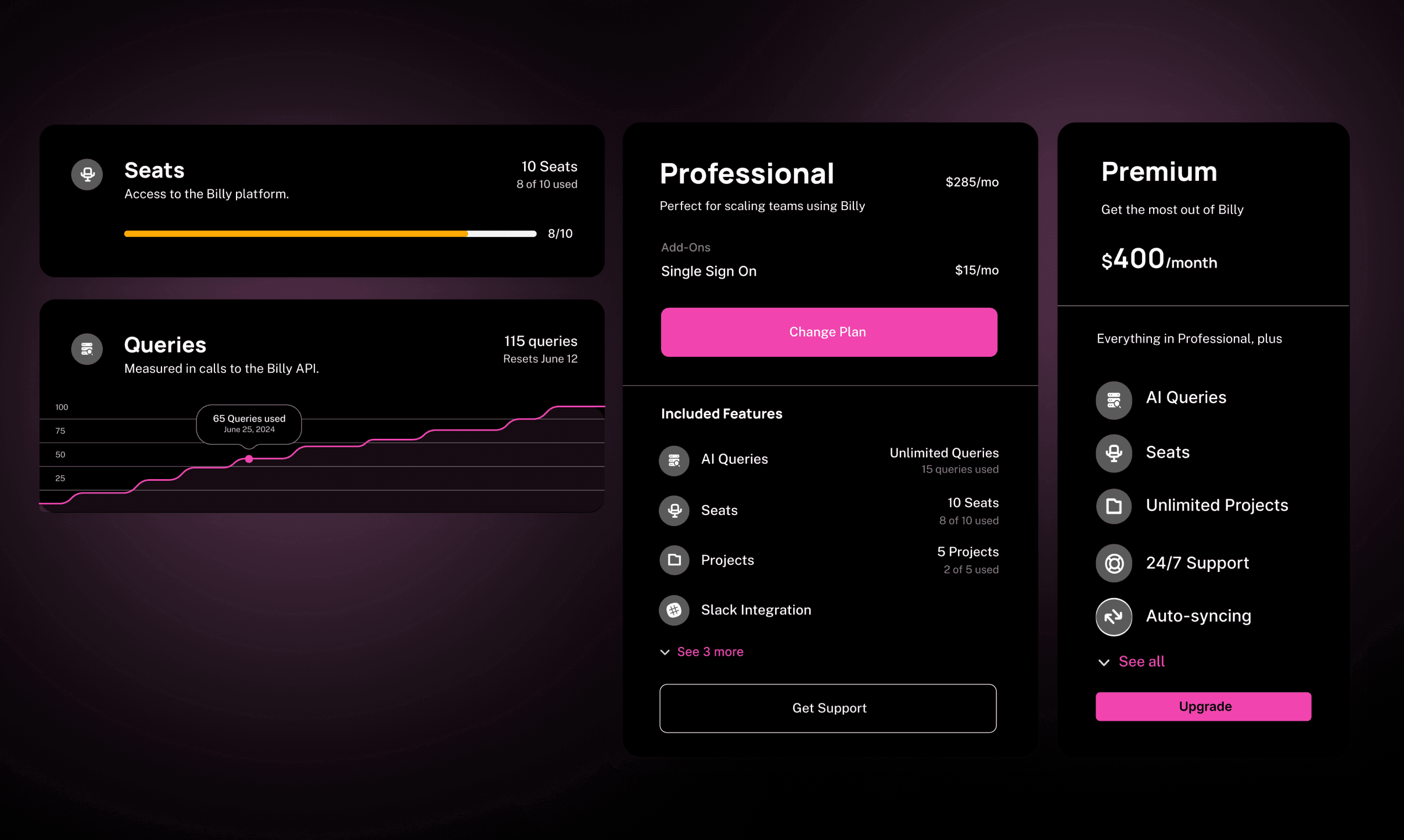
Schematic addresses these concerns through enterprise credit wallets that show customers how much they've consumed, what they're spending, and where their costs are heading.
Buyers can set spending limits, manage usage, and configure controls that help keep consumption within their budgets.
Max Ade, Co-Founder & CEO of Pickleheads, explains how Schematic helped the company put its usage-based pricing strategy into practice:
"Without Schematic, we couldn't have implemented usage limits like capping round robins per month, a capability that was essential to our pricing strategy."
With accurate usage tracking, billing transparency, and customer spending controls in one platform, Schematic helps software and AI companies build stronger customer relationships and support enterprise growth.
Ready to offer usage-based billing your enterprise customers can trust?
FAQs About Usage-Based Billing
What is a usage-based billing plan?
A usage-based billing plan charges customers according to actual consumption during a billing period. Pricing is tied to activity such as API calls, data processed, storage usage, or tokens consumed. A metering system records usage data and applies predefined pricing rules.
What is an example of usage-based billing?
Twilio is an example of usage-based billing. Businesses pay based on the number of messages they send through its APIs. As usage increases, charges increase accordingly. Other examples include cloud storage providers charging for storage consumed and AI platforms charging per token.
What is a usage-based billing platform?
A usage-based billing platform tracks customer consumption, applies pricing rules, and generates accurate invoices based on actual usage. Platforms like Schematic also support real-time usage tracking, spending limits, and prepaid credits, helping SaaS companies manage complex pricing models.
Can I bill customers based on usage?
Yes. You need a system that captures usage events, calculates charges, and generates accurate invoices. Many SaaS companies use dedicated usage-based billing software to manage metering, pricing logic, and billing. Hybrid models can also combine usage charges with subscriptions or prepaid credits.
What is usage-based network billing?
Usage-based network billing charges customers according to their network consumption during a billing period. Common usage metrics include data transferred, bandwidth consumed, and connection time. Charges may follow per-unit rates, volume-based pricing, or tiered pricing structures.